
The allure of a perfectly manicured landscape, defined by clean, continuous concrete curbing, is undeniable. It’s a permanent upgrade that dramatically enhances curb appeal and simplifies yard maintenance. For the dedicated homeowner in the Grand Rapids area, the idea of tackling this project as a DIY endeavor can be appealing. After all, a hands-on approach can be rewarding.
As landscape curbing experts, Premiere Edge Concrete Solutions is committed to empowering our community with knowledge. While we always recommend professional installation for guaranteed, long-lasting results, we understand the spirit of the DIY enthusiast.
This guide will walk you through the basic steps of how to DIY concrete curbing, outlining the process, the necessary materials, and the critical points where a professional touch makes all the difference.
Materials and Tools You’ll Need:
- Concrete mix (a specialized mix for curbing is ideal, but a standard sand/cement mix can be used with proper water control)
- Shovels and wheelbarrow
- String line and stakes
- Trenching tool or edger
- Concrete molds or forms (available for rent or purchase)
- Trowels and finishing tools
- Color and release agents (optional, for a decorative finish)
- Safety gear (gloves, safety glasses)
Step-by-Step DIY Curbing Installation
Ready to get your hands dirty? This process requires careful execution at every stage. Rushing through any step can compromise the entire project, so plan for a full weekend and enlist a helper if possible.
Step 1: Planning and Layout
Mark the Path: Use spray paint or a garden hose to lay out the exact path of your curb. Take your time. Ensure the curves and lines are exactly where you want them.
Set the Grade: Use stakes and a string line to establish the desired curb height and slope. Proper grading is crucial for drainage. The curb should be slightly above the surrounding soil to help prevent mulch washout, but low enough for a lawnmower to pass over the edge.
Step 2: Trenching and Preparation
Dig the Trench: Dig a trench slightly wider than your mold (typically 6 to 8 inches) and 2 to 4 inches deep, depending on soil conditions and curb height. The trench base must be level and compacted.
Remove Debris: Ensure all grass, roots, and rocks are removed from the trench. Any organic material left behind can decompose, causing the concrete to settle unevenly or crack over time.
Step 3: Mixing the Concrete
Use the Right Mix: For curbing, a drier mix than standard sidewalk concrete is needed so it maintains its shape during molding or extrusion. If you’re using a standard mix, you’ll need to carefully control the water content. The mix should be firm, similar to clay, not soupy.
Add Color (Optional): If you’re adding color, mix the pigment thoroughly into the dry ingredients before adding water to help achieve a consistent color throughout the batch.
Step 4: Forming the Curb
This is where the DIY process differs significantly from professional installation.
Using Molds: If you’re using pre-made forms, fill them with concrete, compact the mix, and carefully remove the form to leave the curb shape. This process is done in short sections, which can result in visible seams.
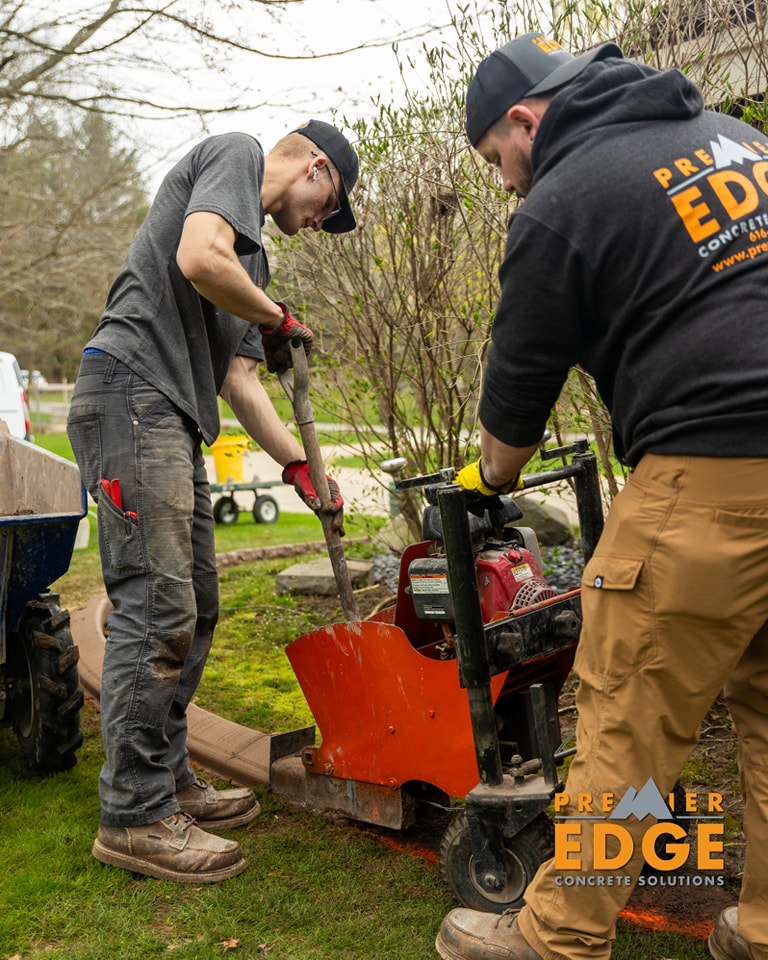
Using Extrusion (If Available): If you’re able to use a curbing machine, feed the concrete mix into the hopper while the machine is guided along the trench. This method requires a consistent pace and a carefully controlled mix consistency to avoid gaps or uneven sections.
Step 5: Finishing and Sealing
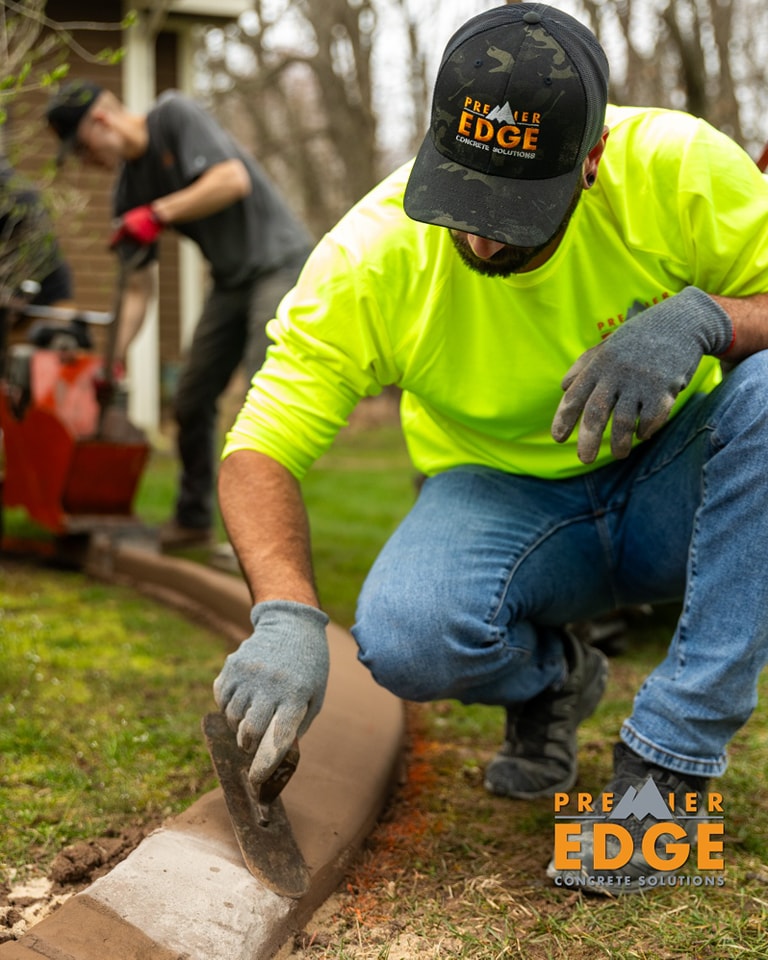
Trowel and Smooth: Use a trowel to smooth the top and sides of the curb, removing rough edges or surface imperfections.
Apply Texture/Stamp (Optional): If using a stamp, apply it while the concrete is still workable but firm enough to hold the impression.
Curing: Cover the curb with plastic sheeting or keep it damp for at least 3 to 5 days. Proper curing helps improve strength and reduces the risk of early cracking.
Sealing: Once fully cured (typically around 28 days), apply a high-quality concrete sealer. This step helps protect the curb from moisture intrusion, staining, and freeze-thaw cycles.
The Premier Edge Difference: Why Go Pro?
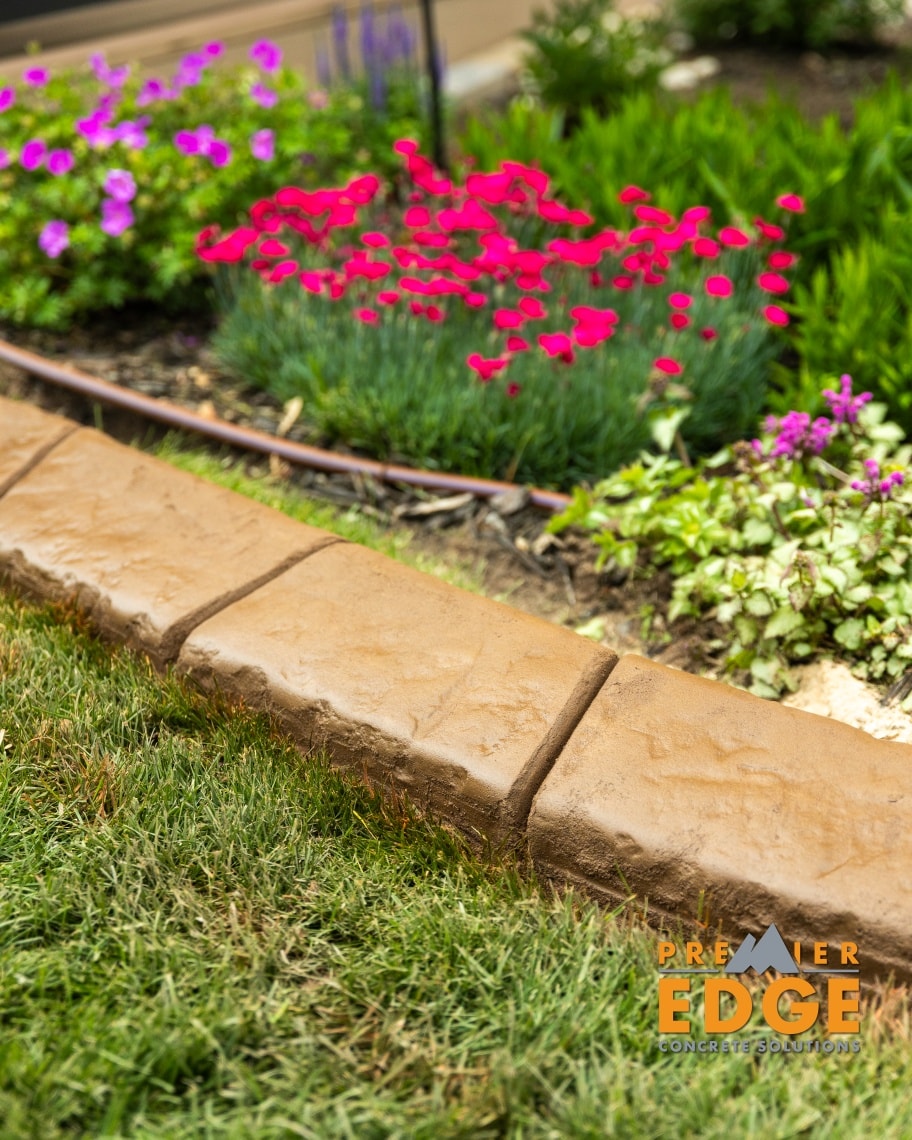
While a DIY project can be a rewarding challenge, it often results in a product that lacks the uniformity, durability, and finish of professionally installed curbing. Without commercial equipment and professional-grade additives, DIY curbing typically exhibits inconsistent appearance, reduced crack resistance, and visible seams between sections, compromising aesthetics and structural integrity.
For a landscape solution designed for long-term performance, clean aesthetics, and effective drainage, professional installation remains the most reliable option.
Ready to skip the heavy lifting and get a professionally installed edge built to last? Contact us today for a free quote on your project. We serve residential and commercial clients throughout Grand Rapids, delivering durable, well-crafted landscape curbing & edging solutions you can rely on.

I’m Nathan Endres, owner of Premier Edge Concrete Solutions. I ensure every project showcases quality and excellence. Specializing in landscape curbing and floor coatings, my team and I serve Grand Rapids, MI, with a focus on providing reliable and affordable craftsmanship.