
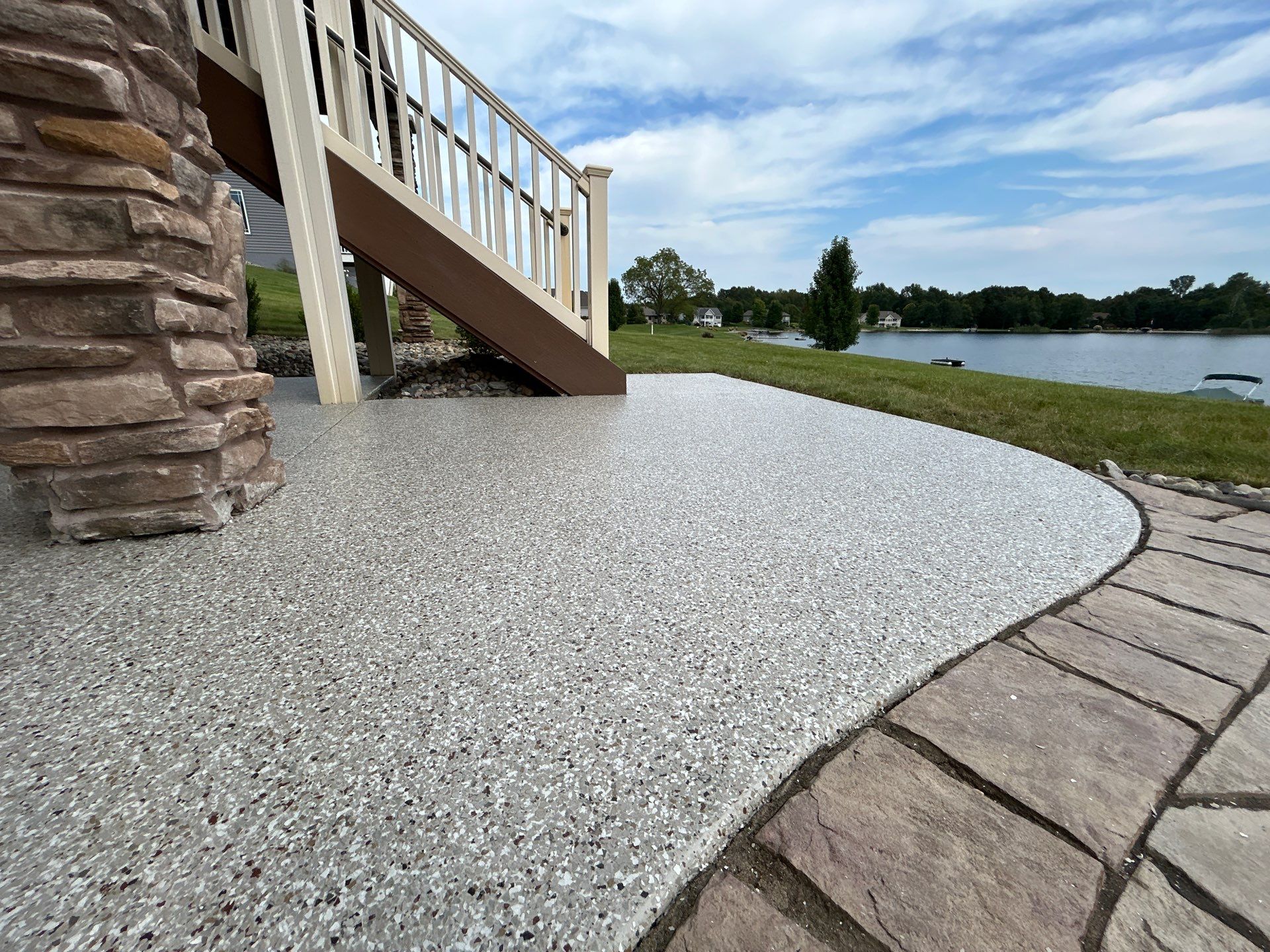
The most durable outdoor concrete coating for patios is a polyaspartic system applied over a high-solids epoxy base. These coatings resist UV degradation, freeze-thaw cycling, and heavy foot traffic better than standalone epoxy or acrylic sealers. Premier Edge Concrete Solutions installs UV-stable outdoor coating systems across Grand Rapids and West Michigan.
If you’ve been comparing options for your patio, you’ve probably landed on two camps: a basic concrete sealer that keeps costs low, or a full multi-layer coating that promises years of protection. Both have a role, and the right choice depends on what your patio faces each season. After coating outdoor surfaces across Kent and Ottawa counties, we’ve seen where each option holds up and where it doesn’t.
How Outdoor Coating Types Compare
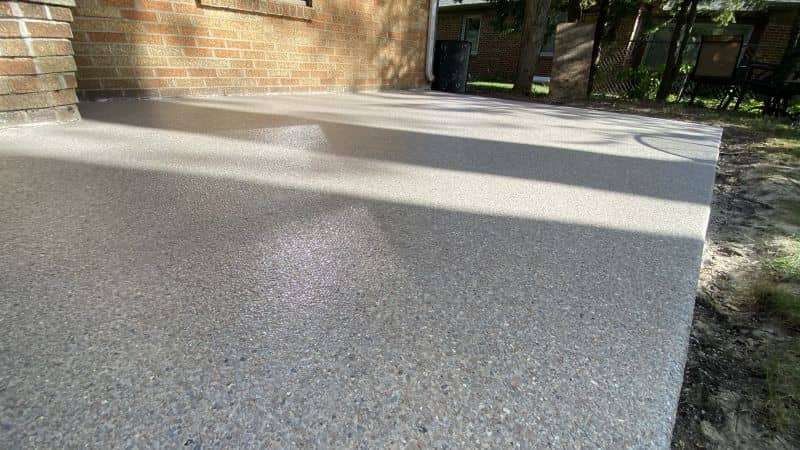
Outdoor concrete coatings range from basic sealers to multi-layer systems built for UV exposure, chemical contact, and heavy use.
Acrylic and Penetrating Sealers
Sealers absorb into concrete or form a thin film that repels water and reduces staining. They’re the most affordable option and work on decorative patios with light foot traffic. The tradeoffs:
- Reapplication needed every 2 to 4 years
- Minimal resistance to impact, abrasion, or chemical spills
- Acrylic formulas tend to yellow under sustained sun exposure
For a patio that mainly serves as a visual feature, a sealer may be sufficient. For regular use, it’s a temporary solution.
Epoxy and Urethane Coatings
Epoxy bonds to properly prepared concrete and resists oil, grease, and moisture penetration. Urethane adds better abrasion resistance and flexibility. The limitation for both outdoors is UV stability. Standard epoxy chalks and yellows within a few years of direct sun, weakening the surface and accelerating wear. Urethane holds up longer, but polyaspartic formulas outperform both in terms of long-term UV resistance on exposed surfaces.
Polyaspartic Systems
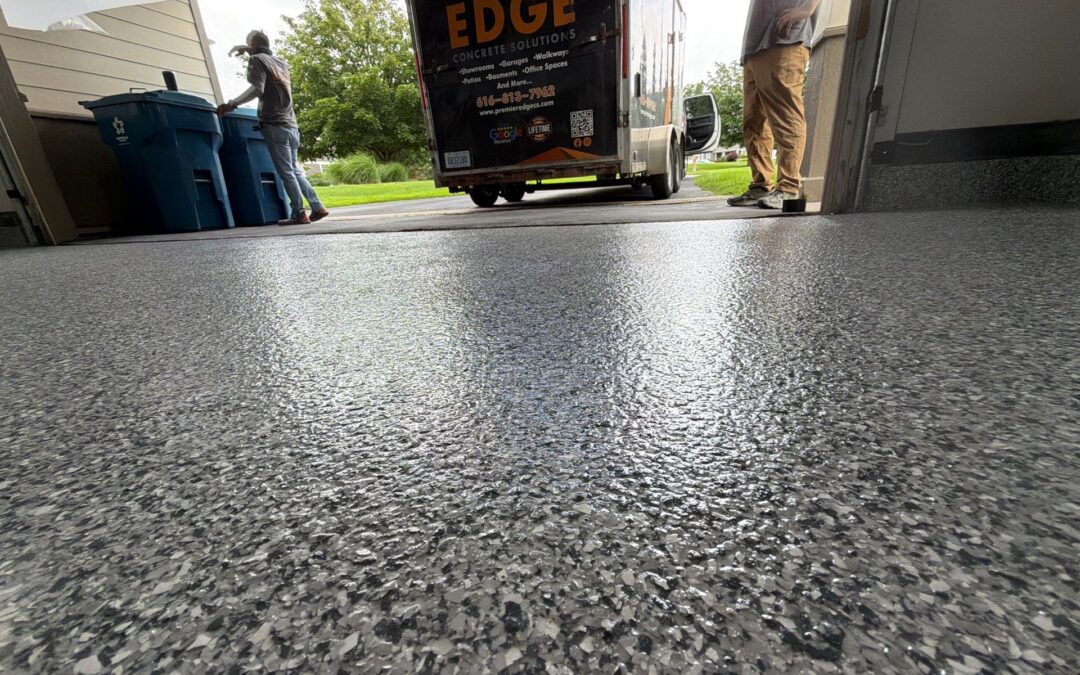
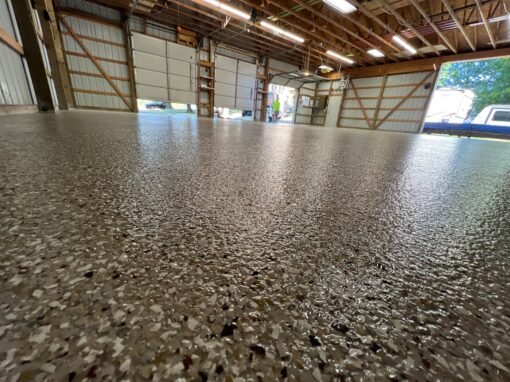
Polyaspartic topcoats don’t yellow in direct sunlight, which is why they’re the preferred finish for outdoor surfaces. Premier Edge Concrete Solutions’ outdoor floor coating system pairs a high-solids epoxy base with a polyaspartic topcoat:
- Epoxy base provides adhesion strength and chemical resistance
- Polyaspartic topcoat provides UV stability, flexibility, and slip resistance when broadcast with aggregate
- The combined system resists moisture, mold, and staining through years of weather exposure
That layered approach distinguishes a surface that looks sharp at year five from one already chalking at year two.
What Michigan Weather Demands From Your Patio Coating
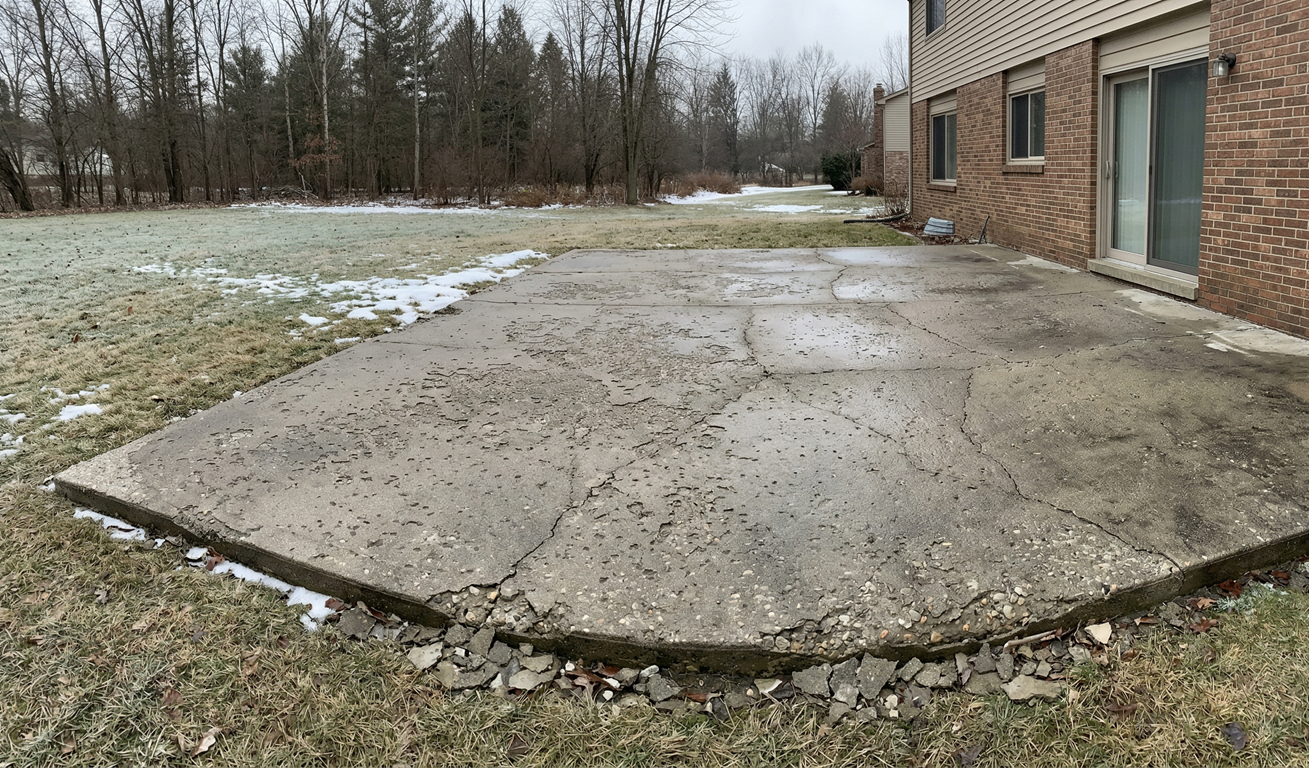
UV resistance matters on any outdoor surface, but West Michigan patios face additional challenges that determine whether a coating survives or fails within a few seasons.
Freeze-Thaw and Moisture Pressure
Water enters unsealed or poorly coated concrete through its surface pores. When temperatures drop below freezing, that trapped water expands and creates pressure that causes spalling and cracks over time. A patio in Grand Haven or Holland endures rapid temperature swings and lake-effect moisture between October and April, putting concrete under more seasonal stress than most homeowners expect.
A coating that only addresses UV will still fail if it can’t flex with the slab. Rigid coatings crack when concrete expands and contracts through seasonal shifts. Polyurea base coats maintain flexibility across a wide temperature range, moving with the concrete rather than separating from it.
Choosing the Right Level of Protection
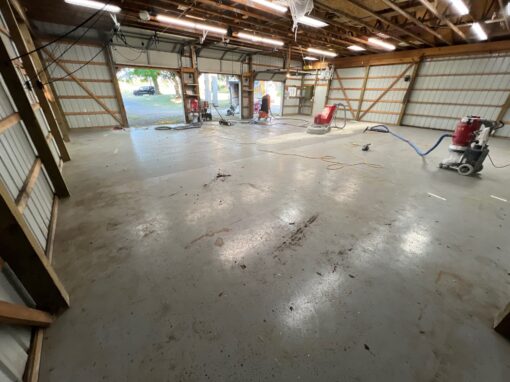
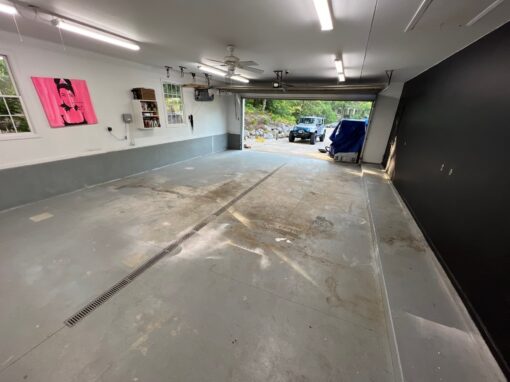
Not every patio needs a full coating system. Concrete sealing works for patios that serve a purely decorative role with light foot traffic. But for patios used as dining areas, entertaining spaces, or extensions of the home, a full coating system with diamond grinding and proper surface preparation delivers protection that a sealer can’t match. The difference shows up after the first full Michigan winter.
Frequently Asked Questions
How long does an outdoor concrete coating last on a patio?
A professionally installed polyurea and polyaspartic system on properly prepared concrete can perform for 10 to 20 years or more with routine cleaning. Longevity depends on sun exposure, foot traffic, and whether the concrete was diamond-ground before coating.
Can I use epoxy on an outdoor patio?
Epoxy works outdoors as a base layer but degrades under direct UV when used as the topcoat. Pairing epoxy with a UV-stable polyaspartic clear coat solves this. Epoxy alone on an exposed patio can begin yellowing and chalking within a few years, especially on south-facing surfaces.
Is a concrete sealer enough to protect my patio in Michigan?
A penetrating sealer provides basic moisture and stain resistance for lightly used patios. For surfaces that handle furniture, foot traffic, and West Michigan’s freeze-thaw conditions, a full coating system offers substantially better long-term protection. Sealers need reapplication every few years, while a professional coating is designed to last without reapplication.
Protect Your Patio With a Coating Built for Michigan
The most durable outdoor concrete coating combines UV-stable chemistry on top with a flexible, well-bonded base underneath, applied over properly prepared concrete. Sealers handle light-duty surfaces. Full coating systems handle patios that live through real Michigan weather. Premier Edge Concrete Solutions installs outdoor coating systems across Grand Rapids and West Michigan, backed by a written lifetime warranty.
Request your free estimate to find out which system fits your patio.

I’m Nathan Endres, owner of Premier Edge Concrete Solutions. I ensure every project showcases quality and excellence. Specializing in landscape curbing and floor coatings, my team and I serve Grand Rapids, MI, with a focus on providing reliable and affordable craftsmanship.