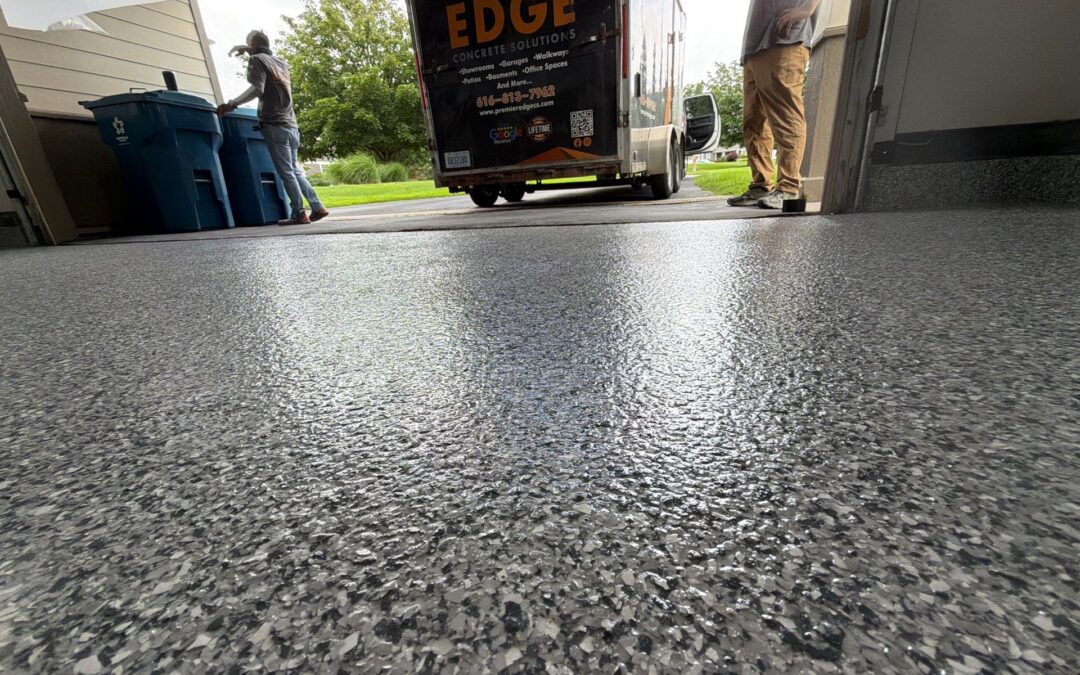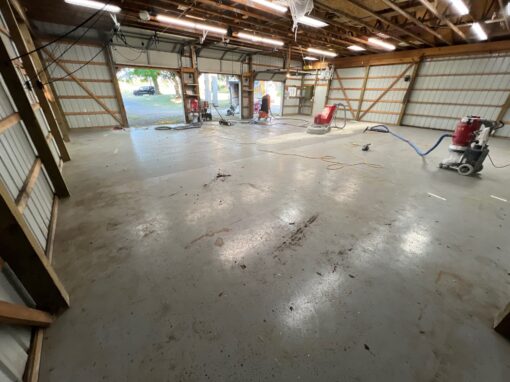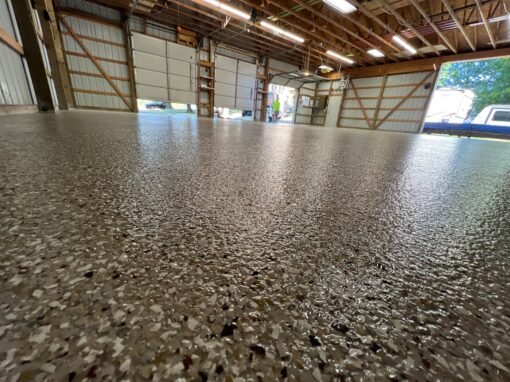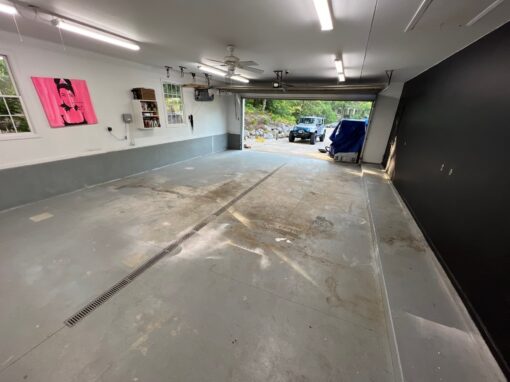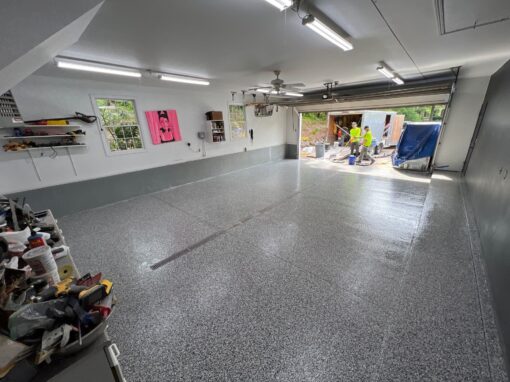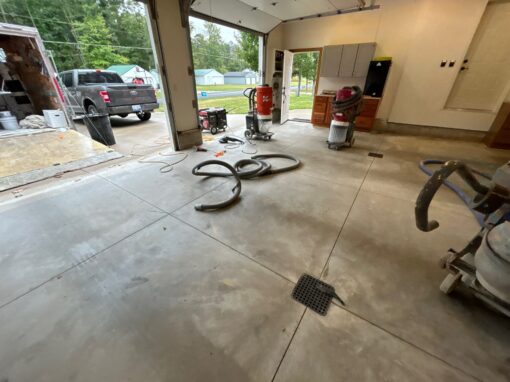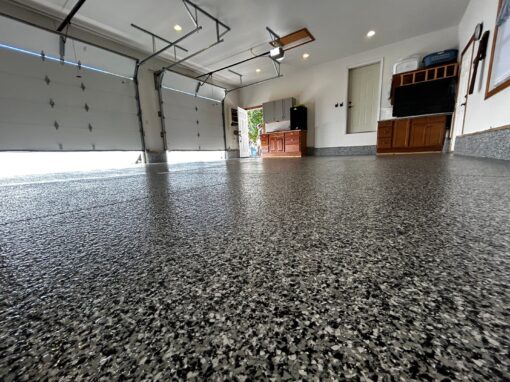

The best epoxy for a basement floor is a 100% solids system applied over a moisture-mitigating primer on a diamond-ground slab. Water-based DIY kits are easier to apply but bond poorly on concrete with even moderate vapor transmission. Premier Edge Concrete Solutions applies basement epoxy floor coatings with diamond grinding and moisture testing on every Grand Rapids project.
Most homeowners assume all epoxy is the same and that the brand on the bucket matters most. The truth is the coating chemistry matters far more than the label. 100% solids epoxy, water-based kits, and polyaspartic hybrids each handle damp concrete differently. We rank three chemistries, from the strongest moisture barrier to the most budget-friendly weekend project.
Epoxy Types Ranked by Moisture Tolerance
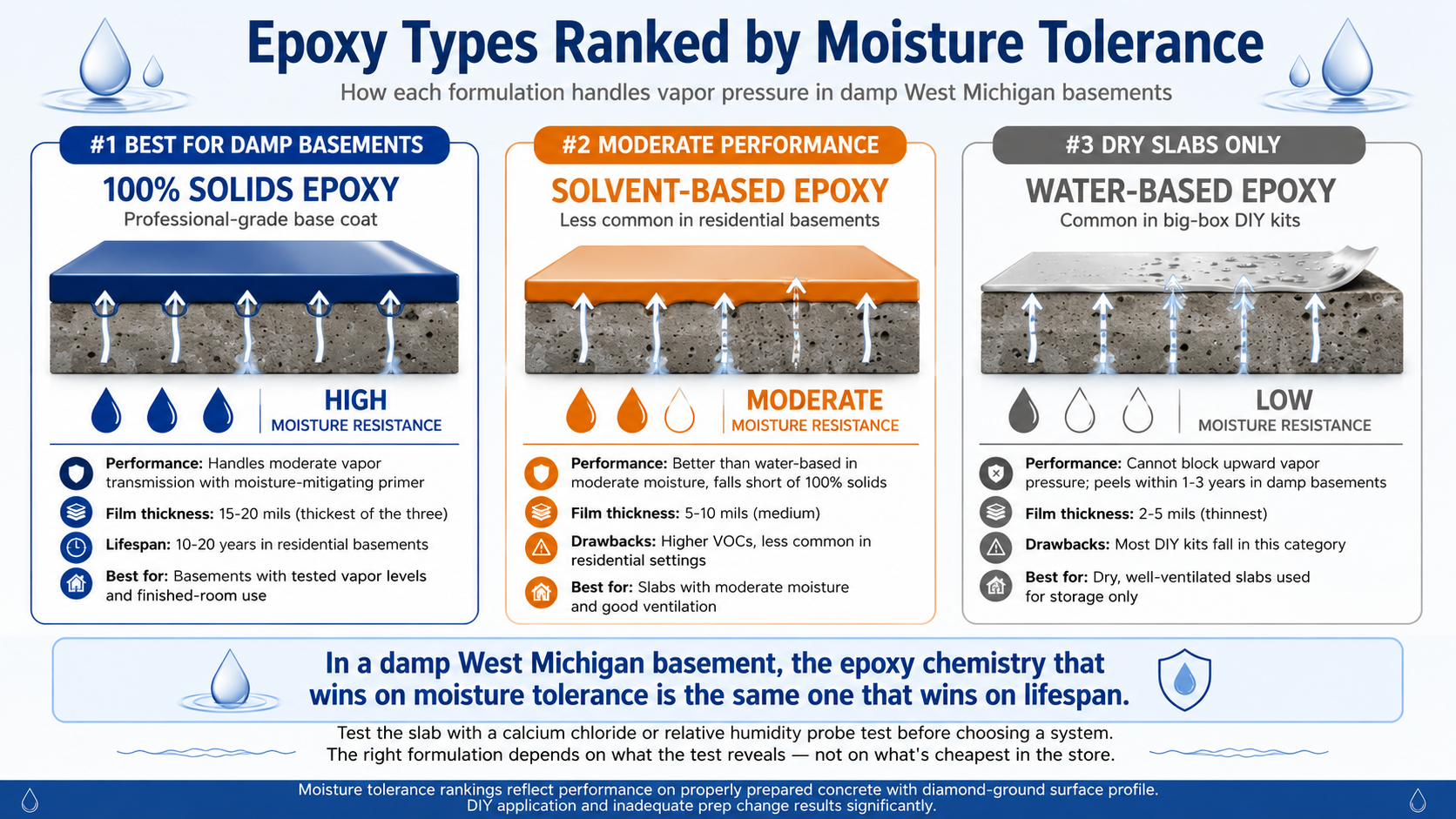
Not all epoxy formulations handle basement moisture the same way. Here’s how the three main categories compare in damp Michigan basements.
100% Solids Epoxy
This formulation is the thickest, most durable option. 100% solids epoxy contains no water or solvents that need to evaporate during curing, which means it builds a dense film in a single coat. It bonds well to properly ground concrete and tolerates moderate vapor transmission when paired with a moisture-mitigating primer. This is the system Premier Edge uses as the base coat in our 5-step process.
Water-Based Epoxy
Water-based alternatives are the easiest to apply and have the lowest VOCs. They work well on dry slabs, but the thinner film offers less moisture resistance than 100% solids. Most big-box DIY kits fall into this category. In a damp West Michigan basement, water-based coatings commonly peel within one to three years because they cannot block upward vapor pressure.
Solvent-Based Epoxy
Solvent-based systems penetrate slightly deeper into the concrete surface, but they produce higher VOCs and are less common in residential applications. They perform better than water-based in moderate moisture, but still fall short compared to 100% solids, especially in basements with known vapor issues.
What a Professional Coating System Adds
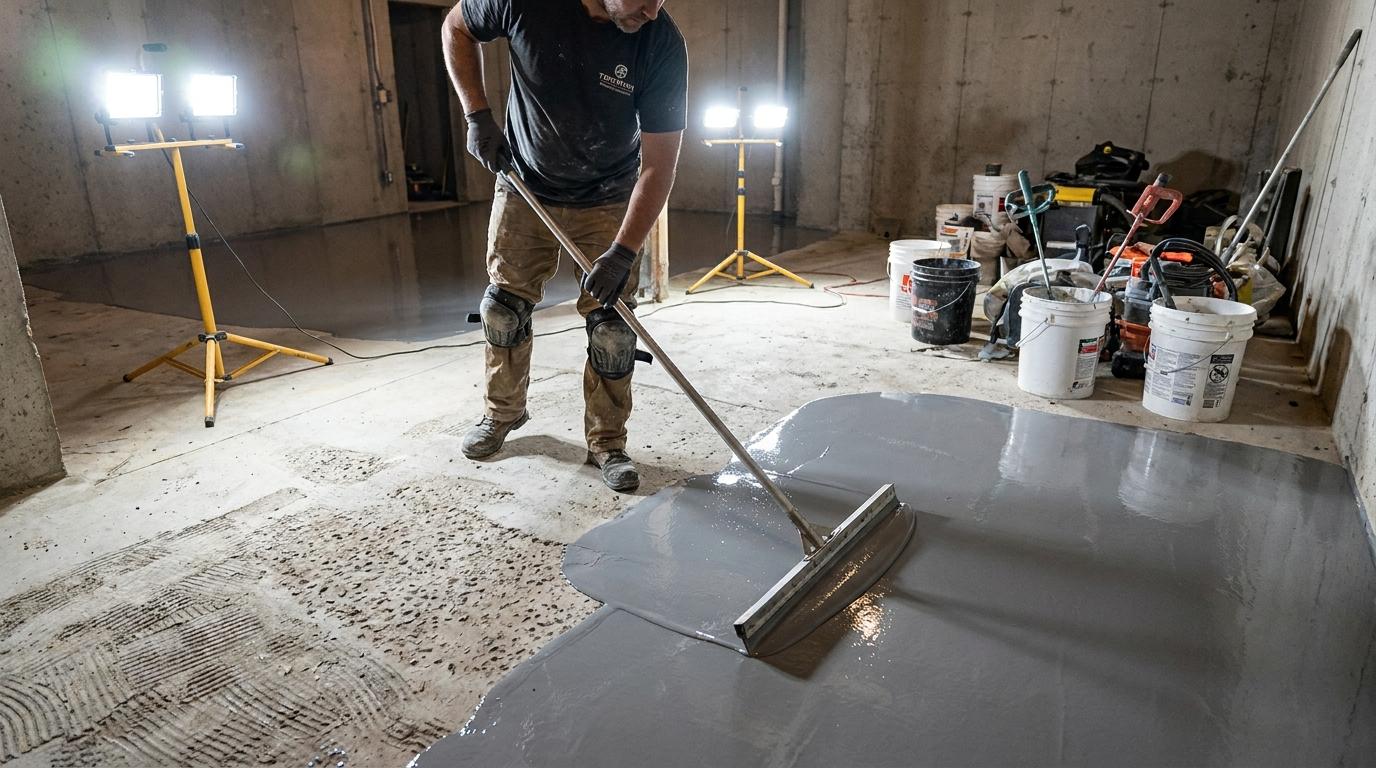
Epoxy chemistry is only one variable. Professional installation adds three steps that a DIY kit can’t replicate.
- Diamond grinding: Mechanically profiles the concrete surface to create the optimal bond. Acid etching, the typical DIY prep method, leaves contaminants and produces an inconsistent profile.
- Moisture testing: A calcium chloride test or relative humidity probe measures actual vapor levels in the slab. Premier Edge will not coat a basement that fails this test.
- Polyaspartic top coat: The final layer is a UV-stable, scratch-resistant polyaspartic clear coat. It adds chemical resistance and a high-gloss finish that water-based kits can’t match.
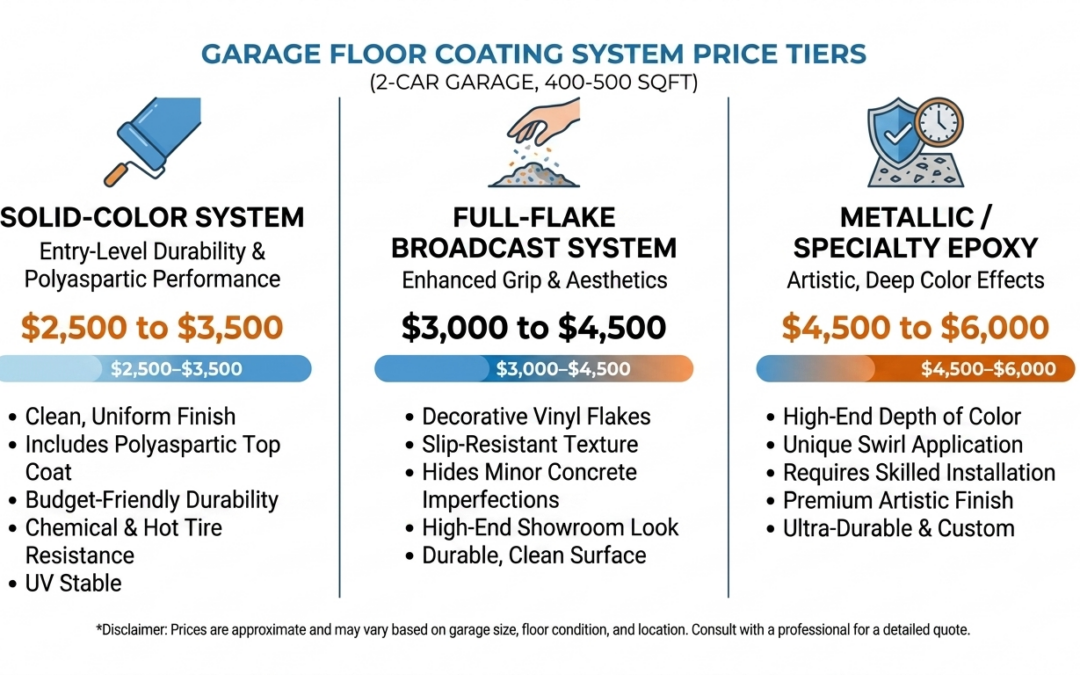
The full system costs $5 to $12 per square foot installed. For a 500-square-foot basement, that runs $2,500 to $6,000, depending on the slab’s condition and the finish selected. Premier Edge backs every installation with a lifetime warranty. Explore the benefits of basement floor coating for a detailed look at what the system delivers.
Matching the System to Your Basement’s Condition
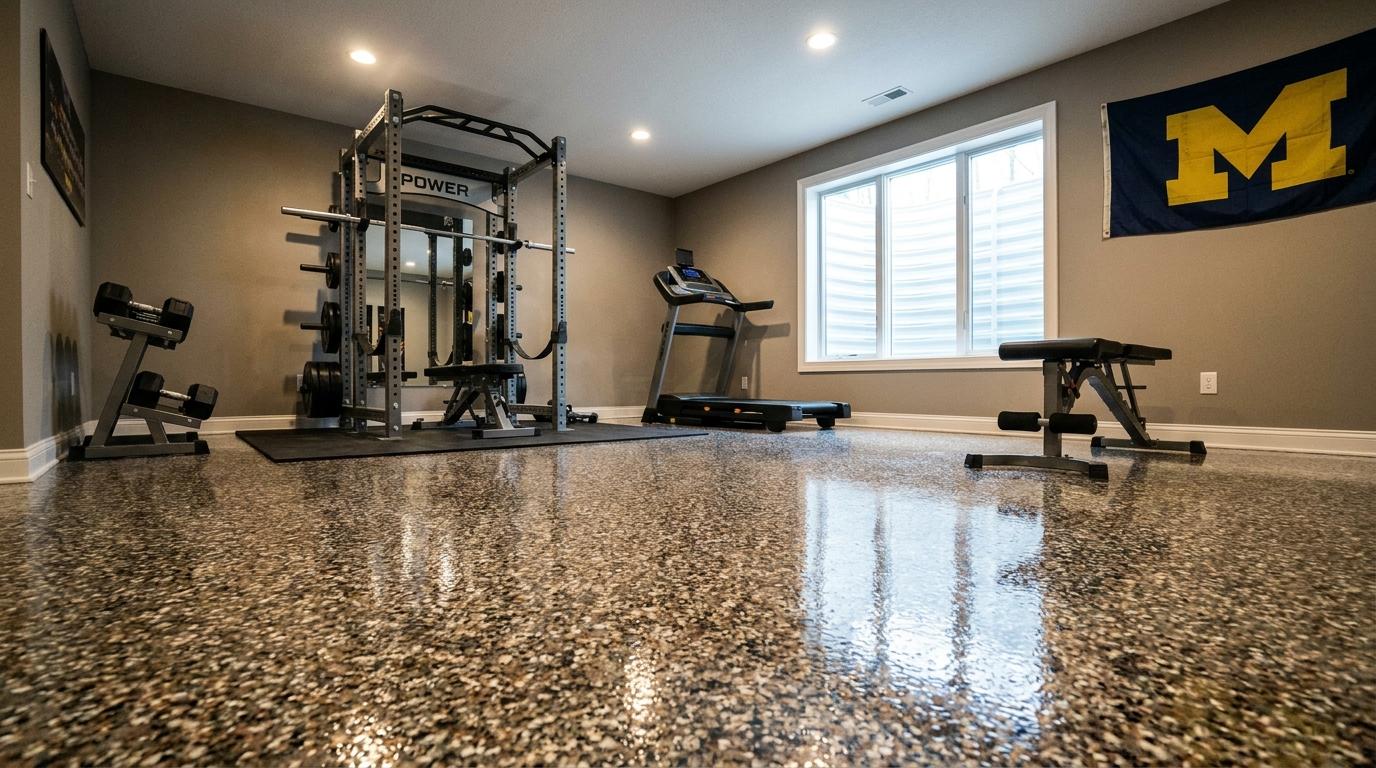
The right choice depends on your slab’s current moisture level and how you plan to use the space.
- Dry slab, light use (storage): A water-based sealer or DIY epoxy kit offers basic protection at the lowest cost. Expect to recoat every two to three years.
- Dry slab, finished space (gym, office, rec room): A 100% solids epoxy system with a polyaspartic top coat delivers a surface that typically lasts 10 to 20 years. This is the most common install in Grand Rapids basements.
- Moderate vapor, finished space: A 100% solids epoxy over a moisture-mitigating primer. The primer creates a barrier between the slab and the coating system.
- Active water intrusion: No epoxy system will last until the water source is addressed. A waterproofing contractor should resolve drainage issues first. Premier Edge does not install drainage systems or foundation membranes.
For moisture-specific coating options, see Premier Edge’s basement waterproofing solutions page.
Frequently Asked Questions
Is 100% solids epoxy worth the extra cost for a basement?
A 100% solids epoxy is worth the extra cost for most Michigan basements. Its thicker film, better adhesion, and superior moisture tolerance mean fewer failures and a longer lifespan. Water-based kits save money upfront but commonly need replacement within three years in damp environments.
Can I apply epoxy over a previously painted basement floor?
You can apply epoxy over a previously painted basement floor only if the old paint is fully removed first. Diamond grinding strips the existing coating and creates the surface profile epoxy needs to bond permanently. Applying over old paint traps contaminants and leads to peeling within months.
How long does basement epoxy take to cure?
Basement epoxy, including Premier Edge’s polyaspartic top coat, allows foot traffic within 24 to 48 hours. Achieving a full cure for heavy items and furniture takes five to seven days. Homeowners in Grandville and across West Michigan typically have their basements back in use within a week.
Choose the Coating That Can Handle Basement Moisture
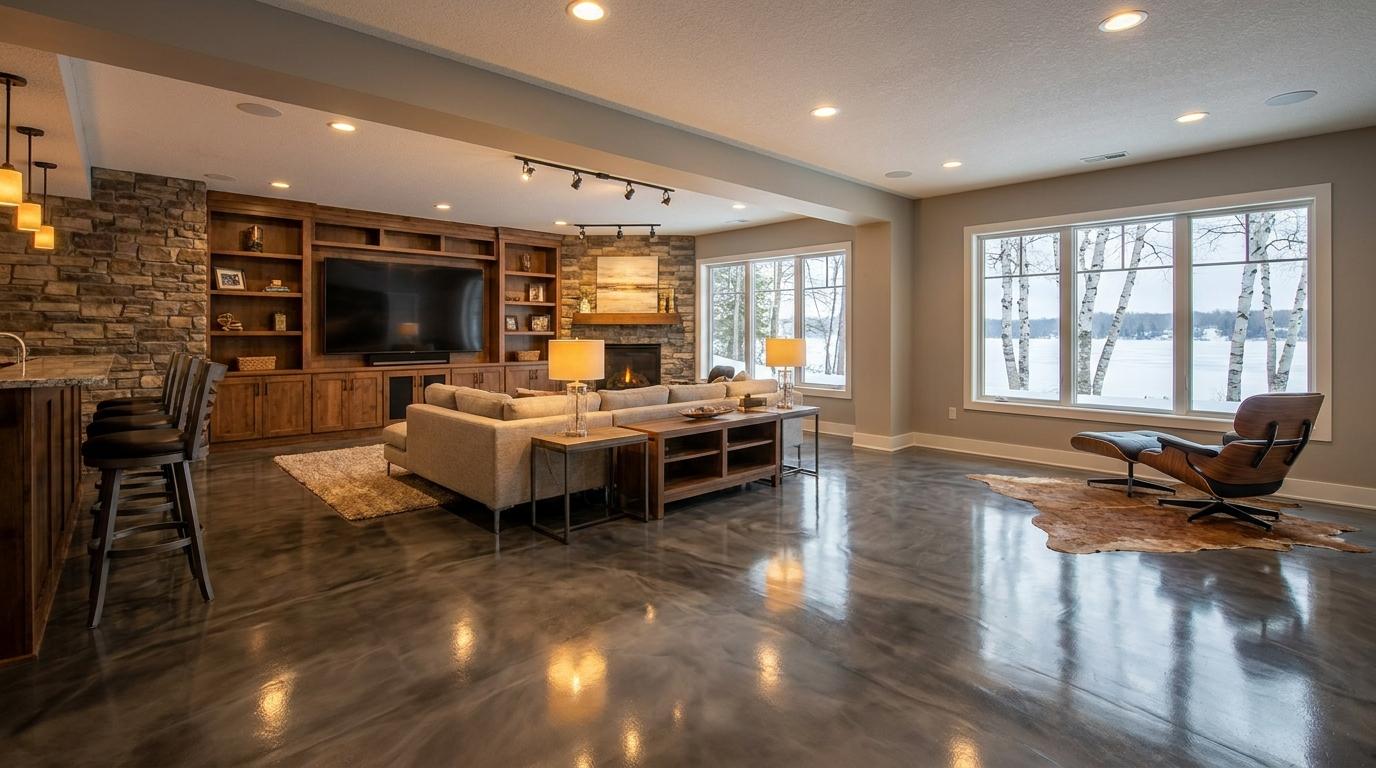
100% solids epoxy with a moisture-mitigating primer is the strongest option for West Michigan basements. Water-based kits work on dry slabs used for storage, but they can’t match the durability or moisture resistance of a professional system. Test the slab first, then choose the system that fits the moisture level and how you’ll actually use the room.
Contact Premier Edge Concrete Solutions at (616) 816-2300 for a free basement coating estimate in Grand Rapids and West Michigan.

I’m Nathan Endres, owner of Premier Edge Concrete Solutions. I ensure every project showcases quality and excellence. Specializing in landscape curbing and floor coatings, my team and I serve Grand Rapids, MI, with a focus on providing reliable and affordable craftsmanship.