
What Is Polyaspartic Floor Coating? Cost, Benefits & Uses

Polyaspartic floor coating is a fast-curing, UV-stable finish from the polyurea family, used as the protective top coat over an epoxy base. It cures in hours instead of days, doesn’t yellow in sunlight the way epoxy does, and resists the chemicals and hot tires that break down standard coatings. Professional installation in Grand Rapids runs $6 to $12 per square foot, about $2,500 to $6,000 for a two-car garage.  A professionally installed system lasts 10 to 20 years under daily use and up to 30 with routine care.

So why pay more for polyaspartic than epoxy? The difference comes down to cure speed, UV stability, and how much better it holds up after a few Michigan winters. Premier Edge Concrete Solutions uses polyaspartic as the top coat in its residential and commercial floor coating projects across West Michigan. Below, we explain how it differs from epoxy, where it performs best, and what it costs.


What Makes Polyaspartic Different From Epoxy?
Standard epoxy coatings bond well to prepared concrete and build a thick, durable base. The trade-off is a slow cure: 24 to 72 hours before foot traffic and up to seven days before vehicles can return. Epoxy also breaks down under UV light, which yellows garage floors near windows and rules it out as a standalone outdoor finish.

Polyaspartic belongs to the polyurea family and uses an aliphatic isocyanate chemistry that cures in two to four hours. The resin is UV-stable at the molecular level, so the finish stays clear for the life of the coating. It also resists hot tire pickup, the peeling that happens when warm tires soften and lift thin or UV-weakened surfaces.

How the Two Systems Work Together

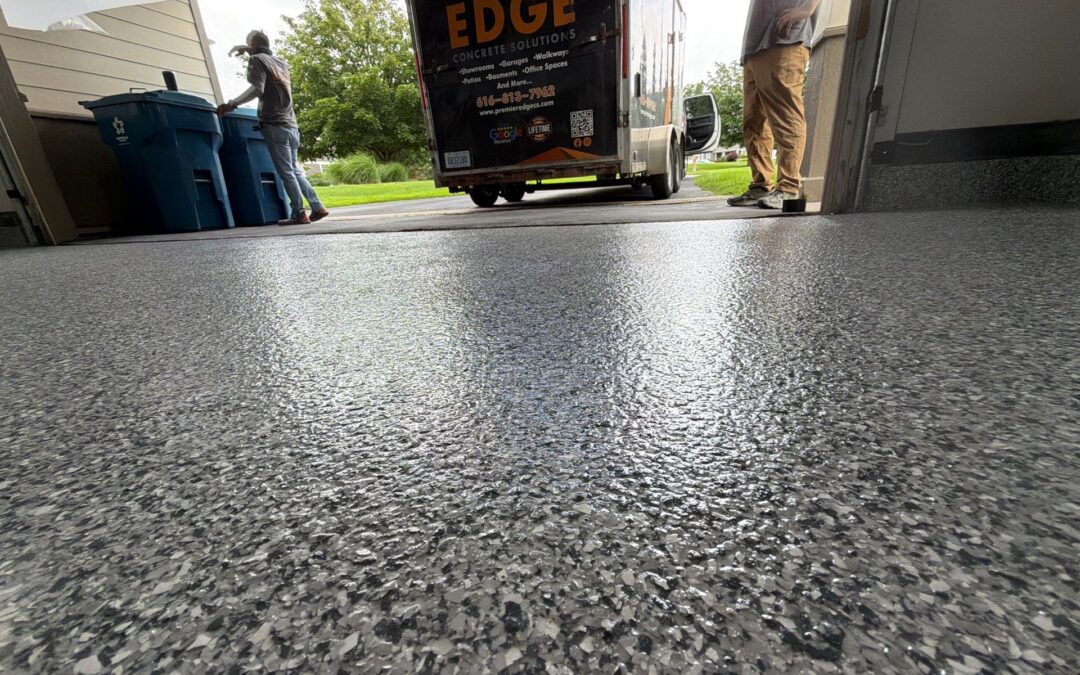
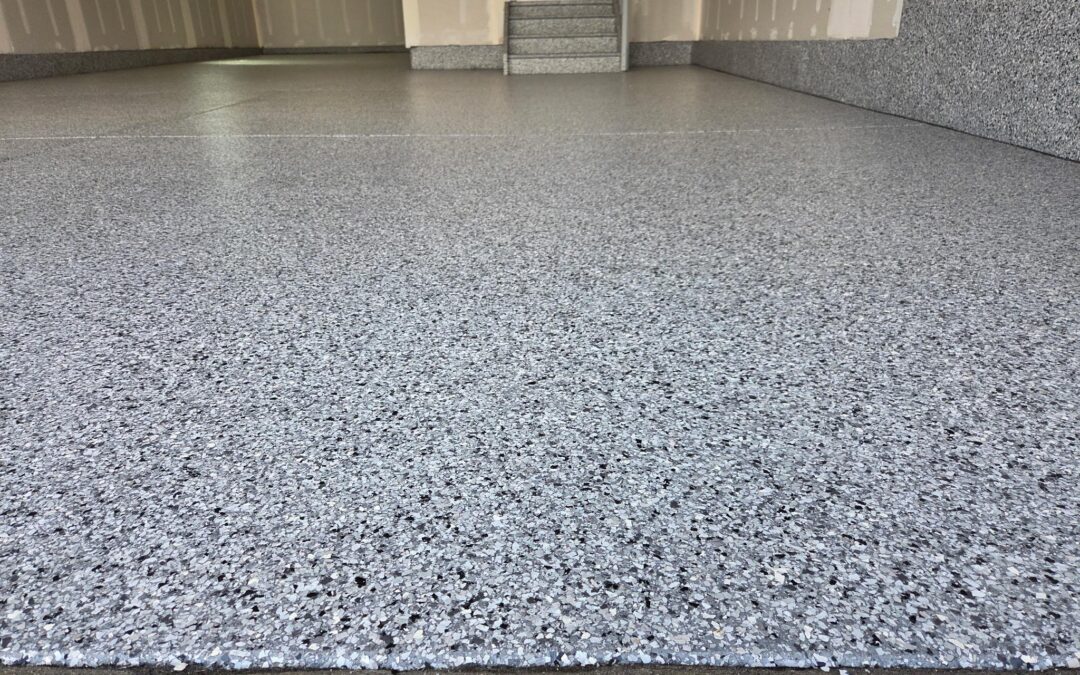
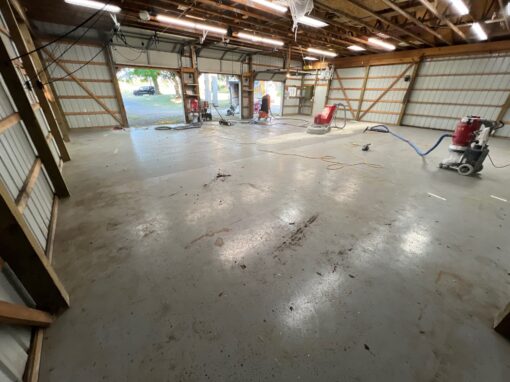
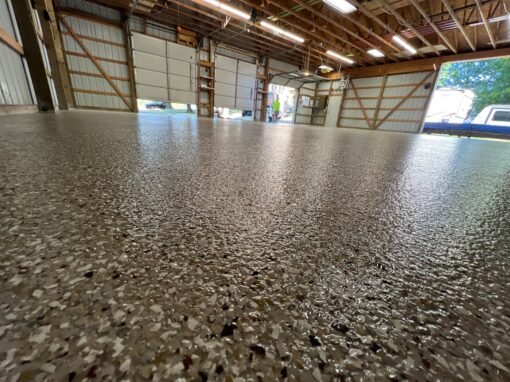
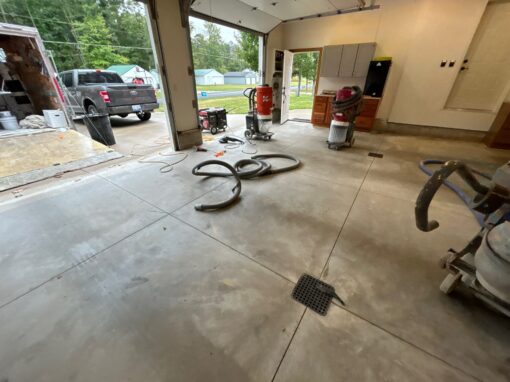
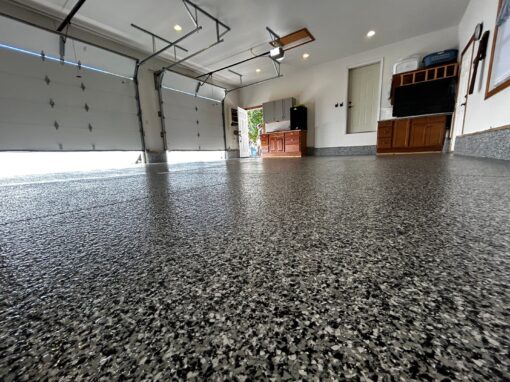
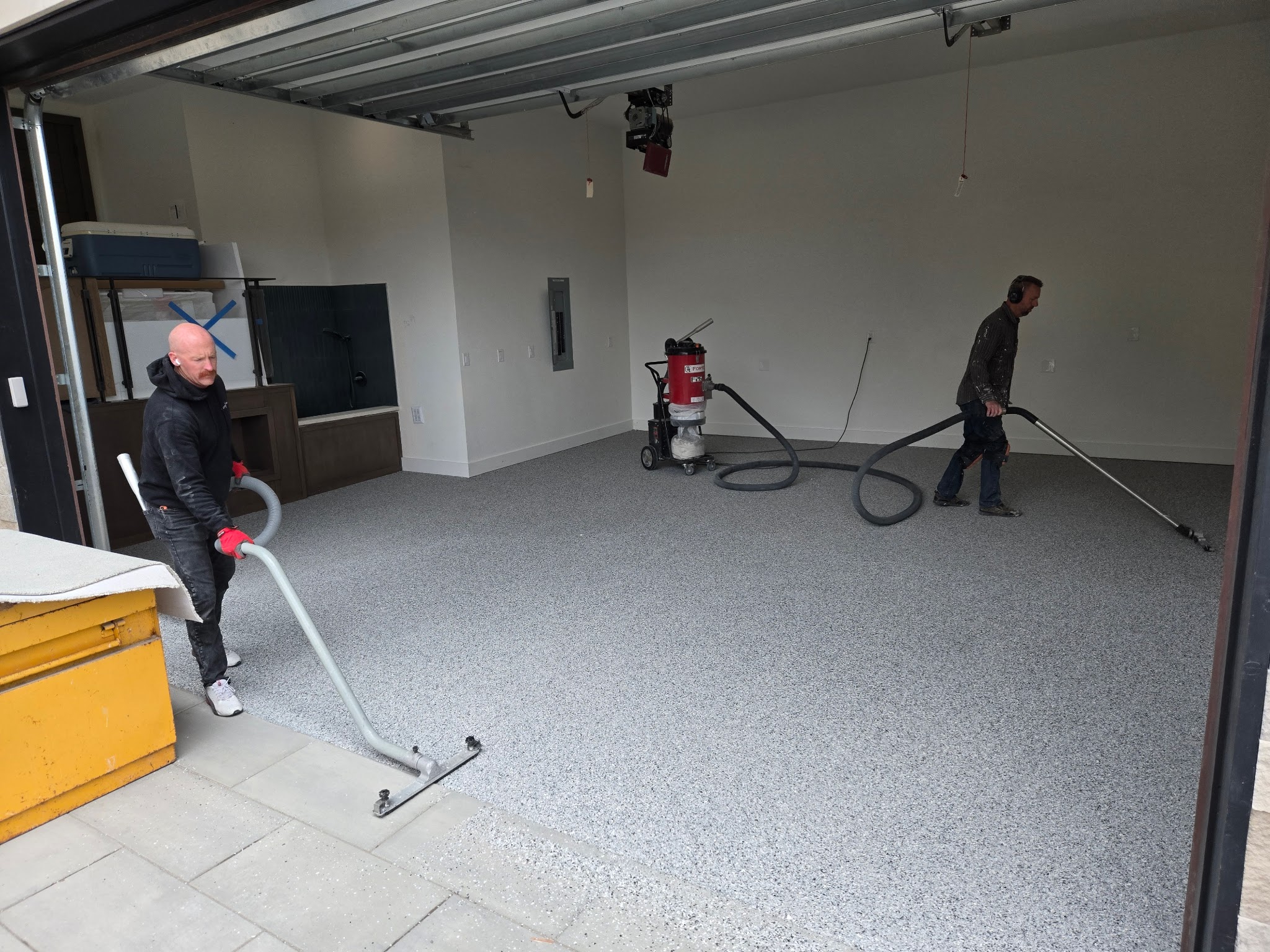
Premier Edge Concrete Solutions uses both materials in a single five-step concrete coating process. Diamond grinding creates the surface profile for permanent adhesion. A high-solids epoxy base coat anchors decorative vinyl flake chips to the concrete. The polyaspartic top coat seals the system with a chemical-resistant, UV-stable finish. Epoxy builds the foundation; polyaspartic protects it.


Where Polyaspartic Coatings Perform Best
Polyaspartic top coats protect any properly prepared concrete surface, but certain applications draw the most benefit from the chemistry.

Garages and Basements

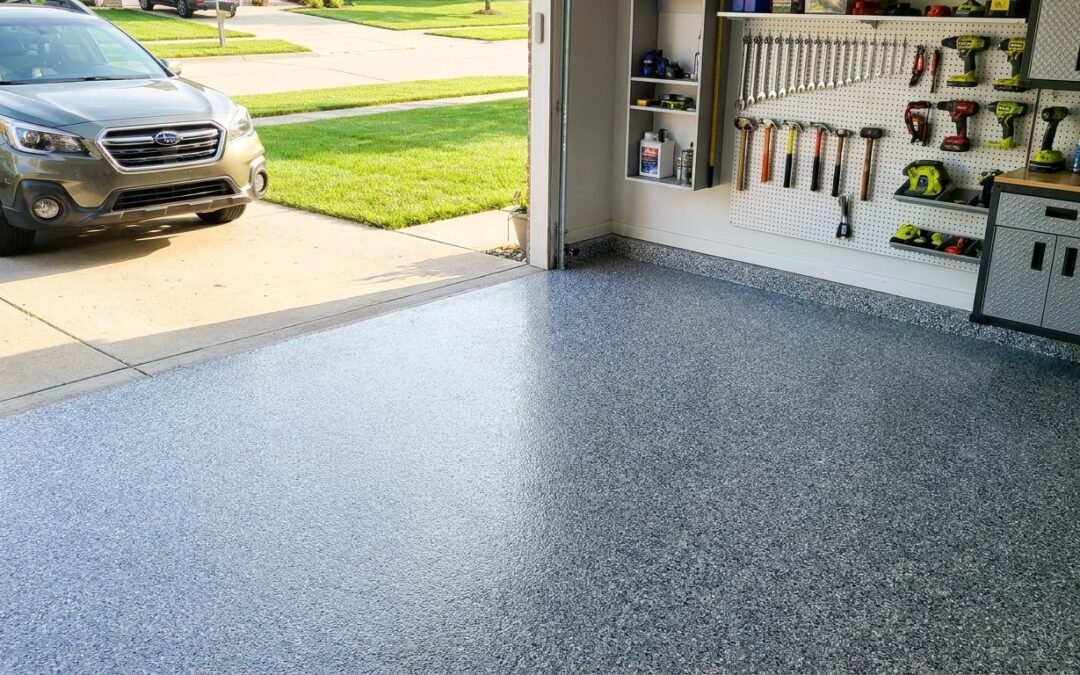
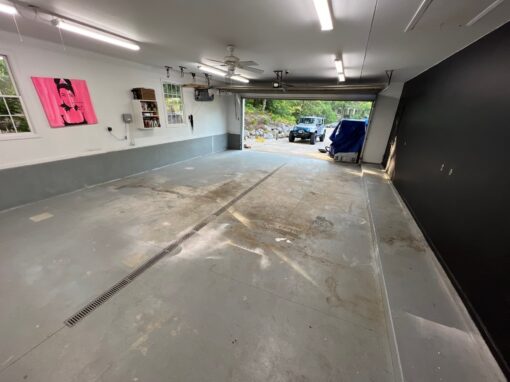
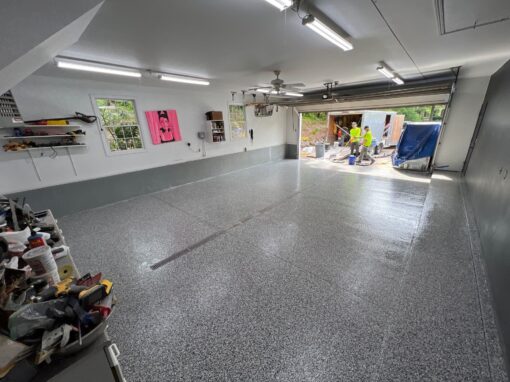
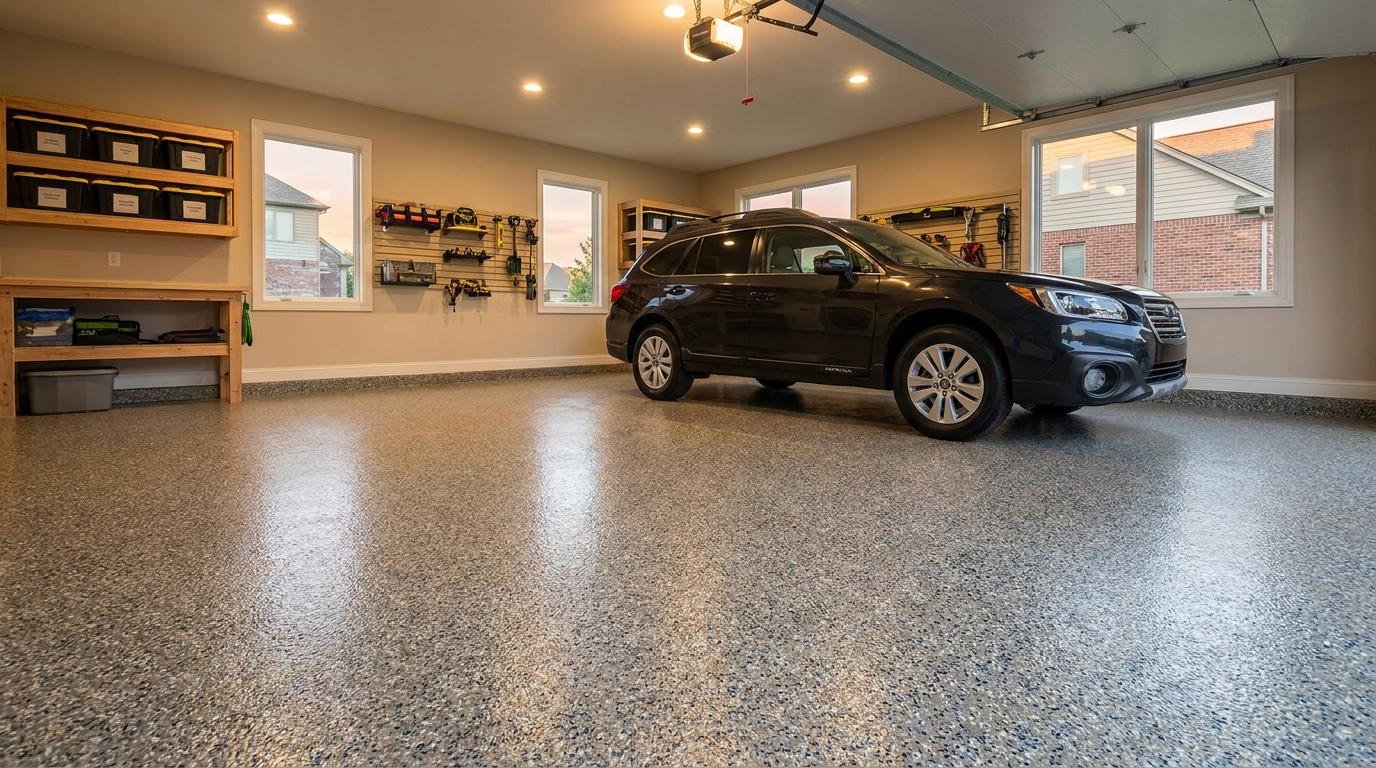
Garage floors absorb the worst of daily life: hot tires, road salt tracked in from November through April, oil drips, and constant foot traffic. A polyaspartic top coat resists hot tire pickup and the chemical staining that causes standard epoxy to yellow or lift within a few years. The coating also protects concrete floors in the Grand Rapids area, including basements where West Michigan’s seasonal moisture and humidity test adhesion year-round. Homeowners converting a basement into a gym, workshop, or rec room benefit from the cleanable, moisture-resistant surface of a basement floor coating.

Commercial and High-Traffic Spaces

Restaurants, warehouses, and manufacturing facilities need floors that survive forklift traffic, chemical spills, and daily cleaning. Polyaspartic coatings handle each demand and cure fast enough to return a commercial floor to foot traffic within hours. The fast cure also means shorter downtime during recoating, which matters for businesses that cannot shut down for multiple days. Premier Edge installs commercial polyaspartic systems across West Michigan for kitchens, auto dealerships, breweries, and high-traffic retail spaces.


Cost, Lifespan, and Maintenance
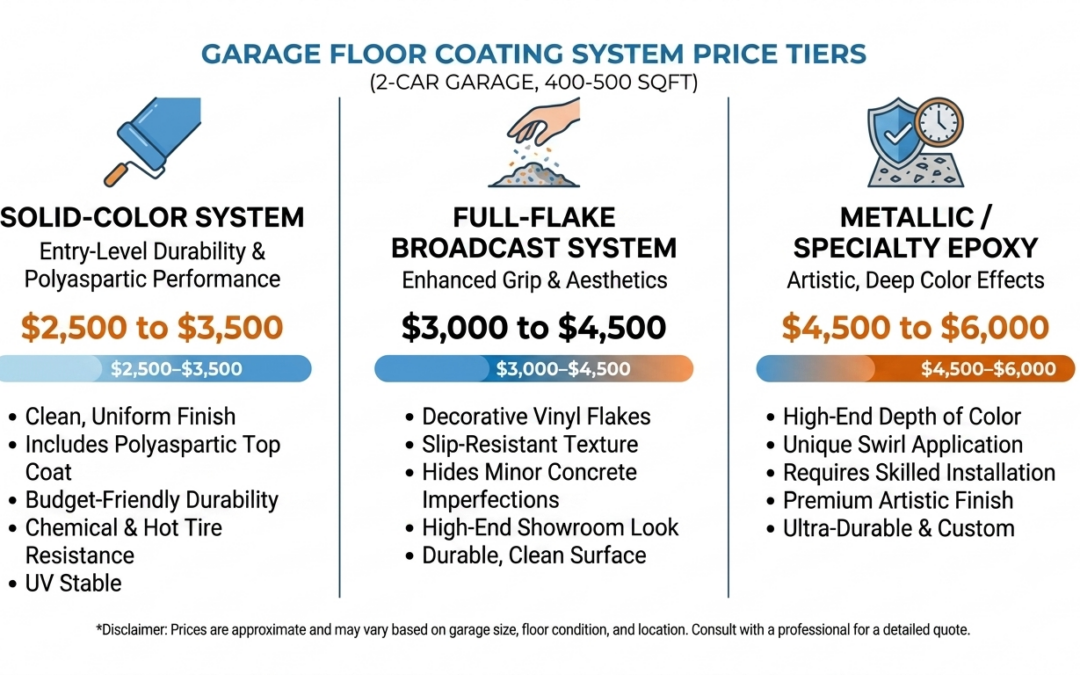
Professional polyaspartic coating in Grand Rapids costs $6 to $12 per square foot installed. A standard two-car garage of 400 to 500 square feet typically runs $2,500 to $6,000, with larger garages and premium finishes pushing toward $8,000+. The final price depends on concrete condition, square footage, and the coating system selected. Polyaspartic sits at the upper end of Premier Edge’s $6 to $12 per square foot range, while epoxy sits at the lower end. The performance gap between the two systems shows up in UV resistance, cure speed, and long-term maintenance costs that close the price difference within a few years.

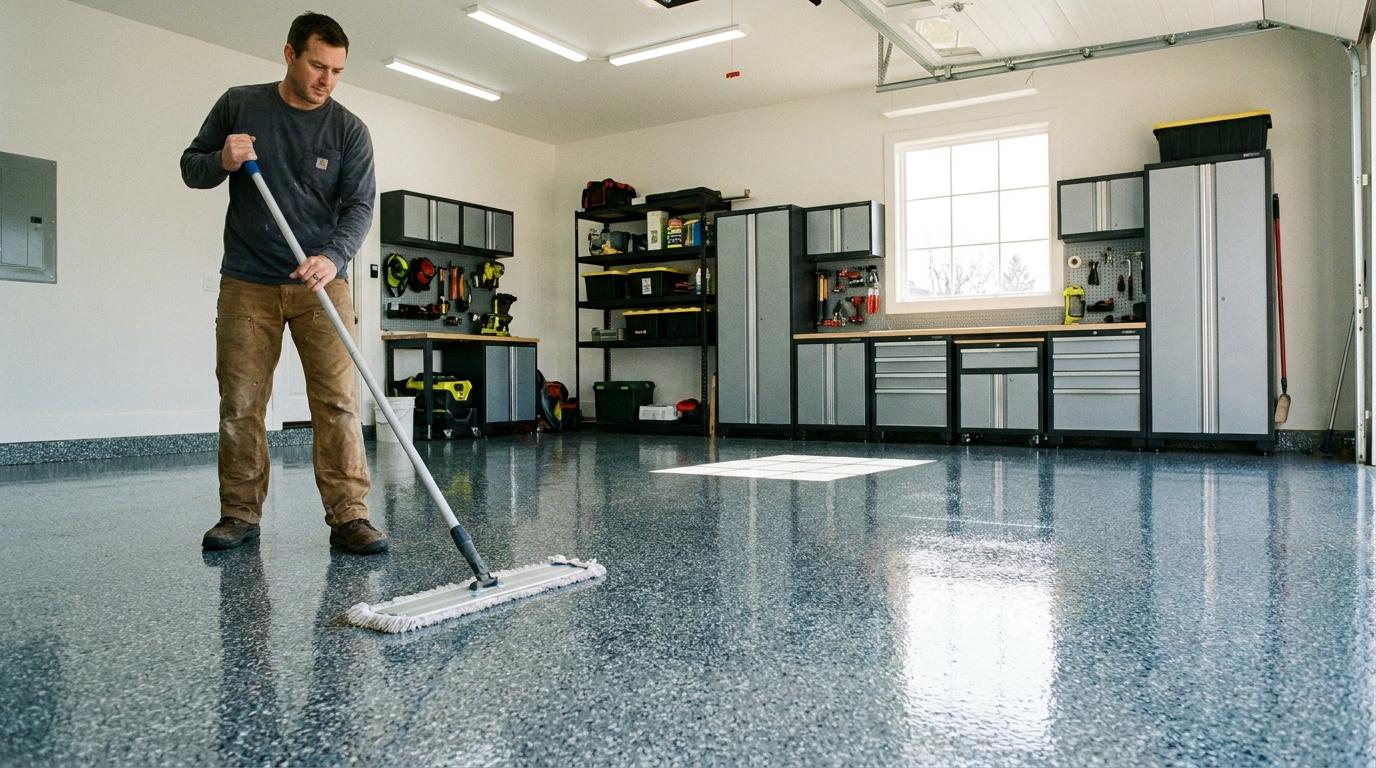
A professionally installed system backed by Premier Edge’s lifetime warranty lasts 20 to 30 years in residential settings with basic care. Maintenance means sweeping debris and occasional damp mopping with a neutral-pH cleaner. No specialty products, waxing, or resealing is required. Road salt and tire marks rinse off with a garden hose, which makes spring cleanup straightforward for West Michigan homeowners.


Frequently Asked Questions

Is polyaspartic the same as polyurethane?

Polyaspartic is not the same as polyurethane. Polyaspartic belongs to the polyurea family and cures through a different chemical reaction that completes in hours rather than days. The faster cure and UV stability make polyaspartic the better fit for garage floors and outdoor surfaces.

How long does a polyaspartic floor coating last?

A professionally installed polyaspartic floor coating lasts 10 to 20 years under daily residential use, and up to 30 years with routine care. Lifespan depends on traffic volume and whether the concrete was properly prepared before coating. 

Can you apply polyaspartic coating in cold weather?

Polyaspartic coatings can be applied in temperatures as low as 30°F, which gives them a wider installation window than standard epoxy. This cold-weather tolerance is a real advantage in places like Hudsonville and across West Michigan, where Premier Edge installs coatings year-round instead of pausing through the cold months. 


Choose the Chemistry That Fits Your Floor
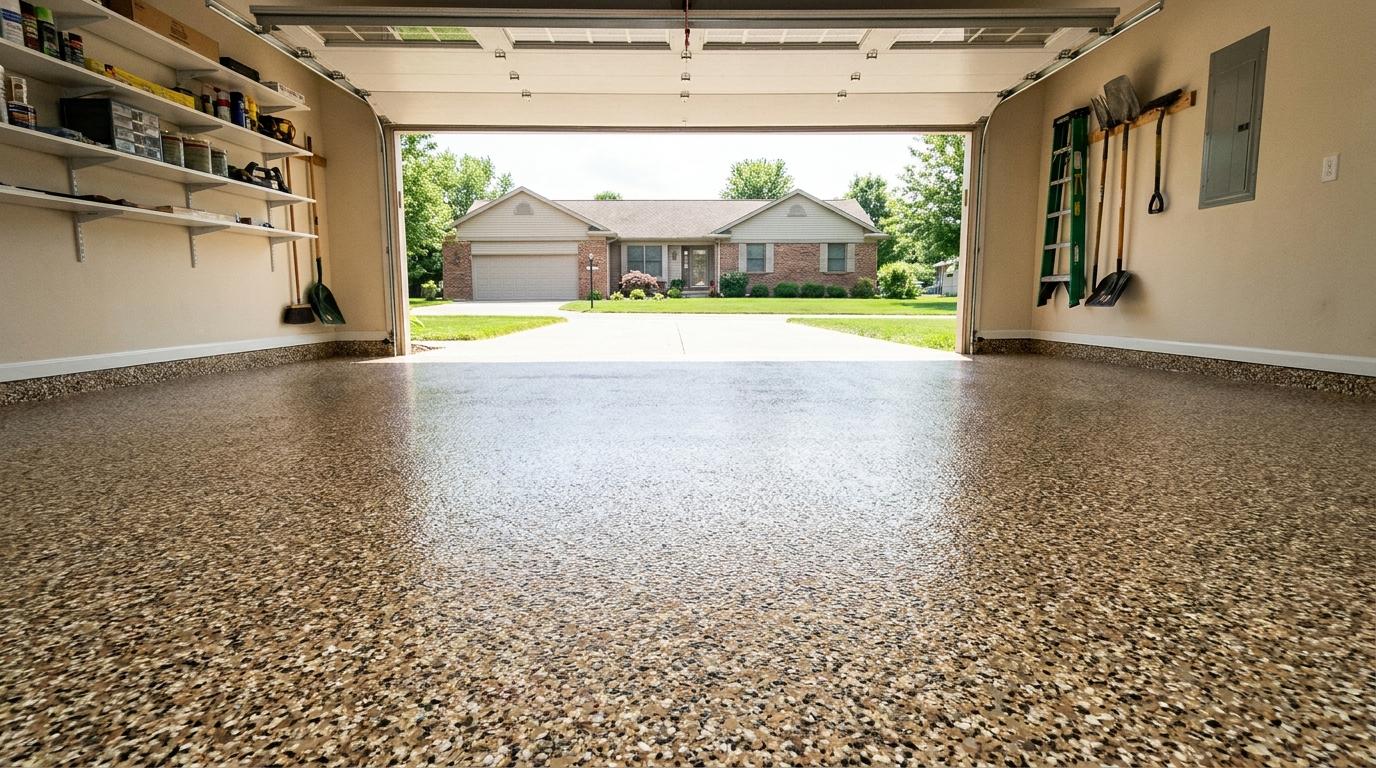
Polyaspartic gives a floor a fast cure, permanent UV protection, and a surface that holds up for decades with little more than sweeping and the occasional mop. It works best exactly where Premier Edge puts it: as the final, protective layer over a properly prepared epoxy base. Epoxy builds the foundation; polyaspartic is what keeps it clear, tough, and looking new through years of hot tires, road salt, and daily traffic.

When you’re ready to see what it would cost for your garage, basement, or commercial floor, contact Premier Edge at (616) 816-2300 or request a free estimate.

CALL US

How Much to Epoxy a 2-Car Garage? Grand Rapids 2026

How Much to Epoxy a 2-Car Garage? Grand Rapids 2026

Epoxy-coating a two-car garage in Grand Rapids runs $2,500 to $6,000 installed, or $6 to $12 per square foot on a standard 400- to 500-square-foot floor. How much you’ll pay exactly is determined by the condition of your concrete and the coating system you choose. A...

How to Clean and Maintain Your Epoxy Garage Floor (Complete Guide)

How to Clean and Maintain Your Epoxy Garage Floor (Complete Guide)

If you’re wondering how to clean an epoxy garage floor, the task only takes about ten minutes a week. Sweep or dust-mop to clear the grit and road salt that scratch the surface, then mop occasionally with warm water and a few drops of dish soap or a pH-neutral...

How Much Do Polyaspartic Garage Floor Coatings Cost? (2026 Price Guide)

How Much Do Polyaspartic Garage Floor Coatings Cost? (2026 Price Guide)

A polyaspartic garage floor coating costs $6 to $12 per square foot installed in Grand Rapids. Most projects land between $2,500 and $8,000+, with smaller single-car garages at the lower end and three-car or larger spaces reaching $8,000 or more. Those figures cover...

COMMERCIAL & RESIDENTIAL

BEAUTIFULLY CRAFTED CONCRETE SOLUTIONS

Premier Edge Concrete Solutions is proud to provide an array of concrete solutions that fits every need for your concrete. We’ll work closely with you to create an experience that you will love!

DURABLE PINK

Durable Floors

Our floors can take an impact

CHEMICAL RESISTANT PINK

Chemical Resistant

Amazing defense against harmful chemicals

CURB APPEAL PINK

CURB APPEAL

Your garage will look better than ever

Premier Edge Warranty Badge

EPIC LIFETIME WARRANTY

Exclusive Written Lifetime Warranty For Our Concrete Coating Systems

STANDING BEHIND

EVERY PROJECT

STANDING BEHIND EVERY PROJECT

concrete coating afterconcrete coating after
garage floor coating - after 2garage floor coating - after 2
garage floor coatinggarage floor coating

⭐⭐⭐⭐⭐

WHAT OTHER HOMEOWNERS SAY

Premier Edge Warranty Badge white font

WHAT MAKES US DIFFERENT?

At Premier Edge Concrete Solutions, we understand that quality matters - the job has to be done right. Our certified technicians have years of experience and skill in delivering our concrete solutions so every customer receives unparalleled excellence each time they come our way!

premier edge emblem with no bg orange

AMAZING Warranty

Premier Edge Concrete Solutions is committed to delivering quality work with a lifetime warranty on our concrete coating solutions - you can trust that any project, from residential floors to commercial spaces, will receive the floor coating application you desire while having peace of mind for years down the line.

premier edge emblem with no bg orange

always Professional & Friendly

Our team is dedicated to taking meticulous care of your project and delivering superior results. We boast a top-notch customer service staff who are knowledgeable experts in their field, ensuring you receive the highest quality service available!

premier edge emblem with no bg orange

Installation Experts

Our experienced professionals will be with you all the way through, so there's nothing to stress over - just wait in anticipation until your stunning new floor is completed!

premier edge emblem with no bg orange

Only The Best Products

Premier Edge FAQs

What are the benefits of epoxy flooring?

Epoxy flooring is becoming increasingly popular for businesses, warehouses, and even residential homes. It offers a high-impact decorative finish, is incredibly durable and long lasting, and can help create a highly functional space.

The primary benefits of epoxy flooring include:

1) Durability: Epoxy floors are incredibly resistant to impact damage from objects such as heavy items like furniture or machinery falling onto the floor. This makes them perfect for busy environments that experience a lot of foot and wheeled traffic such as airports or warehouses where they can last up to 10 years with proper maintenance.

2) Chemical Resistance: Epoxies are also highly resistant to the corrosive effects of chemicals which makes them ideal for factories where harsh cleaning solutions may be used on the floors regularly, helping reduce time spent changing the surface or repairing damages due to those materials. Not only do they resist acidic materials but are also slip-resistant when wet making them safer places to work in hazardous conditions.

3) Ease of Cleaning & Maintenance: Since these surfaces form a continuous seal over an entire space you will not have grout lines that could potentially gather dirt over time thus ensuring easy cleaning solutions such as sweeping and mopping that don't require expensive cleaners or power washers typically used on tile floors.

Can you put epoxy flooring in my basement?

Absolutely! Applying basement epoxy flooring is an excellent choice for a number of reasons. It's highly durable and lasts longer than alternative flooring options, making it ideal for high-traffic or heavily used areas like basements. Epoxy also resists water seepage, mold growth, and staining - all key factors when it comes to keeping your basement dry and safe from moisture damage.

Is garage floor epoxy durable?

Yes, garage floor epoxy is incredibly durable! It’s one of the most durable and long-lasting types of coatings, and depending on the product you choose, it can last up to 10 years when properly applied. In fact, not only is it highly resistant to chemicals such as automotive fluids and grease, but it also offers protection against scratches and abrasion.

For best results, an epoxy coating should be applied by a professional contractor who has experience in this field. They will make sure that all cracks are filled in before applying the epoxy coating so that it adheres better to your concrete surface. Furthermore, because garage floors are commonly subject to foot traffic as well as constant temperature fluctuations due to their proximity to outdoor elements like sunlight or snowfall - additional layers of sealants can help prolong your epoxy's life span even further!

In addition to offering great durability for your garage flooring needs, using epoxy coatings also gives any space a sleek and modern look- turning any dull-looking area into something beautiful! With many color options available ranging from standard colors like light grey or beige tones - or more vivid colors such as pink or blue (perfect for man caves) – there’s something out there suited for everyone’s taste and needs.

What type of coating is best for basement floors?

Choosing the right type of coating for your basement floor can depend on many factors such as the condition of the concrete, the use of the basement, and your aesthetic preferences. However, two commonly recommended options are epoxy coatings and concrete stains.

Epoxy coatings are highly durable, resistant to moisture, and can withstand heavy traffic, making them a popular choice for basements that are used frequently or for specific purposes like a home gym or workshop. They also come in a wide range of colors and finishes, including options that can make your floor look like granite or marble. However, epoxy can be tricky to apply correctly, so it may not be the best choice for a DIY project unless you have experience with this type of work.

Concrete stains, on the other hand, penetrate the concrete and create a permanent color that won't chip or peel. They can give your basement a warm, natural look that's hard to achieve with other types of coatings. Stains are available in a variety of colors and can be applied in creative ways to achieve a unique look. They're also easier to apply than epoxy, making them a good choice for homeowners who want to do the work themselves. However, they don't offer as much protection as epoxy, so they may not be the best choice for basements that see heavy use.

Remember, no matter what type of coating you choose, proper preparation of the concrete surface is key to getting good results. It's also important to consider how the coating will react with any existing paint or sealant on the floor.

What is residential epoxy flooring and why should I care?

Residential epoxy flooring is a type of floor coating that is made from a combination of resin and hardeners. When these two components are mixed together, they form a rigid plastic material that is extremely durable and resistant to wear and tear. Epoxy flooring is commonly used in commercial and industrial settings because of its strength and durability, but it is also becoming increasingly popular in residential homes.

One of the main reasons to consider residential epoxy flooring is its longevity. It can withstand heavy traffic, resist damage from spills and stains, and require minimal maintenance, making it a cost-effective option in the long run. Moreover, it can be customized with a wide variety of colors and designs, allowing homeowners to achieve a unique look that matches their personal style and decor.

Another key benefit of epoxy flooring is its resistance to moisture, which makes it an excellent choice for areas like basements, garages, and laundry rooms where water damage can be a concern. It's also easy to clean and doesn't harbor dust mites or other allergens, making it a good choice for people with allergies. Overall, residential epoxy flooring offers a combination of durability, aesthetics, and ease of maintenance that can make it a valuable addition to any home.

How long does epoxy floor coating last?

Epoxy floor coating is a popular choice for many homeowners and businesses due to its durability, aesthetic appeal, and ease of maintenance. One of the most common questions about this type of flooring is regarding its lifespan. Generally speaking, a professionally installed epoxy floor coating can last between 5 to 10 years in high-traffic commercial or industrial environments, and up to 20 to 30 years in residential settings. However, the actual lifespan can vary greatly depending on several factors.

The longevity of an epoxy floor coating is heavily influenced by the quality of the installation process and the conditions it's exposed to. If the epoxy is correctly applied on a well-prepared surface, it will adhere properly and last longer. On the other hand, improper application or preparation can lead to peeling or chipping, which shortens the lifespan of the coating. The amount of traffic the floor receives also plays a significant role. Floors in high-traffic areas like commercial or industrial spaces may wear out faster than those in residential homes.

Moreover, the maintenance practices employed can significantly impact the lifespan of an epoxy floor coating. Regular cleaning and timely repair of any minor damages can help extend the life of the coating. Using harsh chemicals or abrasive cleaning tools can damage the surface and reduce its lifespan. Therefore, while epoxy floor coatings are known for their durability, their longevity still largely depends on how they're installed, used, and maintained.

Can garage flooring withstand heavy loads, like cars or gym equipment?

Garage flooring, particularly when constructed with high-quality materials such as epoxy or polyurea, is specifically designed to withstand heavy loads, including cars and gym equipment. These materials create a hard, durable surface that can handle the weight of heavy objects without suffering damage. They also have excellent impact resistance, which means they can absorb the shock of dropped weights or tools without cracking or chipping.

Epoxy and polyurea garage floor coatings are not only strong but also resistant to a variety of potentially damaging substances. They can resist oil stains, chemical spills, and hot tire pick-up, making them ideal for use in garages where vehicles are regularly parked. Similarly, if you're using your garage as a home gym, these floorings can hold up against the constant pressure and movement of heavy gym equipment.

However, while these garage floor coatings are incredibly durable, their lifespan and ability to withstand heavy loads also depend on the quality of the installation. A properly prepared and installed floor coating will be more durable and long-lasting. Therefore, it's crucial to ensure that your garage floor is installed by a professional who can adequately prepare the surface and apply the coating correctly. With the right installation and proper care, your garage floor should be able to handle heavy loads without issue.

What are the benefits of epoxy cement floors?

Epoxy cement floors offer a myriad of benefits that contribute to their popularity in both residential and commercial settings. One key advantage is their exceptional durability and resistance to heavy foot traffic, making them well-suited for high-traffic areas such as industrial facilities, warehouses, and garages. Additionally, the non-porous and seamless nature of epoxy floors makes them highly resistant to chemicals, stains, and moisture, providing a long-lasting and easy-to-clean surface. Moreover, the ability to customize epoxy floors with various colors, patterns, and textures adds an aesthetic appeal to spaces, making them a versatile and visually attractive flooring option.

Furthermore, epoxy cement floors are known for their slip-resistant properties, enhancing safety in environments where slip and fall accidents are a concern. This feature, combined with their resistance to mold, mildew, and bacteria growth, makes them suitable for spaces like bathrooms and kitchens, contributing to a hygienic and safe living or working environment. Overall, the numerous benefits of epoxy cement floors make them a practical and advantageous choice for diverse applications, ranging from industrial facilities to residential spaces.

How much does the average epoxy flooring cost?

The cost of epoxy flooring can vary widely based on several factors, including the size of the area to be covered, the type of epoxy used, and whether the application is done professionally or as a do-it-yourself project. According to multiple sources, professional epoxy floor installation typically ranges from $1 to $12 per square foot. This price includes labor and materials. However, these are average costs, and the actual price can fluctuate depending on specific circumstances and local market conditions.

For those considering a do-it-yourself approach, the costs can be significantly lower. DIY epoxy application averages between $2 to $5 per square foot. While this method can be more cost-effective, it requires careful preparation and application to ensure a durable and attractive result. Regardless of the approach chosen, the key to a successful epoxy floor is proper preparation and application.

What to expect from Premier Edge

fast quote

fast quote

We know how crazy life can be. That's why we make our process super easy from start to finish.

scheduled service

scheduled

Time is our most precious resource. That's why we make our scheduling easy to work with and around your schedule.

be satisfied

satisfaction

One of our core values is to make sure every customer gets a smile on their face. We want you to 100% LOVE the decision you made

Prompt, Professional Service, Guaranteed.

TRANSFORM YOUR SPACE TODAY!

Call us today at 616-816-2300 or get a fast quote.