
6 Concrete Curbing Ideas for West Michigan Yards & Businesses

Concrete curbing ideas range from simple mower-edge borders around flower beds to colored, stamped profiles that frame an entire commercial entrance. The common thread is permanence: extruded concrete curbing typically lasts 15 to 20 years compared to two or three seasons from plastic or metal edging. Premier Edge Concrete Solutions installs permanent landscape curbing and edging across Grand Rapids, with profiles and colors matched to each property’s landscape and home exterior. 

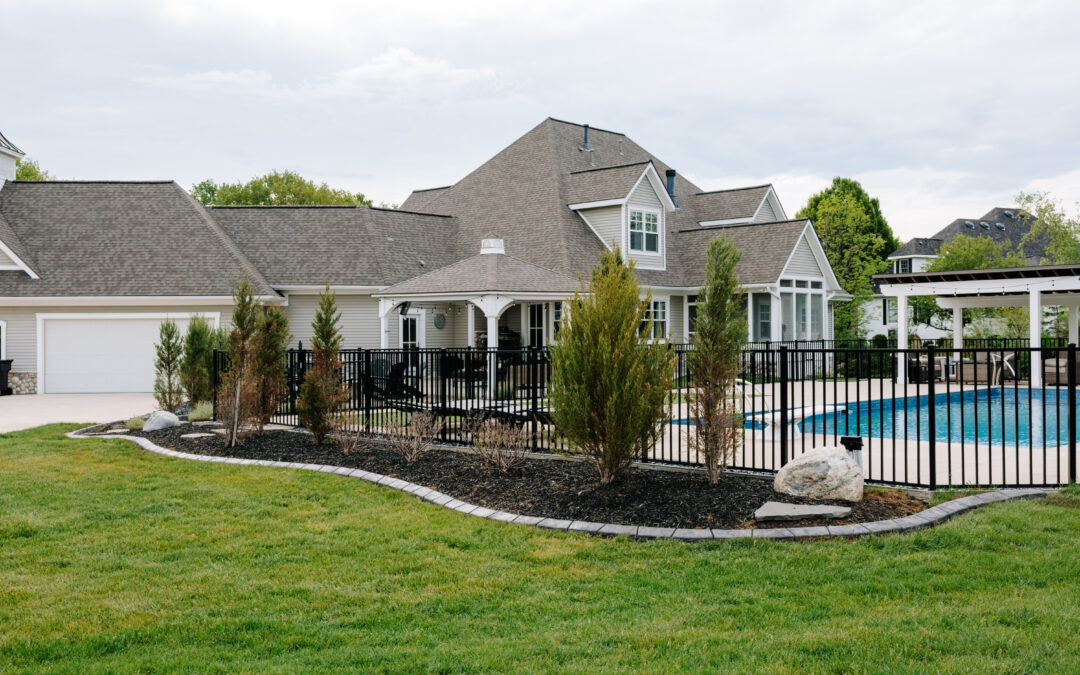
A homeowner in Ada spent three straight Aprils replacing rubber edging that heaved out of the ground every winter. The fourth spring, she asked us to install concrete curbing along her flower beds and driveway. Two years later, the borders have not shifted, the mulch stays in the beds, and the mower rolls right over the edge without trimming. Flower beds need containment. Driveways need plow guidance. Commercial storefronts needs a clean edge. Six applications handle all three.


1. Flower Bed Borders That Hold Mulch in Place
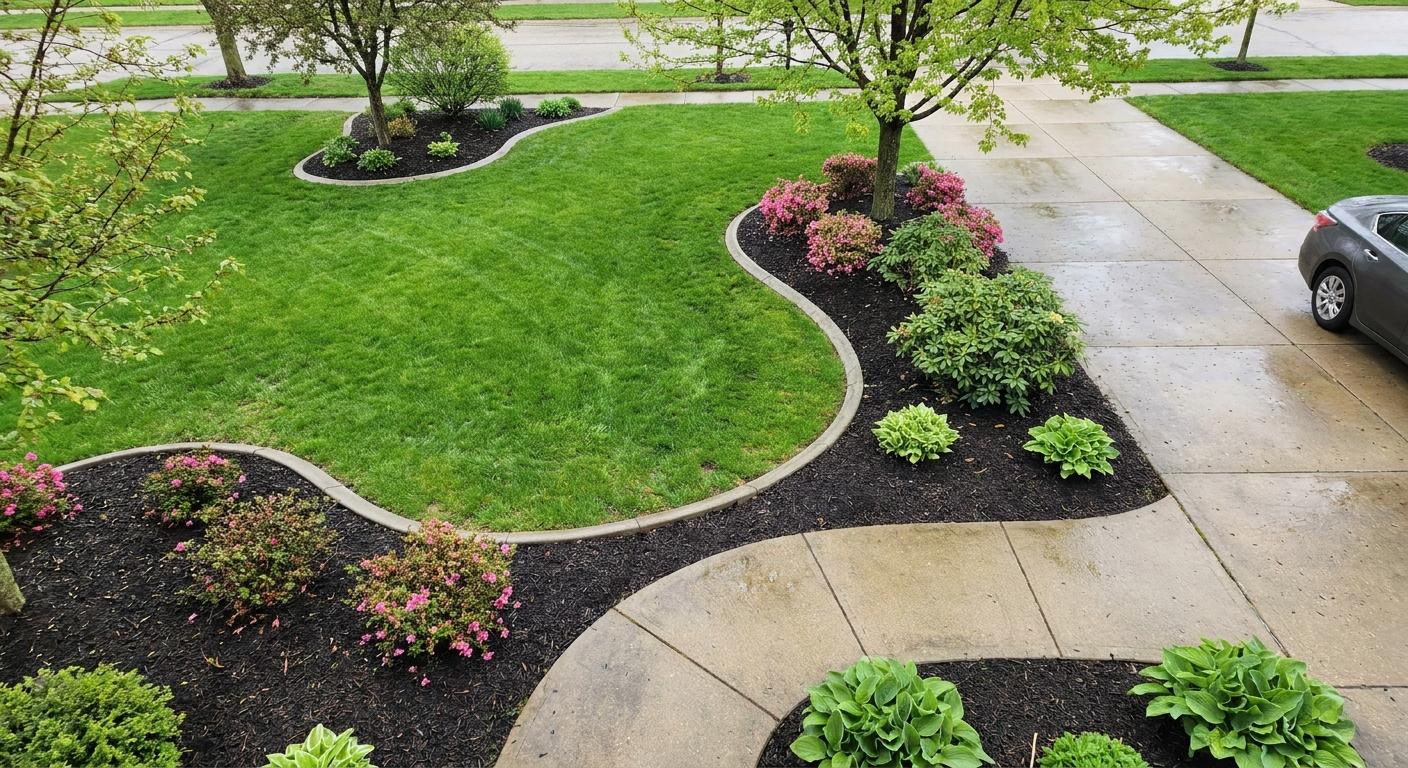
Flower beds without a permanent edge lose mulch after every heavy rain and require annual re-edging. Concrete curbing creates a continuous wall between the bed and the lawn that keeps mulch, soil, and decorative stone contained.

  • Best profile: Slant curb. The angled face directs rainwater into the bed while keeping mulch from washing onto the lawn.
  • Finish option: Integral color in brown or terra cotta blends naturally with mulch and garden soil.
  • Maintenance benefit: Eliminates the need to re-cut bed edges with a spade each spring.


2. Driveway Edge Curbing for Clean Lines and Plow Protection
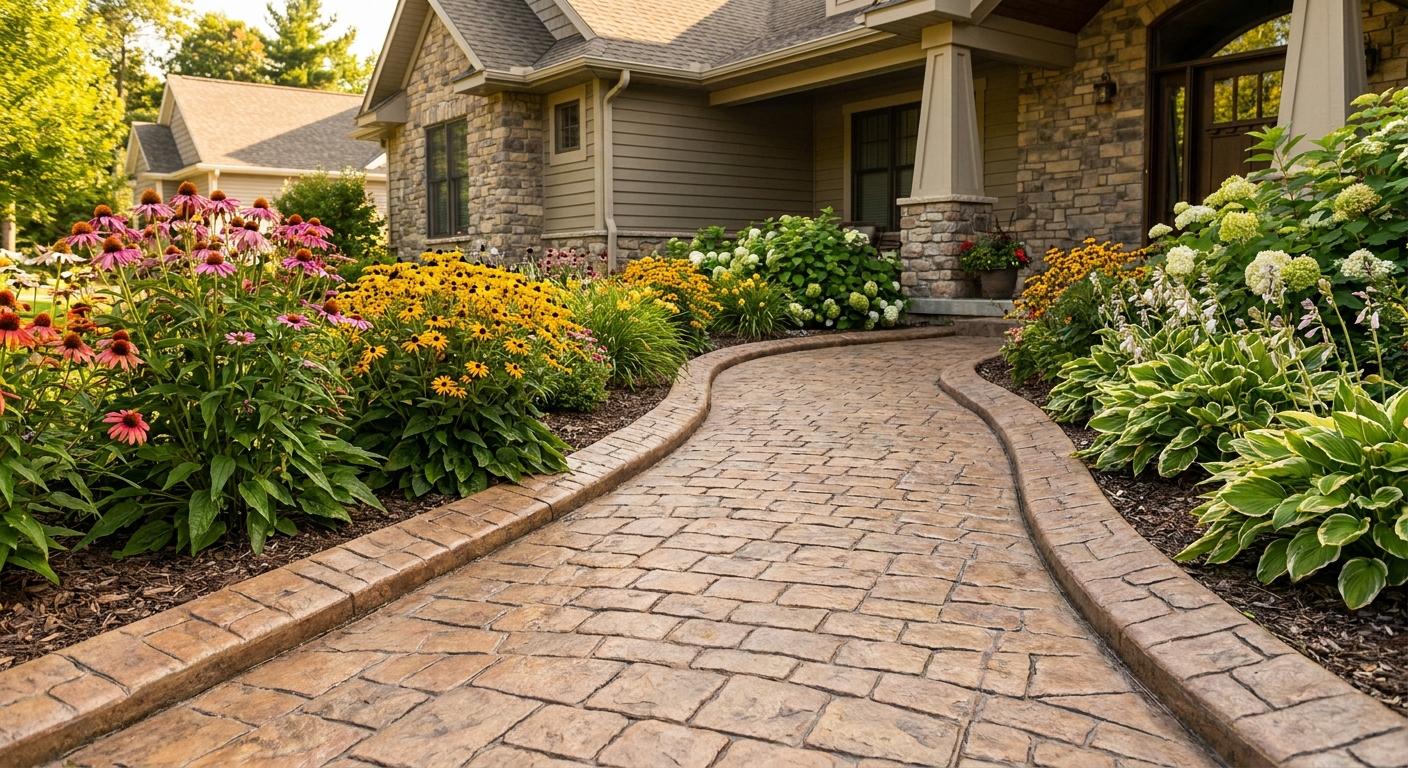
Driveways without curbing let grass creep onto the pavement and give snow plows nothing to follow, which tears up turf every winter. A low-profile curb along the driveway edge solves both problems.

  • Best profile: Mower edge. It sits flush with the lawn so mower wheels ride along the top, and plow blades clear the surface without catching.
  • Finish option: Natural concrete gray matches most driveways and keeps the look understated.
  • Winter benefit: Guides plow blades along the driveway boundary, reducing gravel scatter and sod damage.


3. Tree Ring Curbing That Protects Roots and Simplifies Mowing
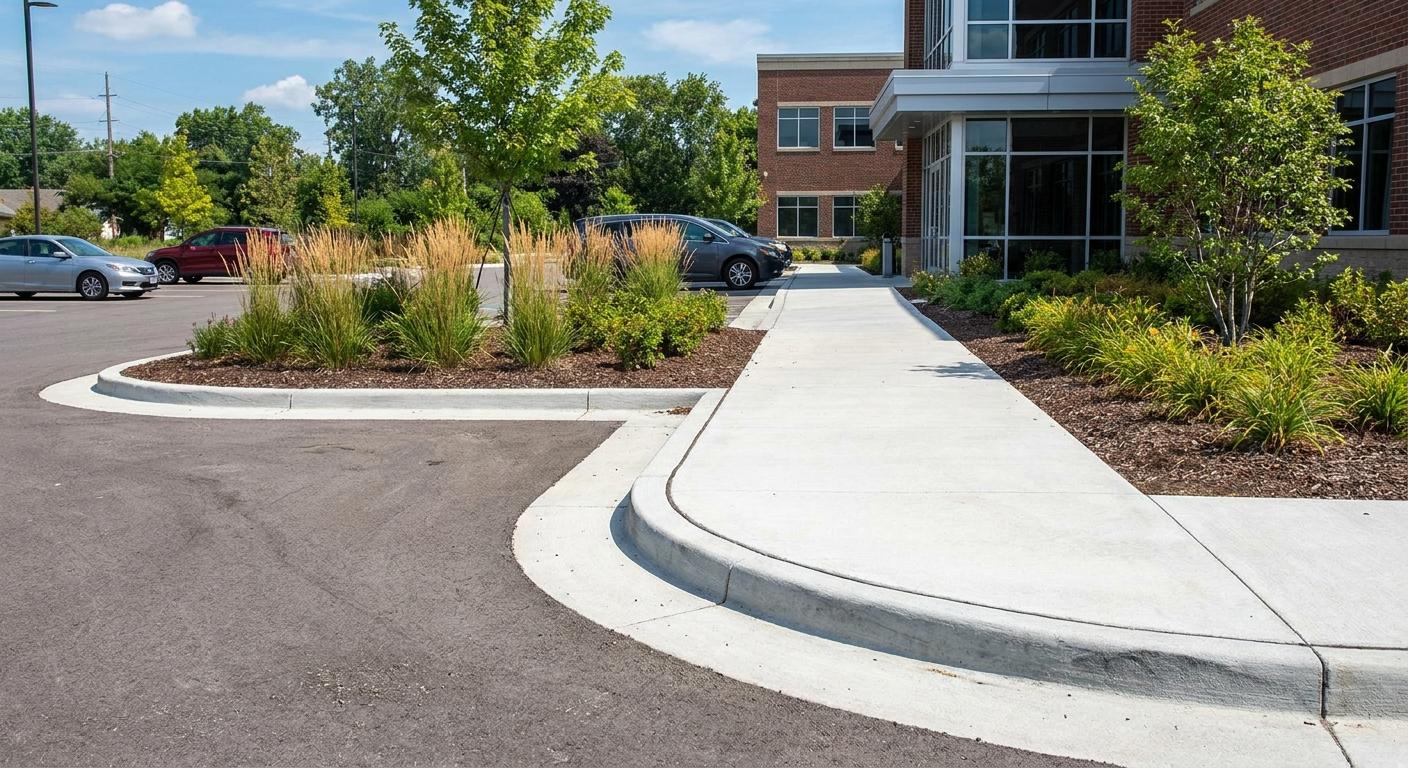
Mowing close to tree trunks damages bark and exposes roots to disease. A concrete tree ring creates a clean boundary around the base, holds mulch in place, and keeps mower blades at a safe distance.

  • Best profile: Mower edge or ribbon curb. Both sit low enough to mow over while defining the mulch zone around the trunk.
  • Design tip: Leave at least 12 inches between the curb and the trunk to allow for future root growth.
  • Bonus: Tree rings also prevent string trimmer damage, which is the leading cause of bark injury on young shade trees.


4. Walkway and Patio Borders With Decorative Stamped Curbing

Walkways and patios are high-visibility areas where plain edging looks out of place. Stamped decorative curbing adds a finished look that complements pavers, flagstone, or brushed concrete surfaces.

  • Best profile: Stamped decorative with a cobblestone or brick pattern. The texture adds depth and shadow lines that elevate the border.
  • Finish option: Integral color matched to the patio or walkway surface for a cohesive appearance.
  • Practical benefit: Contains gravel and prevents edge erosion along walkway borders where foot traffic meets the landscape.

Decorative curbing also creates a permanent weed barrier along the seam where pavement meets soil. 


5. Commercial Property Curbing for a Professional First Impression

Commercial entrances, parking lot islands, and building perimeters need borders that hold up under heavy foot traffic and commercial landscape equipment. Concrete curbing delivers a clean, uniform edge that stays in place year after year.

  • Best profile: Square curb or stamped decorative. Square curb provides maximum definition, and stamped adds visual interest near entrances.
  • Scale advantage: Extruded curbing installs quickly on long commercial runs because the machine lays a continuous line without joints.
  • ROI note: Commercial properties avoid repeated edging replacement and reduce ongoing landscape maintenance labor costs.


6. Custom Color and Profile Combinations

Mixing profiles and colors on the same property creates a layered look that elevates yards without adding different materials. A homeowner might use natural-gray mower edge along the driveway and colored stamped curbing along the front walkway.

  • Color pairing: Earth tones like tan and brown work in most West Michigan yards. Charcoal and slate gray suit modern and mid-century homes.
  • Profile pairing: Mower edge for functional borders, stamped decorative for high-visibility borders. Both are installed on the same visit.
  • Cost consideration: Colored and stamped curbing costs more per linear foot than plain concrete, but the upcharge buys permanent color because pigment runs through the full depth rather than sitting on the surface.


Frequently Asked Questions

How much does concrete curbing cost per foot in West Michigan?

The per foot cost of concrete curbing in West Michigan typically ranges from $16 to $25 per linear foot, depending on profile, footage, and site conditions. Decorative stamped profiles with integral color fall toward the upper end of that range. The total project cost depends on the linear footage and the number of curves in the layout.

Does concrete curbing work in Michigan winters?

Concrete curbing works in Michigan winters if it has fiber mesh reinforcement and galvanized cable. These structural elements prevent the curb from cracking during freeze-thaw cycles. Additionally, a protective sealer applied after installation blocks moisture absorption and extends the life of the curb throughout West Michigan winters.

Can concrete curbing be installed on a slope?

Concrete curbing can be installed on a slope. Extruded curbing follows the natural grade of the yard. The machine adjusts to slopes and curves without joints or seams. Properties in hilly areas like Ada and East Grand Rapids are common installation sites for sloped curbing runs.


Build the Borders Your Yard Actually Needs
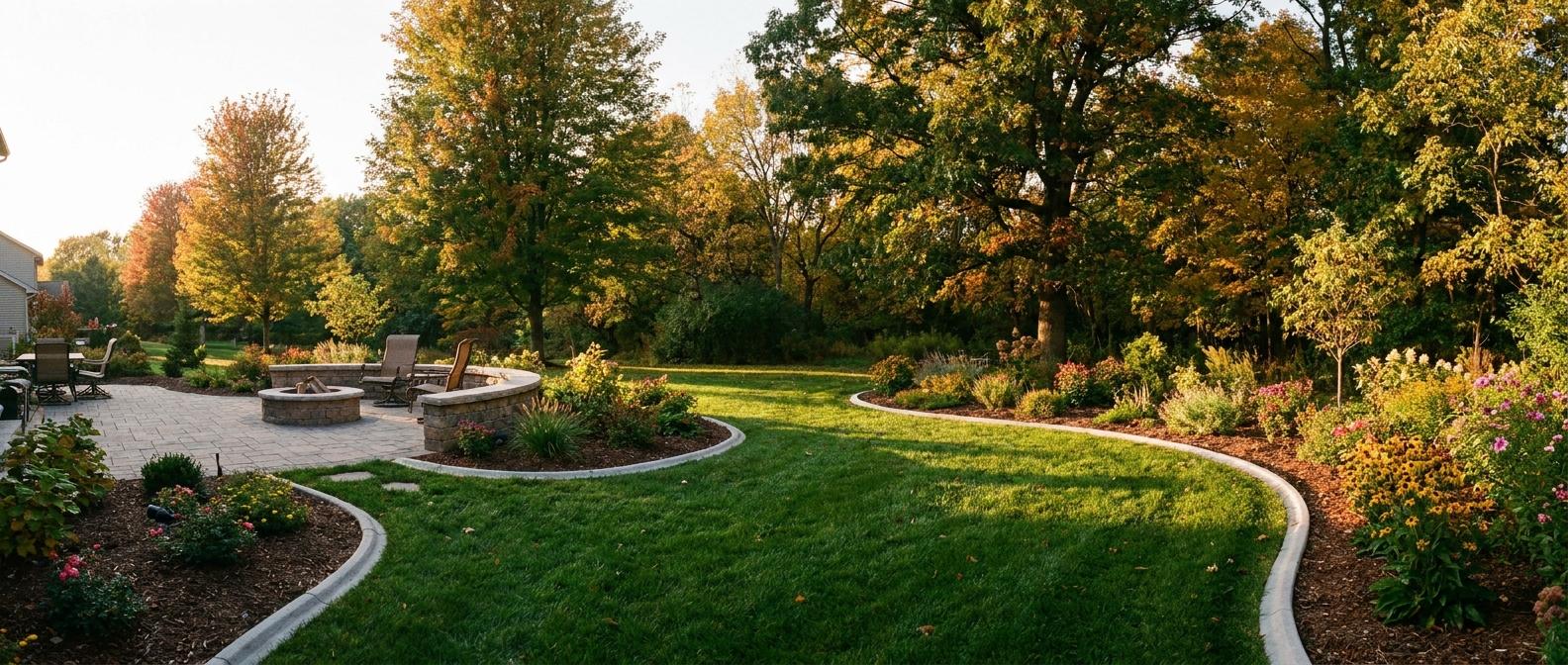
Flower beds, driveways, tree rings, walkways, commercial storefronts, and decorative accent borders each call for a different curbing profile. The right choice depends on the application, the maintenance level you want, and how visible the edge is. Permanent concrete curbing handles all six without the replacements that plastic and metal edging require. 

Contact Premier Edge Concrete Solutions at (616) 816-2300 for a free curbing estimate on your West Michigan yard or commercial property.

CALL US

Concrete Curbing Styles: A Visual Guide to Profiles and Finishes

Concrete Curbing Styles: A Visual Guide to Profiles and Finishes

Concrete curbing styles fall into two categories: functional profiles that simplify mowing and contain landscape materials, and decorative finishes that add visual texture along borders. In Grand Rapids and across West Michigan, the most requested residential profiles...

How Long Does Concrete Sealer Last? Lifespan Factors & When to Reseal

How Long Does Concrete Sealer Last? Lifespan Factors & When to Reseal

How long concrete sealer lasts depends on the type. Penetrating sealers typically last 5 to 10 years, acrylics average 1 to 3 years, and epoxy and polyurea sealers typically last 5 to 10 years. Climate, traffic volume, and application quality all shift those numbers....

Best Epoxy Options for Basement Floors & Damp Spaces

Best Epoxy Options for Basement Floors & Damp Spaces

The best epoxy for a basement floor is a 100% solids system applied over a moisture-mitigating primer on a diamond-ground slab. Water-based DIY kits are easier to apply but bond poorly on concrete with even moderate vapor transmission. Premier Edge Concrete Solutions...

COMMERCIAL & RESIDENTIAL

BEAUTIFULLY CRAFTED CONCRETE SOLUTIONS

Premier Edge Concrete Solutions is proud to provide an array of concrete solutions that fits every need for your concrete. We’ll work closely with you to create an experience that you will love!

DURABLE PINK

Durable Floors

Our floors can take an impact

CHEMICAL RESISTANT PINK

Chemical Resistant

Amazing defense against harmful chemicals

CURB APPEAL PINK

CURB APPEAL

Your garage will look better than ever

Premier Edge Warranty Badge

EPIC LIFETIME WARRANTY

Exclusive Written Lifetime Warranty For Our Concrete Coating Systems

STANDING BEHIND

EVERY PROJECT

STANDING BEHIND EVERY PROJECT

concrete coating afterconcrete coating after
garage floor coating - after 2garage floor coating - after 2
garage floor coatinggarage floor coating

⭐⭐⭐⭐⭐

WHAT OTHER HOMEOWNERS SAY

Premier Edge Warranty Badge white font

WHAT MAKES US DIFFERENT?

At Premier Edge Concrete Solutions, we understand that quality matters - the job has to be done right. Our certified technicians have years of experience and skill in delivering our concrete solutions so every customer receives unparalleled excellence each time they come our way!

premier edge emblem with no bg orange

AMAZING Warranty

Premier Edge Concrete Solutions is committed to delivering quality work with a lifetime warranty on our concrete coating solutions - you can trust that any project, from residential floors to commercial spaces, will receive the floor coating application you desire while having peace of mind for years down the line.

premier edge emblem with no bg orange

always Professional & Friendly

Our team is dedicated to taking meticulous care of your project and delivering superior results. We boast a top-notch customer service staff who are knowledgeable experts in their field, ensuring you receive the highest quality service available!

premier edge emblem with no bg orange

Installation Experts

Our experienced professionals will be with you all the way through, so there's nothing to stress over - just wait in anticipation until your stunning new floor is completed!

premier edge emblem with no bg orange

Only The Best Products

Premier Edge FAQs

What are the benefits of epoxy flooring?

Epoxy flooring is becoming increasingly popular for businesses, warehouses, and even residential homes. It offers a high-impact decorative finish, is incredibly durable and long lasting, and can help create a highly functional space.

The primary benefits of epoxy flooring include:

1) Durability: Epoxy floors are incredibly resistant to impact damage from objects such as heavy items like furniture or machinery falling onto the floor. This makes them perfect for busy environments that experience a lot of foot and wheeled traffic such as airports or warehouses where they can last up to 10 years with proper maintenance.

2) Chemical Resistance: Epoxies are also highly resistant to the corrosive effects of chemicals which makes them ideal for factories where harsh cleaning solutions may be used on the floors regularly, helping reduce time spent changing the surface or repairing damages due to those materials. Not only do they resist acidic materials but are also slip-resistant when wet making them safer places to work in hazardous conditions.

3) Ease of Cleaning & Maintenance: Since these surfaces form a continuous seal over an entire space you will not have grout lines that could potentially gather dirt over time thus ensuring easy cleaning solutions such as sweeping and mopping that don't require expensive cleaners or power washers typically used on tile floors.

Can you put epoxy flooring in my basement?

Absolutely! Applying basement epoxy flooring is an excellent choice for a number of reasons. It's highly durable and lasts longer than alternative flooring options, making it ideal for high-traffic or heavily used areas like basements. Epoxy also resists water seepage, mold growth, and staining - all key factors when it comes to keeping your basement dry and safe from moisture damage.

Is garage floor epoxy durable?

Yes, garage floor epoxy is incredibly durable! It’s one of the most durable and long-lasting types of coatings, and depending on the product you choose, it can last up to 10 years when properly applied. In fact, not only is it highly resistant to chemicals such as automotive fluids and grease, but it also offers protection against scratches and abrasion.

For best results, an epoxy coating should be applied by a professional contractor who has experience in this field. They will make sure that all cracks are filled in before applying the epoxy coating so that it adheres better to your concrete surface. Furthermore, because garage floors are commonly subject to foot traffic as well as constant temperature fluctuations due to their proximity to outdoor elements like sunlight or snowfall - additional layers of sealants can help prolong your epoxy's life span even further!

In addition to offering great durability for your garage flooring needs, using epoxy coatings also gives any space a sleek and modern look- turning any dull-looking area into something beautiful! With many color options available ranging from standard colors like light grey or beige tones - or more vivid colors such as pink or blue (perfect for man caves) – there’s something out there suited for everyone’s taste and needs.

What type of coating is best for basement floors?

Choosing the right type of coating for your basement floor can depend on many factors such as the condition of the concrete, the use of the basement, and your aesthetic preferences. However, two commonly recommended options are epoxy coatings and concrete stains.

Epoxy coatings are highly durable, resistant to moisture, and can withstand heavy traffic, making them a popular choice for basements that are used frequently or for specific purposes like a home gym or workshop. They also come in a wide range of colors and finishes, including options that can make your floor look like granite or marble. However, epoxy can be tricky to apply correctly, so it may not be the best choice for a DIY project unless you have experience with this type of work.

Concrete stains, on the other hand, penetrate the concrete and create a permanent color that won't chip or peel. They can give your basement a warm, natural look that's hard to achieve with other types of coatings. Stains are available in a variety of colors and can be applied in creative ways to achieve a unique look. They're also easier to apply than epoxy, making them a good choice for homeowners who want to do the work themselves. However, they don't offer as much protection as epoxy, so they may not be the best choice for basements that see heavy use.

Remember, no matter what type of coating you choose, proper preparation of the concrete surface is key to getting good results. It's also important to consider how the coating will react with any existing paint or sealant on the floor.

What is residential epoxy flooring and why should I care?

Residential epoxy flooring is a type of floor coating that is made from a combination of resin and hardeners. When these two components are mixed together, they form a rigid plastic material that is extremely durable and resistant to wear and tear. Epoxy flooring is commonly used in commercial and industrial settings because of its strength and durability, but it is also becoming increasingly popular in residential homes.

One of the main reasons to consider residential epoxy flooring is its longevity. It can withstand heavy traffic, resist damage from spills and stains, and require minimal maintenance, making it a cost-effective option in the long run. Moreover, it can be customized with a wide variety of colors and designs, allowing homeowners to achieve a unique look that matches their personal style and decor.

Another key benefit of epoxy flooring is its resistance to moisture, which makes it an excellent choice for areas like basements, garages, and laundry rooms where water damage can be a concern. It's also easy to clean and doesn't harbor dust mites or other allergens, making it a good choice for people with allergies. Overall, residential epoxy flooring offers a combination of durability, aesthetics, and ease of maintenance that can make it a valuable addition to any home.

How long does epoxy floor coating last?

Epoxy floor coating is a popular choice for many homeowners and businesses due to its durability, aesthetic appeal, and ease of maintenance. One of the most common questions about this type of flooring is regarding its lifespan. Generally speaking, a professionally installed epoxy floor coating can last between 5 to 10 years in high-traffic commercial or industrial environments, and up to 20 to 30 years in residential settings. However, the actual lifespan can vary greatly depending on several factors.

The longevity of an epoxy floor coating is heavily influenced by the quality of the installation process and the conditions it's exposed to. If the epoxy is correctly applied on a well-prepared surface, it will adhere properly and last longer. On the other hand, improper application or preparation can lead to peeling or chipping, which shortens the lifespan of the coating. The amount of traffic the floor receives also plays a significant role. Floors in high-traffic areas like commercial or industrial spaces may wear out faster than those in residential homes.

Moreover, the maintenance practices employed can significantly impact the lifespan of an epoxy floor coating. Regular cleaning and timely repair of any minor damages can help extend the life of the coating. Using harsh chemicals or abrasive cleaning tools can damage the surface and reduce its lifespan. Therefore, while epoxy floor coatings are known for their durability, their longevity still largely depends on how they're installed, used, and maintained.

Can garage flooring withstand heavy loads, like cars or gym equipment?

Garage flooring, particularly when constructed with high-quality materials such as epoxy or polyurea, is specifically designed to withstand heavy loads, including cars and gym equipment. These materials create a hard, durable surface that can handle the weight of heavy objects without suffering damage. They also have excellent impact resistance, which means they can absorb the shock of dropped weights or tools without cracking or chipping.

Epoxy and polyurea garage floor coatings are not only strong but also resistant to a variety of potentially damaging substances. They can resist oil stains, chemical spills, and hot tire pick-up, making them ideal for use in garages where vehicles are regularly parked. Similarly, if you're using your garage as a home gym, these floorings can hold up against the constant pressure and movement of heavy gym equipment.

However, while these garage floor coatings are incredibly durable, their lifespan and ability to withstand heavy loads also depend on the quality of the installation. A properly prepared and installed floor coating will be more durable and long-lasting. Therefore, it's crucial to ensure that your garage floor is installed by a professional who can adequately prepare the surface and apply the coating correctly. With the right installation and proper care, your garage floor should be able to handle heavy loads without issue.

What are the benefits of epoxy cement floors?

Epoxy cement floors offer a myriad of benefits that contribute to their popularity in both residential and commercial settings. One key advantage is their exceptional durability and resistance to heavy foot traffic, making them well-suited for high-traffic areas such as industrial facilities, warehouses, and garages. Additionally, the non-porous and seamless nature of epoxy floors makes them highly resistant to chemicals, stains, and moisture, providing a long-lasting and easy-to-clean surface. Moreover, the ability to customize epoxy floors with various colors, patterns, and textures adds an aesthetic appeal to spaces, making them a versatile and visually attractive flooring option.

Furthermore, epoxy cement floors are known for their slip-resistant properties, enhancing safety in environments where slip and fall accidents are a concern. This feature, combined with their resistance to mold, mildew, and bacteria growth, makes them suitable for spaces like bathrooms and kitchens, contributing to a hygienic and safe living or working environment. Overall, the numerous benefits of epoxy cement floors make them a practical and advantageous choice for diverse applications, ranging from industrial facilities to residential spaces.

How much does the average epoxy flooring cost?

The cost of epoxy flooring can vary widely based on several factors, including the size of the area to be covered, the type of epoxy used, and whether the application is done professionally or as a do-it-yourself project. According to multiple sources, professional epoxy floor installation typically ranges from $1 to $12 per square foot. This price includes labor and materials. However, these are average costs, and the actual price can fluctuate depending on specific circumstances and local market conditions.

For those considering a do-it-yourself approach, the costs can be significantly lower. DIY epoxy application averages between $2 to $5 per square foot. While this method can be more cost-effective, it requires careful preparation and application to ensure a durable and attractive result. Regardless of the approach chosen, the key to a successful epoxy floor is proper preparation and application.

What to expect from Premier Edge

fast quote

fast quote

We know how crazy life can be. That's why we make our process super easy from start to finish.

scheduled service

scheduled

Time is our most precious resource. That's why we make our scheduling easy to work with and around your schedule.

be satisfied

satisfaction

One of our core values is to make sure every customer gets a smile on their face. We want you to 100% LOVE the decision you made

Prompt, Professional Service, Guaranteed.

TRANSFORM YOUR SPACE TODAY!

Call us today at 616-816-2300 or get a fast quote.