
Polyaspartic vs Epoxy Floor Coatings: 2026 Complete Comparison Guide
In the polyaspartic vs epoxy decision, the trade-off comes down to three things: cure speed, UV resistance, and cost. Epoxy is cheaper upfront but needs five to seven days to fully cure and yellows in sunlight within a year or two. Polyaspartic costs more, but it cures in hours instead of days, resists UV yellowing for the life of the floor, and holds up to chemical exposure without softening. Both sit in Premier Edge’s $6 to $12 per square foot range: epoxy at the low end, polyaspartic at the high end.
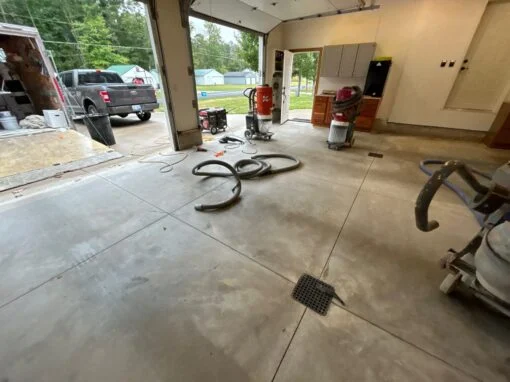
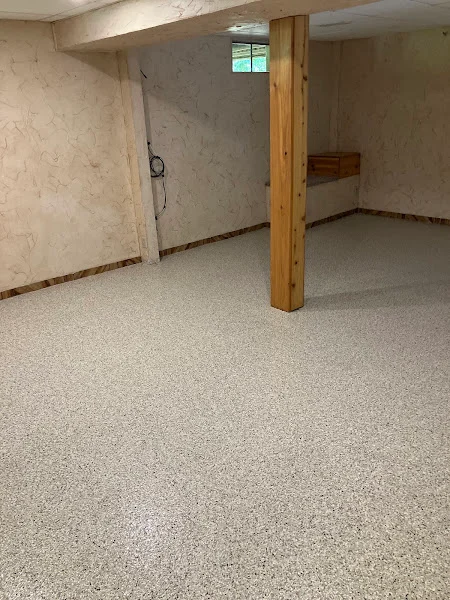
So the better system isn’t really about which resin wins on paper. It’s about how you use your garage: epoxy makes sense when sunlight is minimal and you can spare a week for curing, while polyaspartic fits when you want the floor back fast, the space gets direct sun, or you need maximum chemical and abrasion resistance. At Premier Edge Concrete Solutions, we install both systems as part of our professional epoxy floor coating services across Grand Rapids. Below, we discuss how the two compare on cure time, UV stability, and long-term cost.
Cure Time and Return-to-Service Speed

Epoxy needs time to harden. A standard two-part epoxy base coat requires 12 to 24 hours before it can accept a top coat, and the full system needs five to seven days before receiving vehicle traffic. That timeline means your garage is out of service for close to a week.
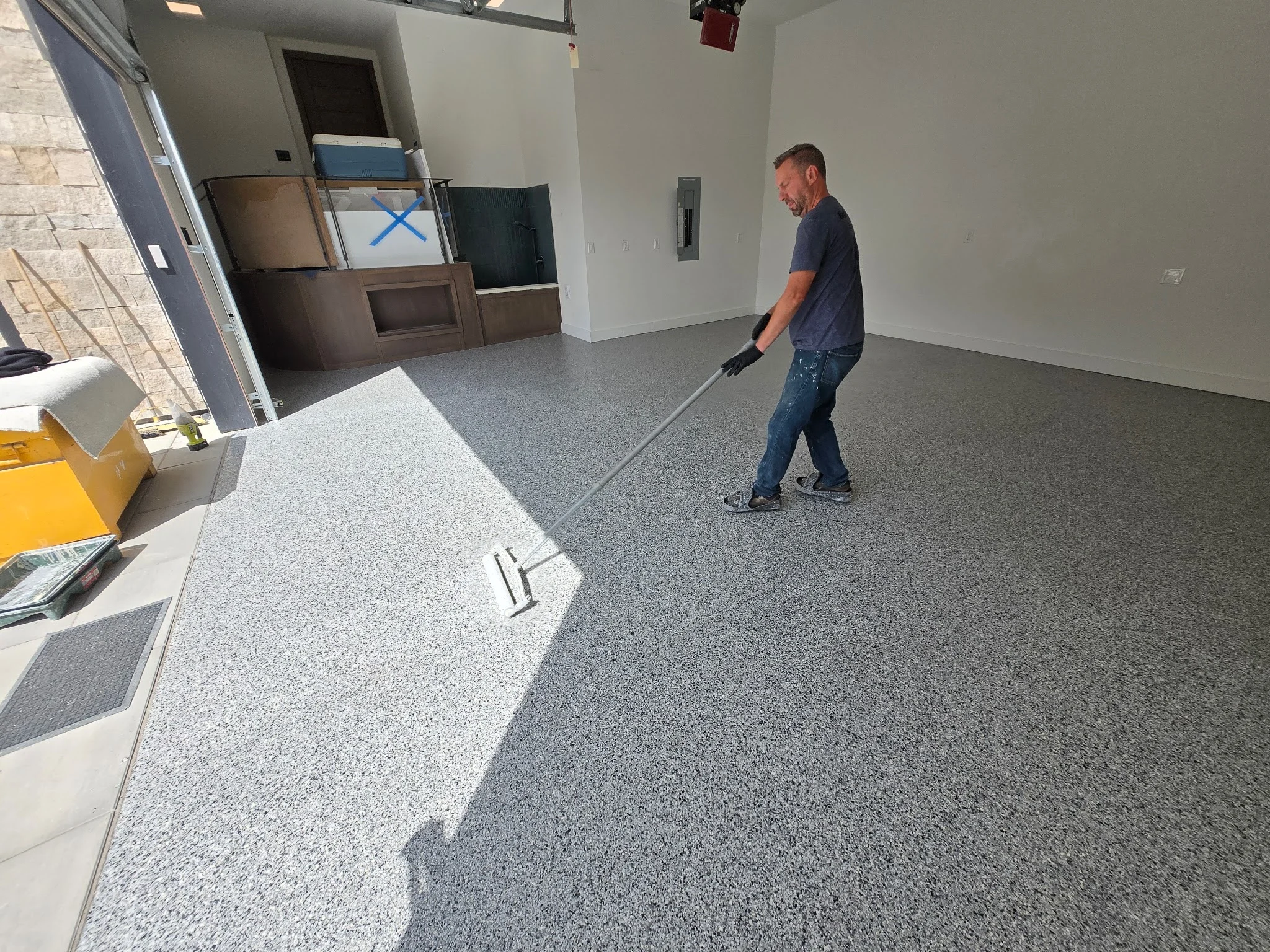
Polyaspartic cures in two to four hours per coat, allowing us to follow our five-step installation process over a single day. You can walk on the surface within 24 to 72 hours and park on it after about 7 days of full curing. For Michigan homeowners, the shorter cure window also means your coating can be installed later in fall or earlier in spring without running into temperature delays that can stall multi-day epoxy systems.
UV Stability and Long-Term Appearance
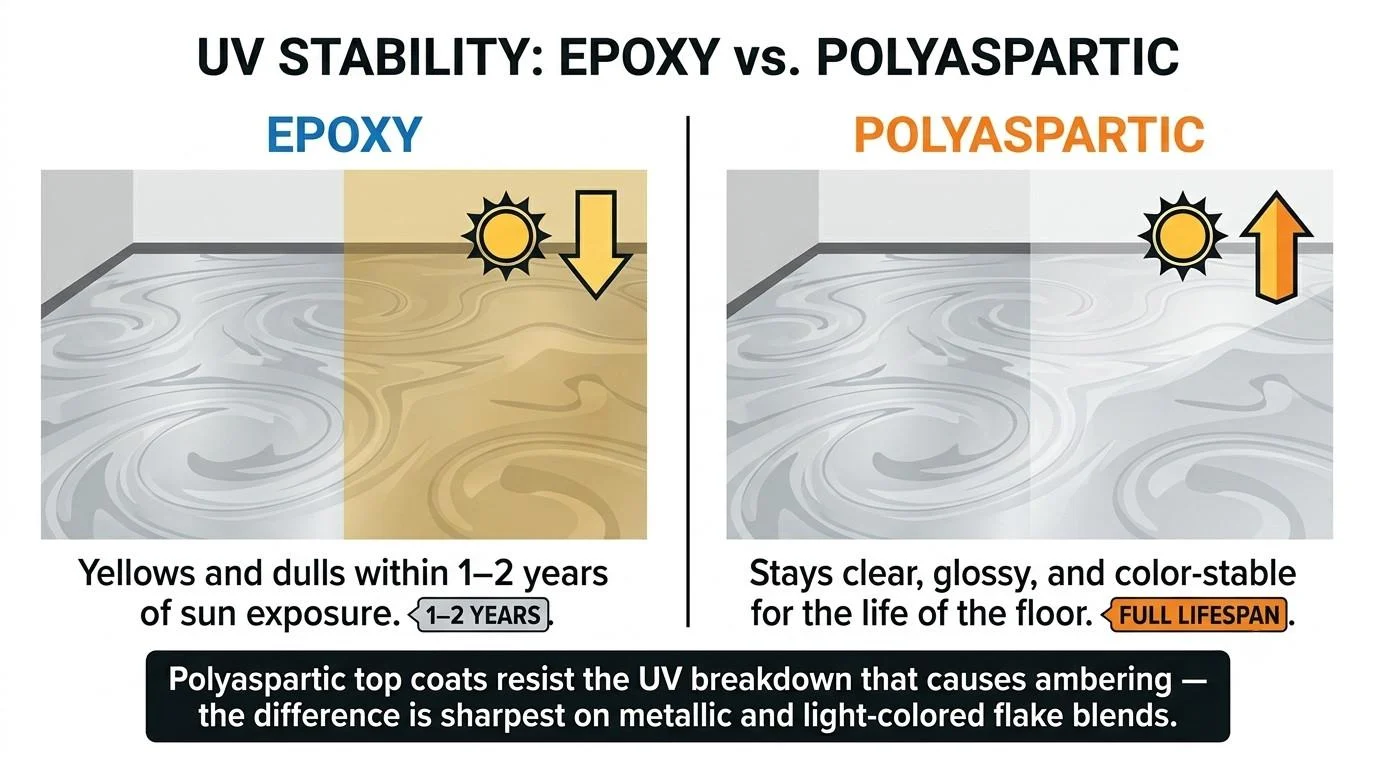
Standard epoxy yellows when exposed to sunlight, especially in garages with south-facing doors or windows that let UV in throughout the day. The discoloration starts subtly but becomes obvious within one to two years on a light-colored floor.
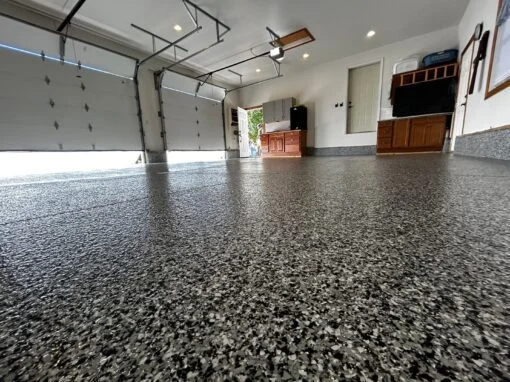
Polyaspartic top coats are inherently UV stable. The chemical structure resists the breakdown that causes ambering, which is why polyaspartic garage floor coatings maintain their clarity and gloss for the full lifespan of the system. On metallic and lighter-colored flake blends, the difference is especially visible. A polyaspartic-topped metallic floor keeps its depth and reflectivity, while the same blend under a basic epoxy top coat dulls within a season of sun exposure.
Cost and Long-Term Value
The price difference between the two systems comes down to what the polyaspartic premium buys you: a faster cure time, better UV resistance, and a top coat that’s less likely to need repair or replacement.
A single professional coating outlasts big-box epoxy DIY kits, and the total material and labor cost of those repeated applications usually exceeds the one-time professional investment. When you factor in our lifetime warranty, the long-term cost of either professional system beats the cycle of failed DIY recoats.
Frequently Asked Questions
Is Polyaspartic More Durable Than Epoxy?
Polyaspartic is more resistant to UV damage, chemical exposure, and surface abrasion than standard epoxy in most garage environments. The molecular structure stays flexible at lower temperatures and resists yellowing under direct sunlight, which makes it more durable in Michigan’s climate. Both systems perform well when applied over properly diamond-ground concrete.
Can You Apply Polyaspartic Over Existing Epoxy?
Applying polyaspartic over existing epoxy is possible if the current coating is fully bonded, clean, and lightly abraded for adhesion. Premier Edge Concrete Solutions diamond-grinds the existing surface to create a fresh mechanical profile before applying any new system. Coating over a failing or contaminated base leads to the same delamination problems the new coat was supposed to fix.
How Long Does a Polyaspartic Garage Floor Last?
A professionally installed polyaspartic garage floor coating typically lasts 10 to 20 years under residential use, depending on traffic volume and maintenance. The UV-stable chemistry prevents the yellowing and surface breakdown that shortens the lifespan of basic epoxy systems, which matters in sun-exposed garages across Rockford and the surrounding West Michigan area. Proper diamond grinding during installation is the single biggest contributor to maximizing the coating’s longevity.
Which System Fits Your Garage?

Both epoxy and polyaspartic deliver a durable, chemical-resistant finish when applied over properly prepared concrete. Epoxy is the budget-friendly choice when UV exposure is minimal and you can afford to wait five to seven days for a full cure. Polyaspartic is the better fit when you need a faster return to service, direct sunlight hits the floor, or you want the highest chemical and abrasion resistance available. The right pick depends less on which resin is better and more on how your garage is used.
Request a free garage floor estimate from Premier Edge Concrete Solutions. Call (616) 816-2300 to compare options for your space.