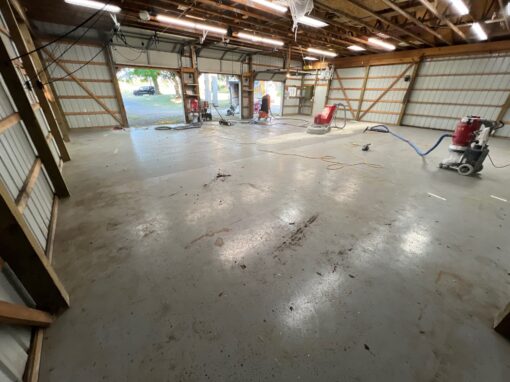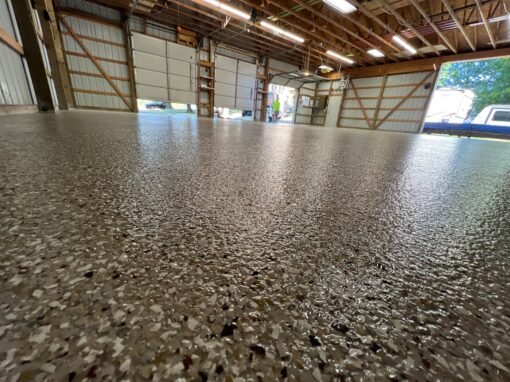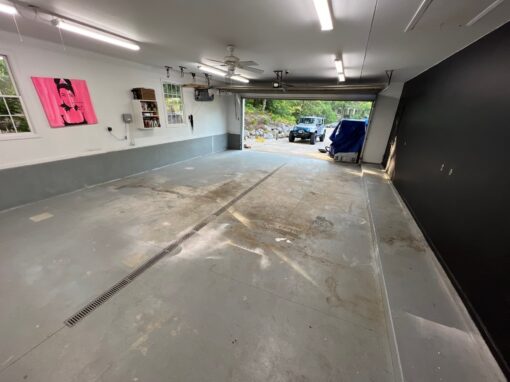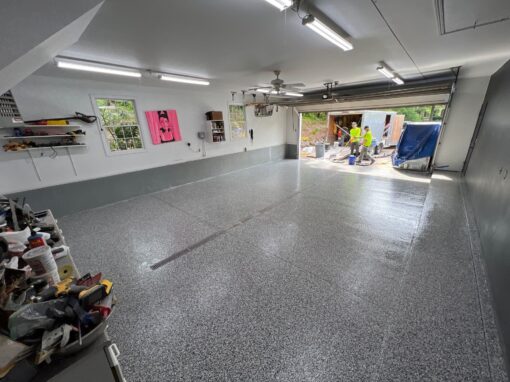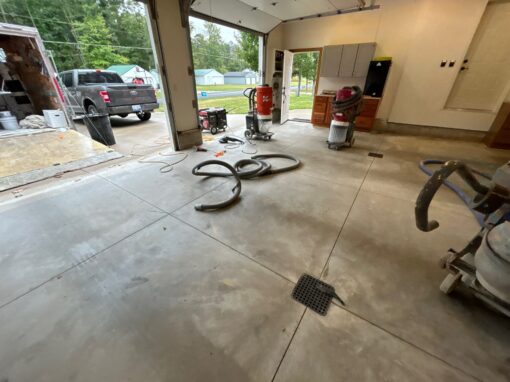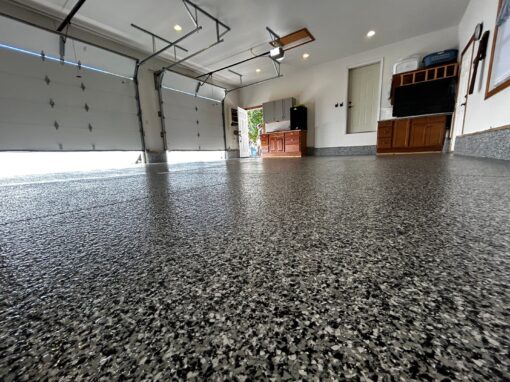


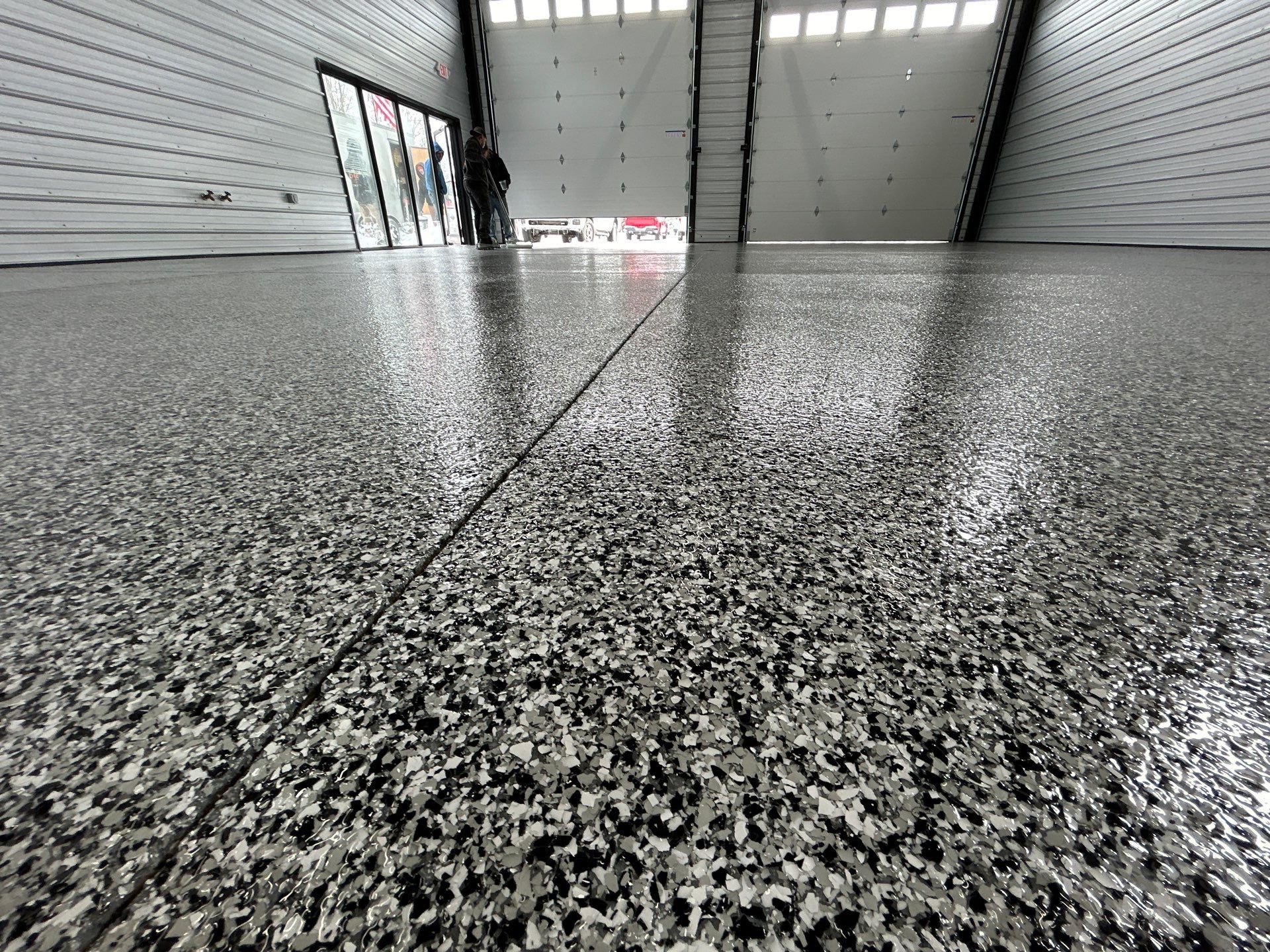
Hot tire pickup is a coating failure where heated tires bond to the surface of a garage floor and pull the coating off when the vehicle moves. It’s one of the most common problems with consumer-grade epoxy kits and low-solids commercial coatings. Premier Edge Concrete Solutions installs hot tire resistant floor systems across Grand Rapids and West Michigan designed to handle daily vehicle use without surface damage.
Here’s something most homeowners don’t realize before they coat their garage floor: the coating that looks perfect on installation day may not survive regular parking. Tires heat up during normal driving, often reaching temperatures well above 100 degrees Fahrenheit on summer pavement. When those tires sit on a coating that softens at moderate heat, the rubber chemically bonds to the surface. Move the car the next morning and the coating comes with it. It’s not a defect you’d catch during installation. It shows up weeks or months later, and by then the floor is already failing.
What Causes Hot Tire Pickup?
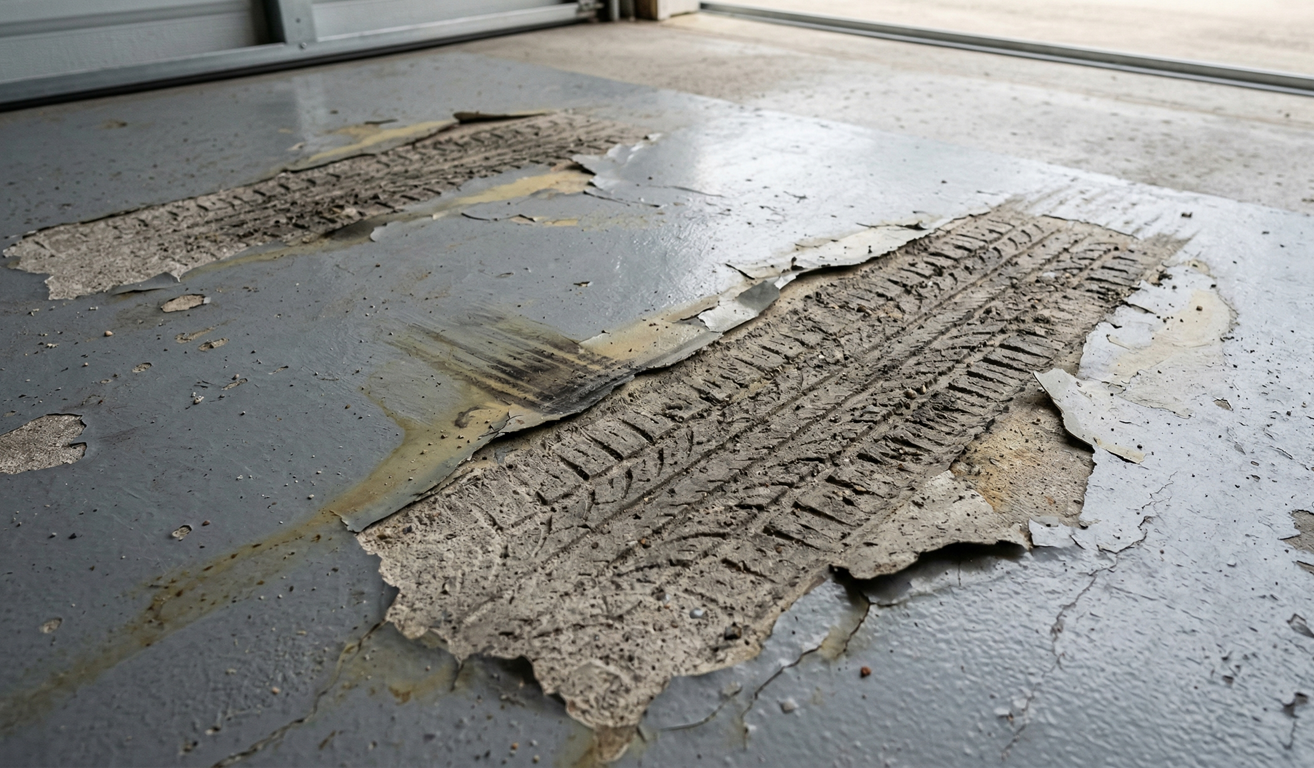
Hot tire pickup is a heat and adhesion problem. When rubber tires absorb heat from road surfaces during driving, they transfer that thermal energy directly to the garage floor coating underneath. If the coating’s chemistry softens at those temperatures, the plasticizers in the tire rubber bond to the softened surface.
Most single-component epoxy kits sold at home improvement stores use a water-based formula with lower solids content. These coatings cure to a film that’s hard enough to walk on but softens under sustained heat and pressure. The combination of a hot tire sitting in the same spot for hours creates the conditions for the rubber to fuse to the surface.
Two-component, high-solids epoxy and polyurea/polyaspartic systems cure through a chemical reaction that produces a harder, more heat-resistant film. The difference isn’t visible on day one, but it determines whether the floor handles real garage conditions over time. In West Michigan, where garages see vehicles coming in from hot summer asphalt and road-salt-covered winter highways, the coating system has to handle both temperature extremes consistently.
Which Coatings Resist Hot Tire Pickup?
Not all professional coatings solve the problem equally. Since it’s the topcoat layer that comes into contact with the tire, that’s where heat resistance matters most.
Polyaspartic topcoats outperform standard epoxy clear coats in terms of hot tire resistance because they cure harder and maintain their integrity at higher temperatures. Premier Edge Concrete Solutions’ 5-step coating process uses a polyaspartic or urethane topcoat over a high-solids epoxy base specifically for this reason. The base coat provides adhesion and chemical resistance. The topcoat provides the heat-stable surface that prevents the coating from adhering to the tire..
As you evaluate garage floor coating systems, ask what the topcoat is made of and whether it’s been tested for hot tire resistance. Single-component clear coat systems sold as ‘epoxy’ are one of the most common reasons garage floor coatings fail prematurely. The distinction between a coating that works in a showroom and one that works under a daily driver parked on a 90-degree July afternoon in Caledonia comes down to the topcoat chemistry.
Signs Your Floor Is Already Affected
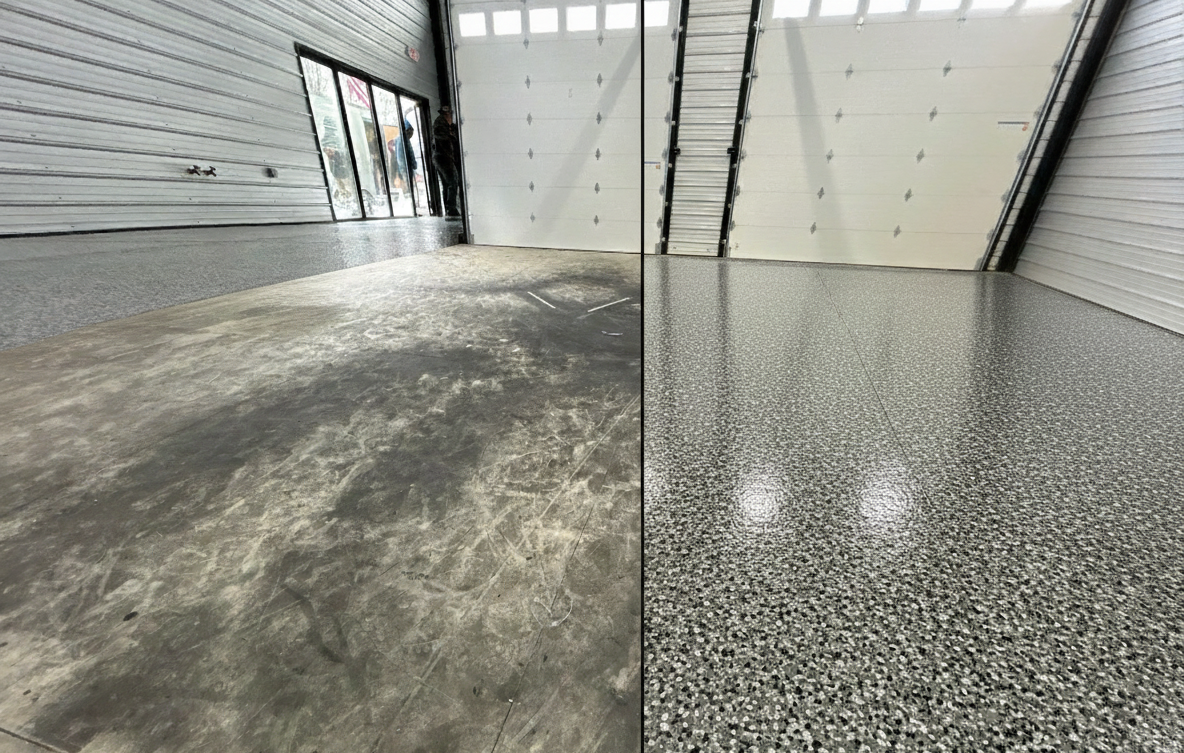
Hot tire pickup doesn’t always show up as dramatic peeling. Early signs are subtler:
- Tire-shaped discoloration or glossy patches where vehicles park
- A slightly tacky or soft feel on the coating surface in warm weather
- Small flakes or chips lifting in the tire contact zones only
- Rubber residue that won’t clean off with standard degreasing
If these signs appear on a floor that’s less than two years old, the coating system likely isn’t rated for vehicle use. A floor showing hot tire damage early will continue to degrade. Spot repairs over a heat-vulnerable coating delay the problem without solving it.
The fix is the same as for any coating failure: remove the compromised system, diamond grind the concrete to the proper surface profile, and install a coating built for the conditions the floor actually faces.
Frequently Asked Questions
Will waxing or sealing my epoxy floor prevent hot tire pickup?
No. Topical sealers and wax don’t change the underlying coating’s heat resistance. They may temporarily reduce surface tackiness, but the plasticizer migration from hot tires will continue to degrade a coating that isn’t chemically resistant to sustained heat. The only lasting solution is a topcoat formulated for hot tire conditions.
Can I fix hot tire pickup without recoating the entire floor?
Spot repairs are possible if damage is limited to small areas directly under the tires. However, if the coating softens across the surface in warm weather, the entire system is vulnerable and targeted patches will only delay further failure. A full evaluation from Premier Edge Concrete Solutions can help determine whether spot repair or full recoating makes more sense.
How do I know if a coating is rated for hot tire resistance before I buy?
Ask the installer or manufacturer specifically about hot tire pickup performance. Polyaspartic and urethane topcoats generally handle hot tires well. Single-component water-based epoxy kits typically do not. Premier Edge Concrete Solutions uses polyaspartic topcoats on all residential garage floors for this reason.
Your Garage Floor Should Handle What You Park on It
A garage floor coating that can’t withstand the tires parked on it every day isn’t doing its job. Hot tire pickup is preventable with the right system and proper installation. Premier Edge Concrete Solutions installs polyaspartic-topped floor systems across Caledonia, Grand Rapids, and West Michigan, backed by a written lifetime warranty. Get a free estimate and find out what a coating built for real conditions looks like.

I’m Nathan Endres, owner of Premier Edge Concrete Solutions. I ensure every project showcases quality and excellence. Specializing in landscape curbing and floor coatings, my team and I serve Grand Rapids, MI, with a focus on providing reliable and affordable craftsmanship.