
How long concrete sealer lasts depends on the type. Penetrating sealers typically last 5 to 10 years, acrylics average 1 to 3 years, and epoxy and polyurea sealers typically last 5 to 10 years. Climate, traffic volume, and application quality all shift those numbers. Premier Edge Concrete Solutions applies hydrophobic, penetrating concrete sealers across Grand Rapids that are built for Michigan conditions.
A homeowner in Jenison called last spring after noticing dark water stains soaking into a driveway that had been sealed three years earlier. The acrylic sealer had worn through in the tire tracks and along the apron where road salt accumulates every winter. Penetrating sealers can outlast acrylics several times over, but only under the right conditions. Four variables determine where your sealer falls in that range.
Sealer Lifespan by Type
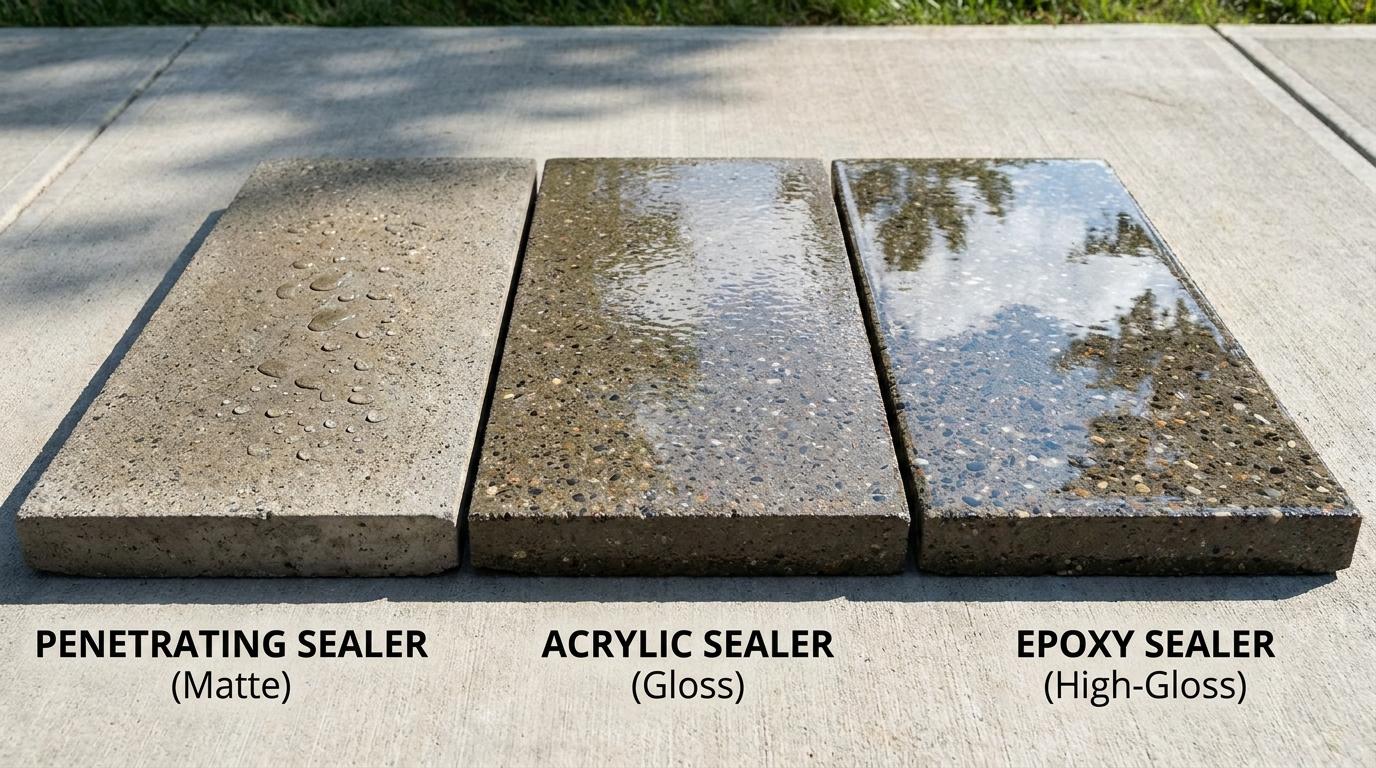
Each sealer category protects concrete differently, and that difference directly affects how long the protection lasts.
Penetrating Sealers (5 to 10 Years)
Penetrating sealers soak into the concrete and react chemically below the surface. They block moisture from within without changing the appearance or texture of the slab. Because the active barrier sits inside the concrete rather than on top, it does not wear away from foot traffic or tire abrasion. This is the type Premier Edge applies on driveways, patios, and garage aprons across West Michigan.
Acrylic Sealers (1 to 3 Years)
Acrylic sealers form a thin film on the concrete surface that adds a glossy or satin sheen. They enhance color and are popular on decorative concrete, but the film wears away under vehicle traffic and UV exposure. In Michigan, road salt and freeze-thaw cycles accelerate that wear. Expect to reapply every one to three years on a driveway and every two to four years on a patio with lighter foot traffic.
Epoxy and Polyurea Sealers (5 to 10 Years)
These sealers create a thicker, harder film than acrylics. They resist chemicals, stains, and abrasion well in garages and basements. On outdoor surfaces exposed to UV, they can yellow or delaminate toward the lower end of that range. Indoor applications with a polyaspartic top coat push it toward the upper end.
Four Factors That Shorten Sealer Life
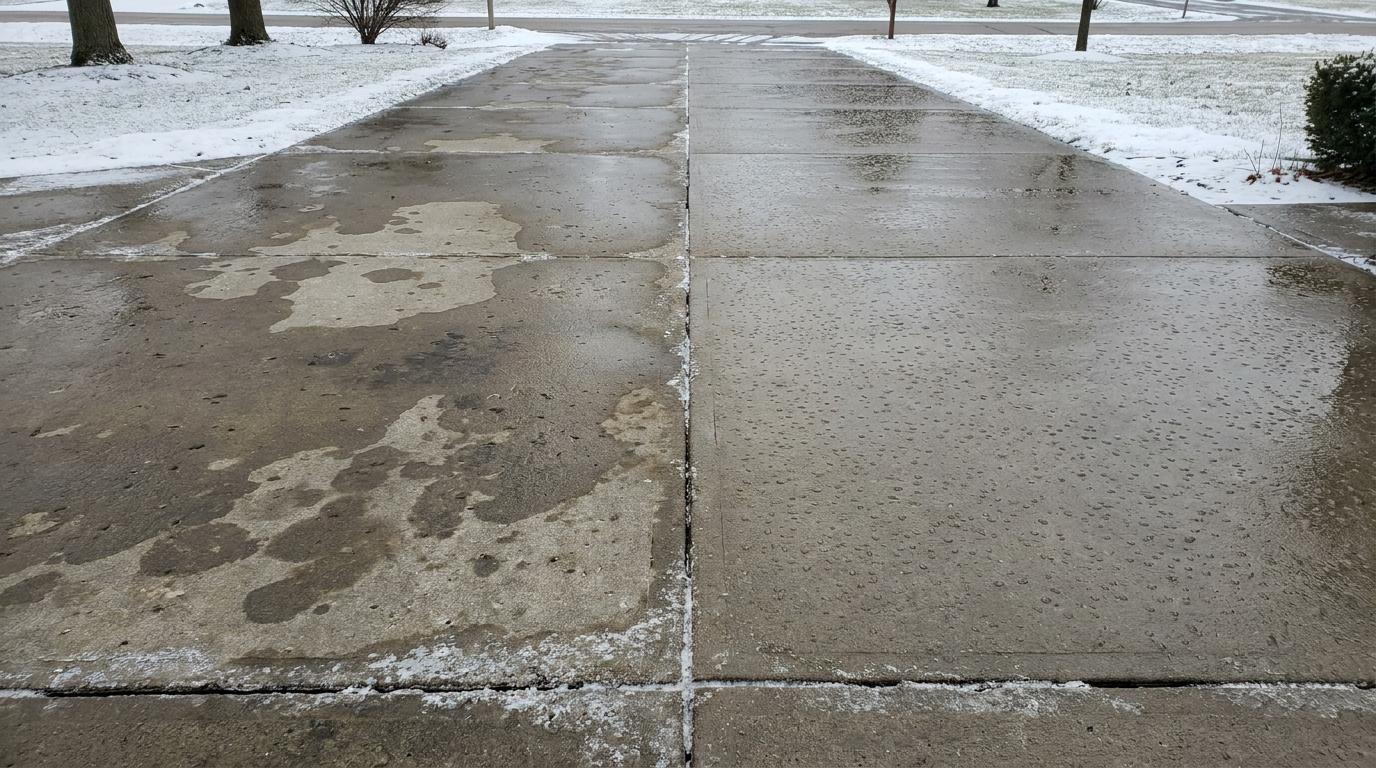
A sealer’s rated lifespan assumes proper application and moderate conditions. These four factors demonstrate why you need to seal concrete in the first place. Traffic, weather, application quality, and slab condition all wear concrete down whether it’s sealed or not, especially when it stays unprotected.
- Traffic volume: A two-car driveway with daily use wears through surface sealers faster than a backyard patio. Penetrating sealers hold up better under heavy traffic because the barrier is below the surface.
- Freeze-thaw cycles: West Michigan sees repeated freeze-thaw cycling through the winter. Each cycle drives moisture into unsealed pores, where it expands as it freezes. Salt accelerates the damage by lowering the freeze point and increasing the number of cycles the surface endures.
- Application quality: Applying sealer too thick, on a damp surface, or over contaminants causes early failure. Professional concrete sealing on a clean, dry slab with the right coverage rate is the single most controllable factor.
- Concrete age and condition: New concrete should cure at least 28 days before sealing. Old concrete with existing cracks, spalling, or prior sealer residue needs repair and cleaning before a new sealer will bond properly.
When to Reseal Concrete in Michigan
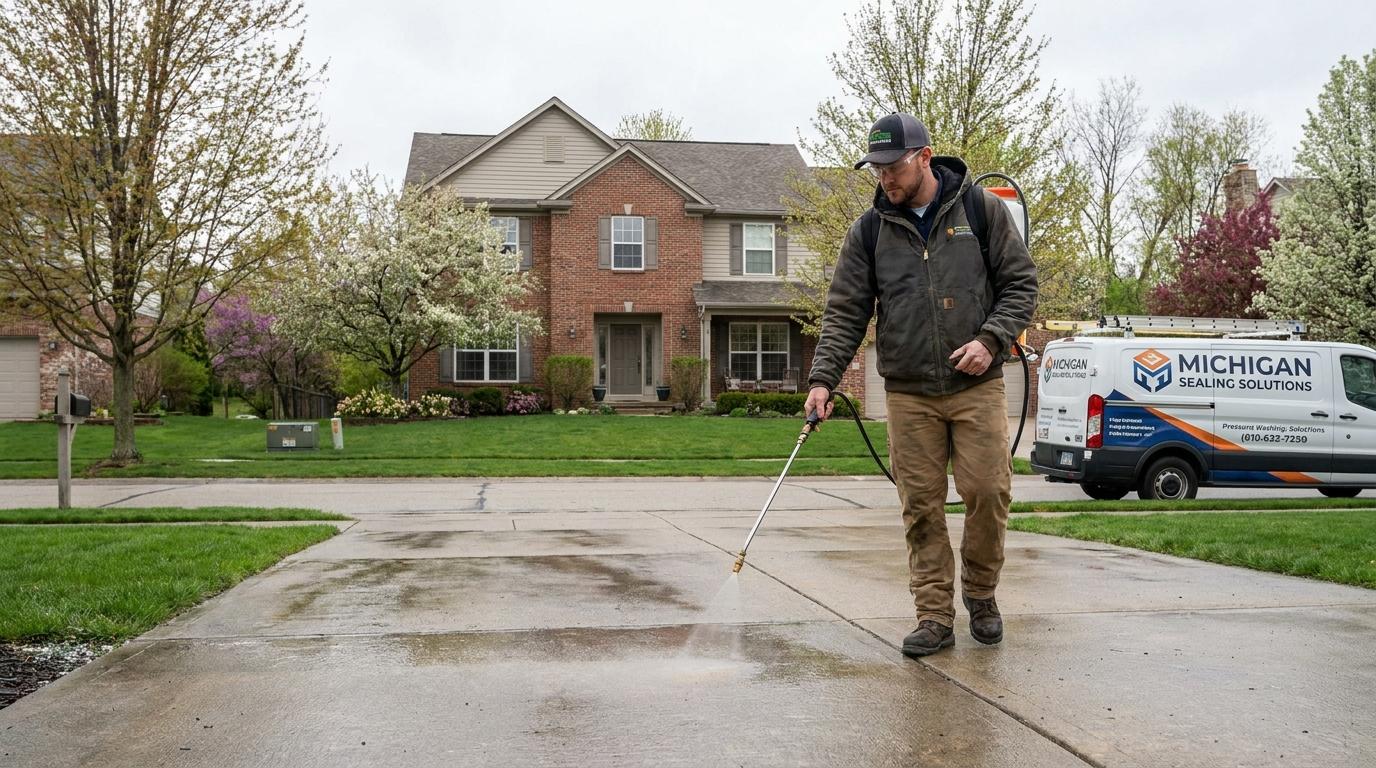
The best time to reseal in West Michigan is late spring through early fall, when air temperatures stay above 50°F and rain is less frequent. These signs tell you the existing sealer has worn through:
- Water no longer beads on the surface and instead soaks in and darkens the concrete
- The surface feels rough or chalky in areas that previously felt smooth
- Stains from oil, leaves, or rust penetrate instead of sitting on top
- Visible color fading or white haze on previously clear-coated decorative concrete
For penetrating sealers on driveways, a five-year reseal cycle works well in Grand Rapids. Acrylic-sealed patios and decorative slabs benefit from reapplication every two to three years.
Frequently Asked Questions
Does concrete sealer wear off?
Concrete sealers wear off over time due to traffic, UV, and chemical exposure. This includes surface-forming sealers like acrylics and epoxies. Penetrating sealers degrade more slowly because the active barrier is inside the concrete, not on top. All sealers eventually need reapplication.
Can you seal concrete too often?
You can seal concrete too often, which can lead to a thick buildup that peels, flakes, or traps moisture. Penetrating sealers are harder to over-apply because they absorb into the slab. Follow the recommended reapplication schedule for the sealer type you have.
Is professional concrete sealing worth the cost in Michigan?
Professional concrete sealing is often worth the cost in Michigan due to the region’s freeze-thaw cycles and road salt. This is why it’s a popular choice for driveways and outdoor slabs. Professional application ensures correct coverage and a clean surface bond. Homeowners in Holland and along the lakeshore see some of the fastest sealer wear due to lake-effect moisture and salt exposure.
Know When Your Sealer Needs a Refresh
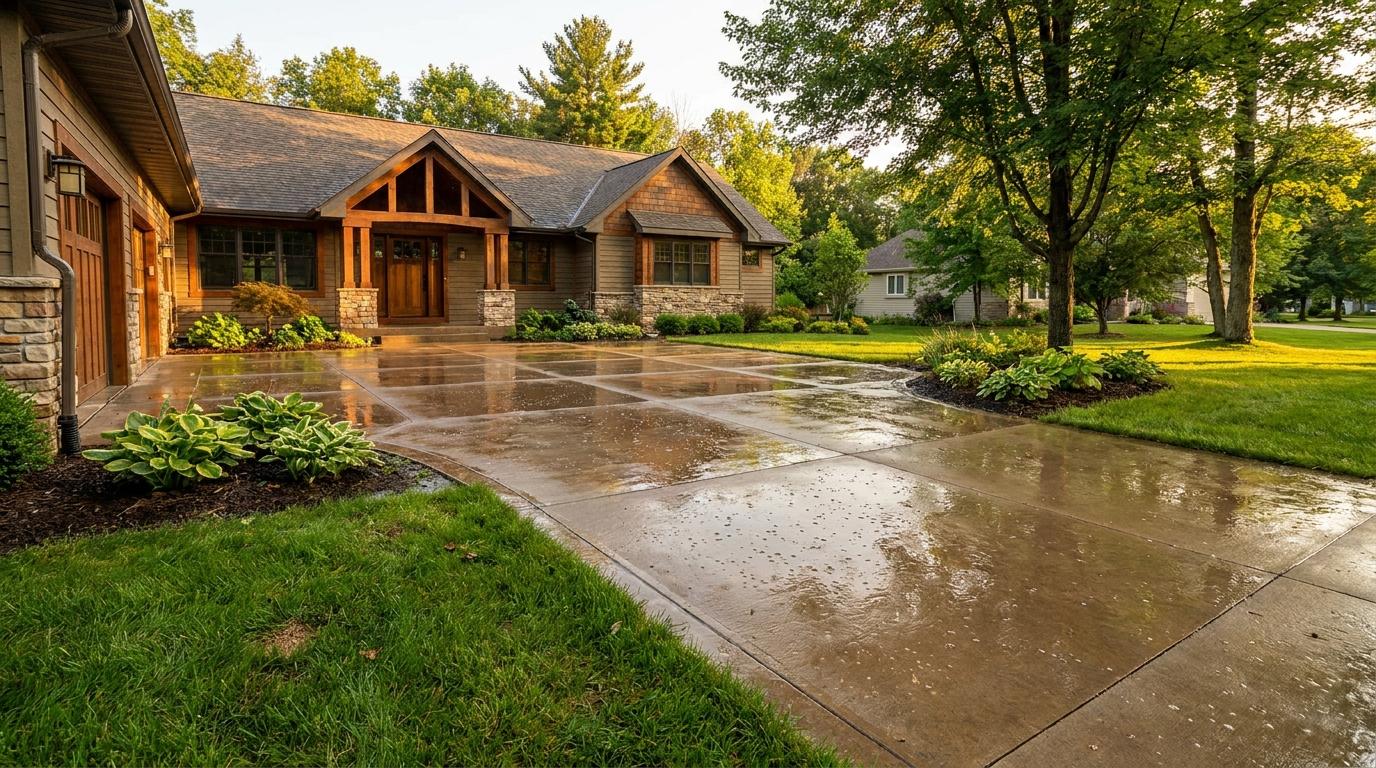
Penetrating sealers last the longest and handle Michigan winters best. Acrylics add gloss but need frequent reapplication. The right sealer and a consistent resealing schedule keep concrete protected year-round and prevents homeowners from overspending on unnecessary recoats.
Contact Premier Edge Concrete Solutions at (616) 816-2300 for a free concrete sealing estimate in Grand Rapids and West Michigan.

I’m Nathan Endres, owner of Premier Edge Concrete Solutions. I ensure every project showcases quality and excellence. Specializing in landscape curbing and floor coatings, my team and I serve Grand Rapids, MI, with a focus on providing reliable and affordable craftsmanship.