
Waterproofing a basement floor starts with identifying where the moisture is coming from. Surface condensation, minor vapor transmission, and active water intrusion each require a different fix. Premier Edge Concrete Solutions installs basement epoxy floor coatings with moisture-mitigating primers across Grand Rapids once the slab is within acceptable moisture limits.
Most homeowners researching basement waterproofing solutions assume the floor itself is the problem. In many West Michigan homes, the real cause is hydrostatic pressure from a high water table or poor exterior drainage that’s pushing moisture through the slab from below. Sealing a dry crack is a weekend task, but fixing an active leak takes professional drainage work. The steps ahead explain the right repairs for different moisture levels.
Identify the Source of Moisture Before You Seal
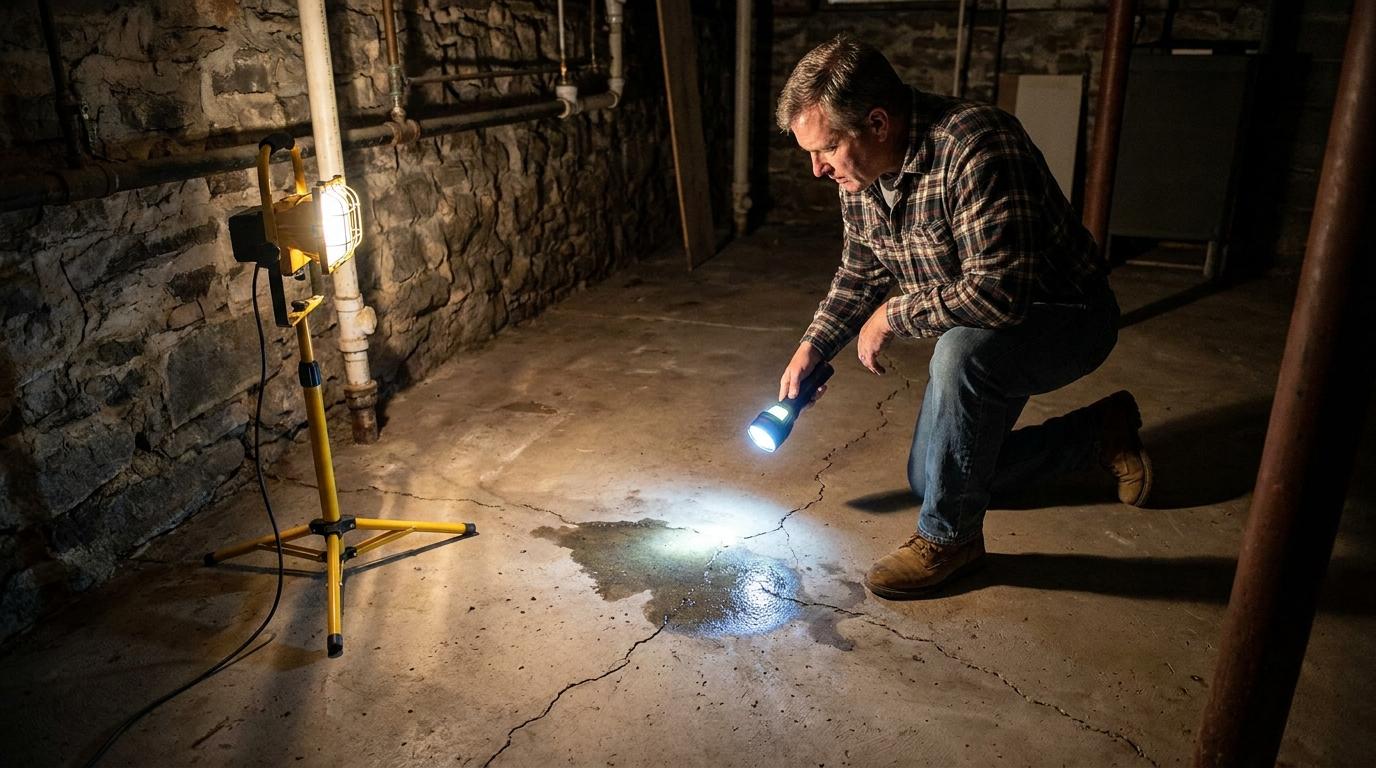
Taping a square of plastic sheeting to the basement floor for 24 to 48 hours is the simplest diagnostic. If moisture collects on top of the plastic, the problem is condensation from humid basement air. If moisture collects underneath, vapor is pushing up through the slab.
- Surface condensation: A dehumidifier and improved ventilation often solve this without any coating. Relative humidity that stays below 50% prevents condensation on cold concrete.
- Minor vapor transmission: A penetrating concrete sealer or moisture-mitigating epoxy primer blocks low-level vapor. This is the most common scenario in Grand Rapids basements that have no visible water intrusion.
- Active water intrusion: Standing water, wall seepage, or floor cracks that weep during rain require drainage work (French drains, sump pumps, or exterior grading) before any coating is applied. Premier Edge does not install drainage systems; a waterproofing contractor handles that trade.
DIY Basement Floor Waterproofing Steps
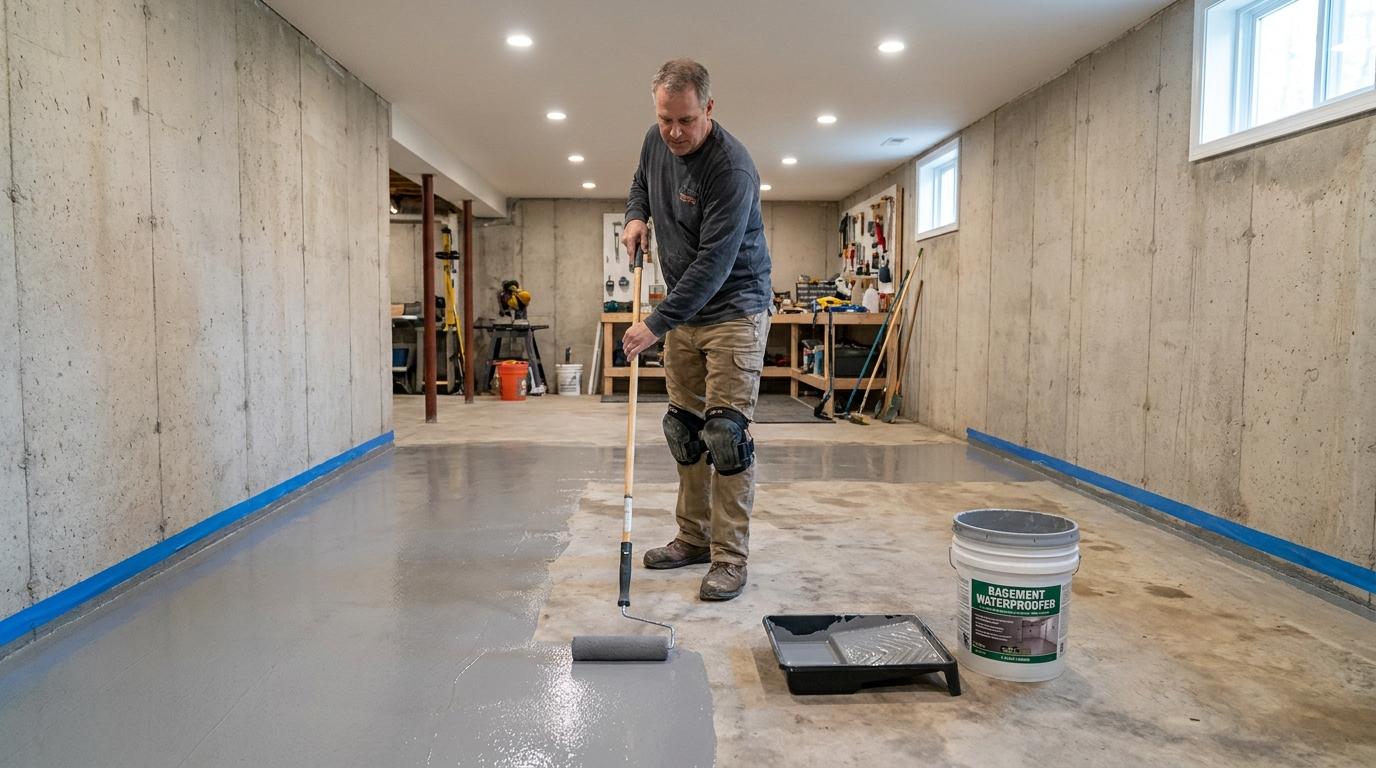
If the plastic sheet test shows minor vapor or no moisture, DIY sealing can provide basic protection. Follow these steps in order.
- Clean the floor: Sweep, vacuum, and degrease the entire slab. Oil stains, paint drips, and dust keep the sealer from adhering. A concrete degreaser and stiff brush handle most contaminants.
- Repair cracks: Fill hairline cracks with a concrete crack filler. For cracks wider than 1/4 inch, use a two-part epoxy injection kit. Let the repairs cure fully before sealing.
- Apply penetrating sealer: Roll or spray a silicate-based penetrating sealer across the entire floor. Penetrating sealers soak into the concrete and chemically block moisture from within. Apply two coats, allowing four to six hours between coats.
- Allow full cure: Most penetrating sealers cure in 24 to 72 hours. Avoid foot traffic during this window. Check the product label for the exact timing.
DIY sealers protect against surface moisture and light vapor, but they do not create the seamless, durable finish that an epoxy coating system provides.
When to Call a Professional
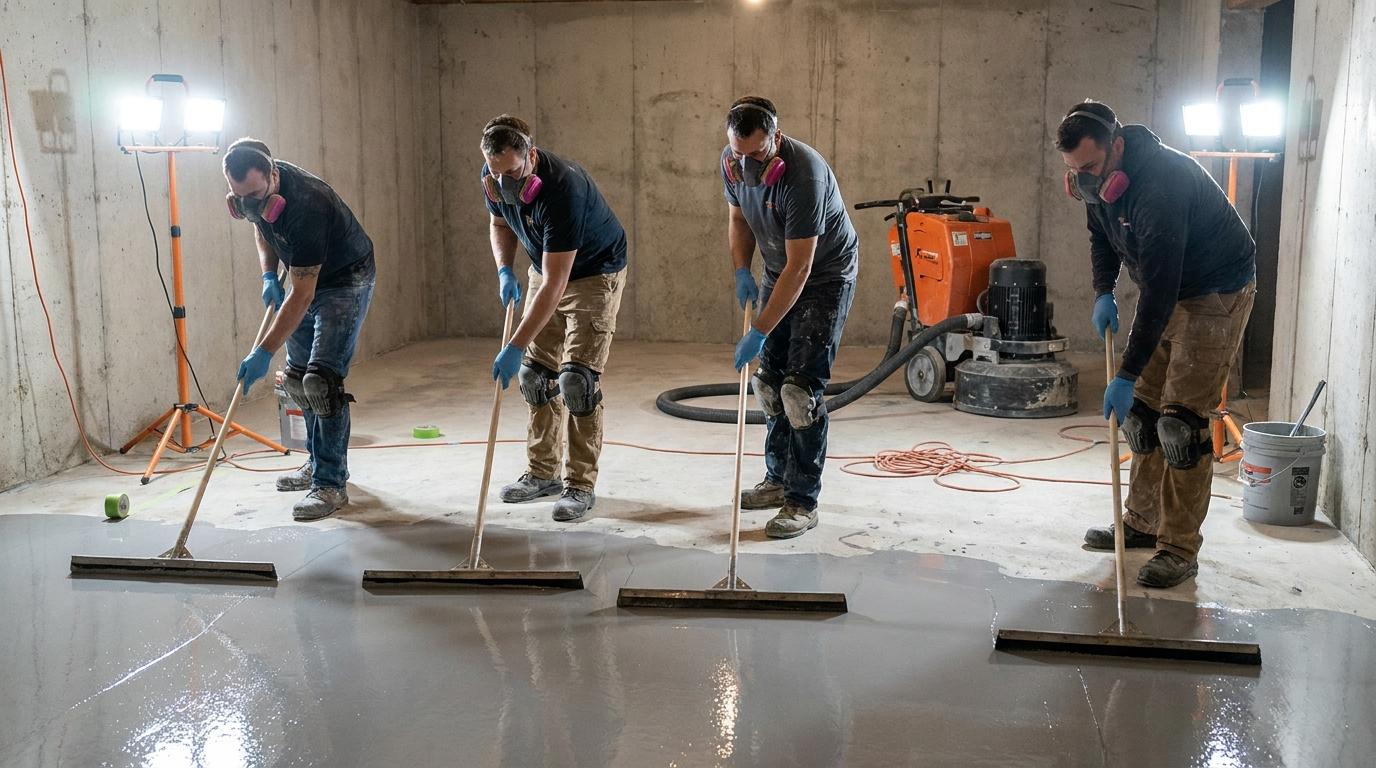
A professional basement floor coating makes sense when you want a finished, usable space rather than basic moisture protection. Diamond grinding, moisture testing, crack repair, and a multi-layer epoxy system deliver results that DIY sealers can’t match.
Premier Edge’s process starts with a calcium chloride moisture test. If the slab passes, our crew diamond-grinds the surface to open the pores, applies a moisture-mitigating primer where needed, then lays down a high-solids epoxy base coat, decorative flake broadcast, and polyaspartic top coat. The full system is backed by a lifetime warranty.
If the slab fails the moisture test, Premier Edge will advise you to address the source of moisture first. A waterproofing contractor or plumber can install interior drainage, a sump pump, or exterior grading improvements. Once the moisture issue is resolved, the coating project can proceed.
Frequently Asked Questions
Does epoxy waterproof a basement floor?
Epoxy waterproofs a basement floor by creating a moisture-resistant barrier on top of the slab, but it does not stop water from pushing up from below. A moisture-mitigating primer handles moderate vapor transmission. Active water intrusion requires drainage work before any coating is applied.
How much does it cost to waterproof a basement floor in Michigan?
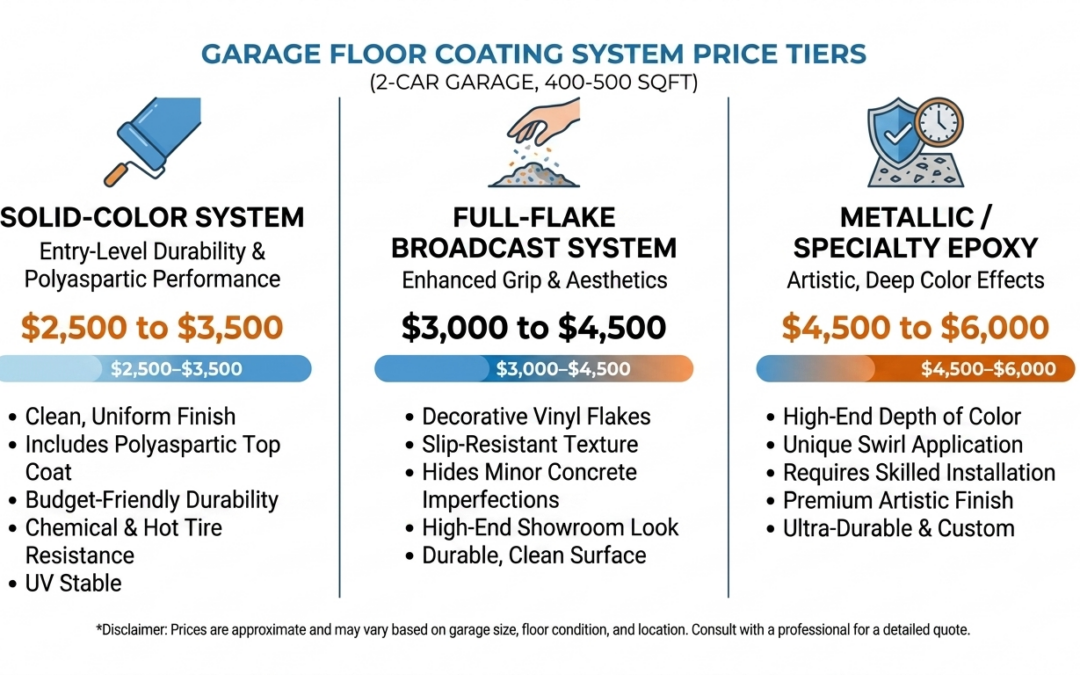
Waterproofing a basement floor in Michigan with a DIY penetrating sealer costs $50 to $150 in materials for a 500-square-foot basement. A professional epoxy coating system runs $5 to $12 per square foot installed, or $2,500 to $6,000 for the same area. The professional route includes moisture testing, surface prep, and a lifetime warranty.
Can I coat a basement floor that gets damp in spring?
You can coat a basement floor that gets damp in spring if a moisture test confirms the dampness is within certain limits. A moisture-mitigating primer and 100% solids epoxy system handle moderate vapor levels. Severe or persistent dampness needs drainage work before any coating goes down. Seasonal dampness is common in Cascade and other West Michigan communities with clay-heavy soil, which is why Premier Edge tests every basement before installation.
Stop the Moisture Before It Spreads
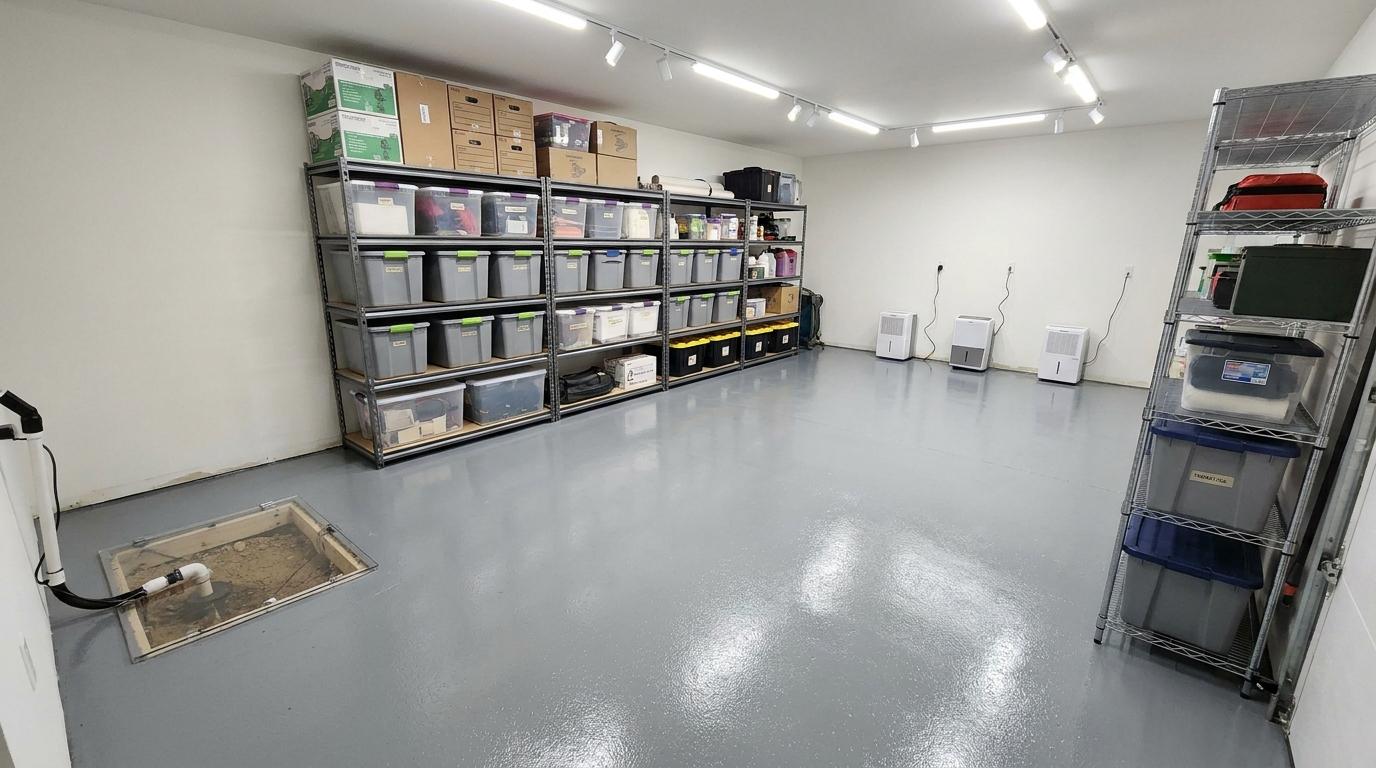
Surface condensation, vapor transmission, and active water each need different solutions. A plastic sheet test and a professional moisture reading tell you which category your basement falls into. Solve the source first, then protect the slab with the right sealer or coating system.
Contact Premier Edge Concrete Solutions at (616) 816-2300 for a free basement floor coating consultation in Grand Rapids and West Michigan.

I’m Nathan Endres, owner of Premier Edge Concrete Solutions. I ensure every project showcases quality and excellence. Specializing in landscape curbing and floor coatings, my team and I serve Grand Rapids, MI, with a focus on providing reliable and affordable craftsmanship.