
Yes, you need to seal concrete to protect it from moisture absorption, freeze-thaw cracking, salt damage, and staining. Unsealed concrete is porous and absorbs water, which expands when it freezes, causing surface spalling and deterioration in cold climates. Premier Edge Concrete Solutions applies hydrophobic penetrating sealers that block moisture at the molecular level.
Is that driveway spalling you noticed this spring just cosmetic wear, or is it the beginning of something more expensive? For most West Michigan homeowners, the answer depends on whether their concrete was ever sealed in the first place. This guide explains what concrete sealing actually does at the material level, the warning signs that your slab needs it now, and how to approach the process, whether you hire a professional or tackle it yourself.
What Concrete Sealing Actually Does
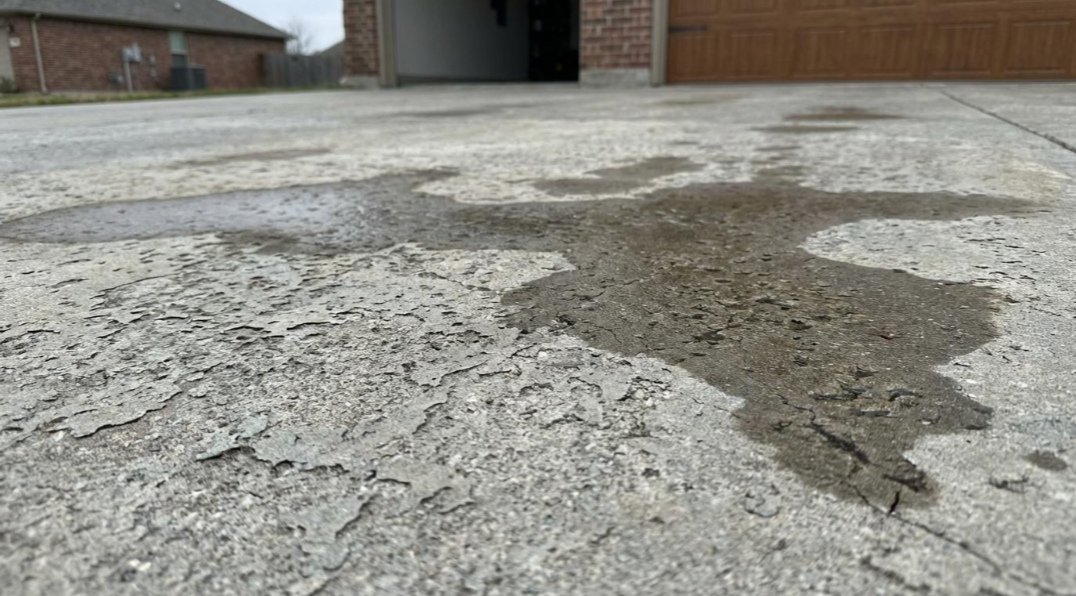
Concrete looks solid but contains millions of microscopic pores and capillaries that absorb water like a sponge. A cubic foot of standard concrete can absorb several pounds of water through capillary action alone. In Michigan, the absorbed water freezes and expands by roughly 9% in volume, generating internal pressure that fractures the concrete from within.
Penetrating sealers work by chemically reacting with the concrete’s mineral structure to form a hydrophobic barrier within the pores. Unlike surface-film sealers that sit on top, penetrating sealers don’t change the concrete’s appearance or texture. They block water absorption at the source while still allowing trapped moisture vapor to escape upward. For a deeper look at the science and options, this guide to concrete sealing benefits, types, and application methods covers each sealer category in detail. The practical result is concrete that repels water, resists salt penetration, and withstands freeze-thaw cycles without spalling.
Signs Your Concrete Needs Sealing Now
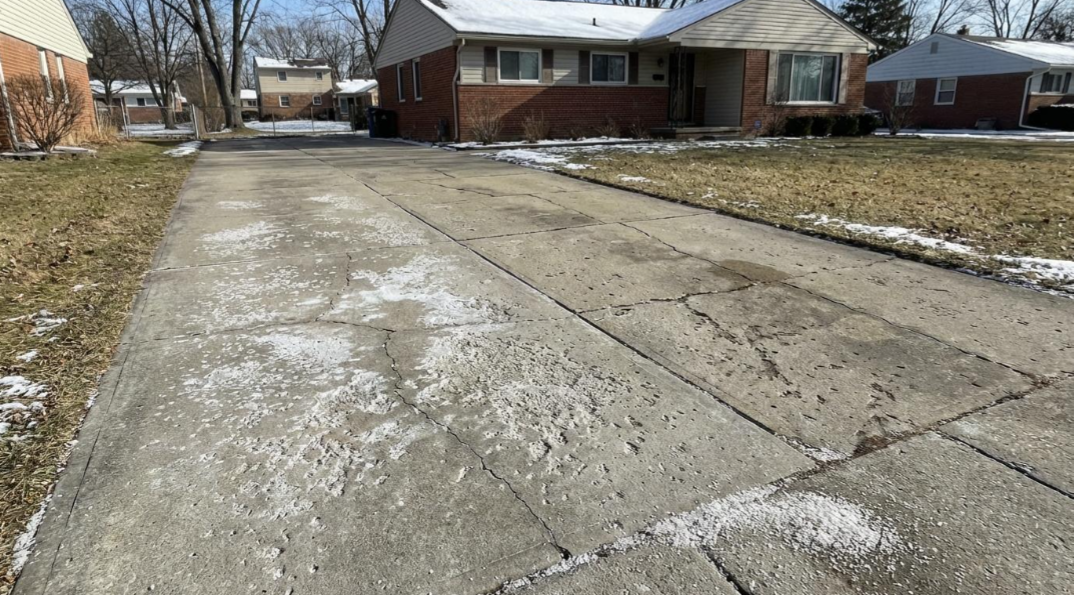
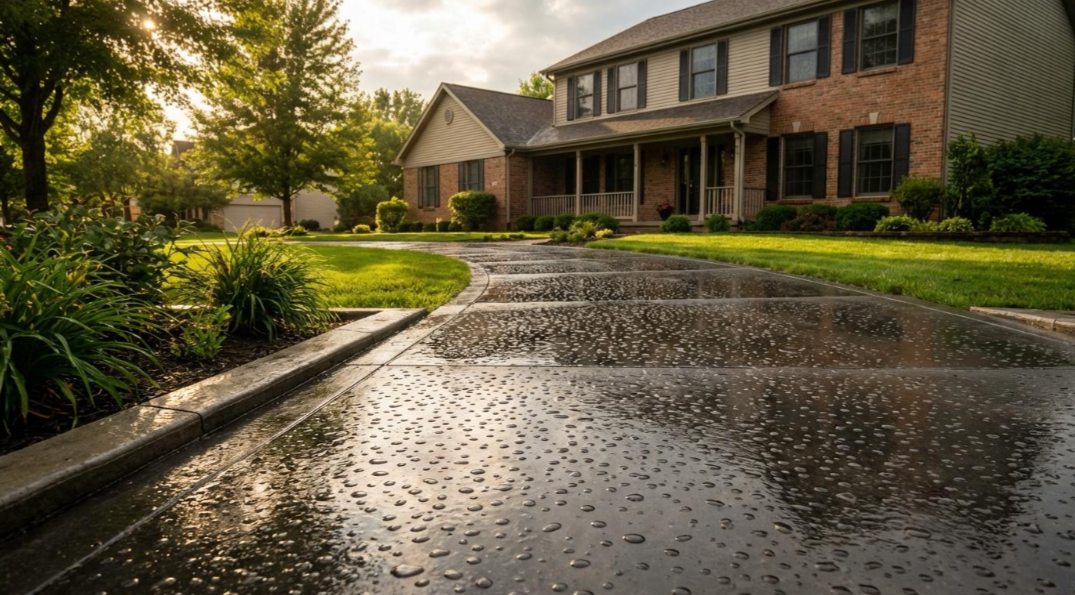
Several visible indicators tell you sealing is overdue. The most reliable test takes 30 seconds: pour a cup of water on your concrete surface. If it absorbs within a minute and darkens the slab, the pores are open and unprotected.
Other warning signs include:
- White powdery deposits (efflorescence) that appear on the surface after rain
- Surface scaling or flaking, especially near garage entrances, where road salt accumulates
- Dark stains from oil, leaves, or rust that won’t pressure wash away
- Hairline cracks form in a map-like pattern across flat surfaces
- Concrete that stays wet or damp for hours longer than the surrounding surfaces after rain
New concrete should be sealed 28 to 30 days after pouring, once it’s fully cured. Existing concrete that’s never been sealed accumulates damage with every rain cycle and every winter freeze. For Grand Rapids homeowners dealing with road salt tracked across driveways and garage floors from November through April, sealing prevents surface wear and structural damage.
How To Seal Concrete: The Basic Process
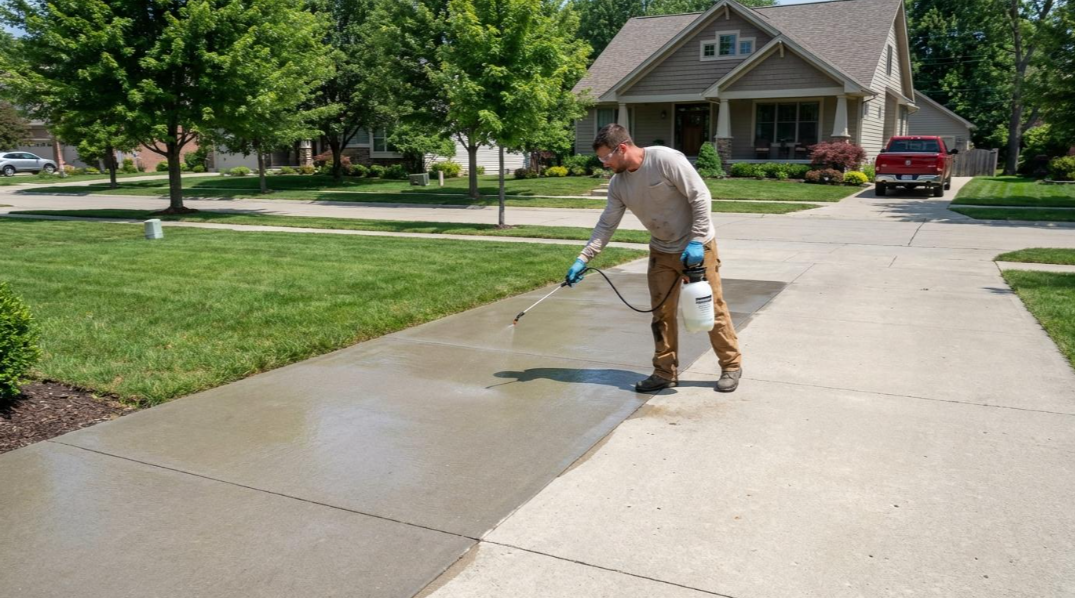
The sealing process follows a straightforward sequence, whether you do it yourself or hire a professional.
1. Surface Preparation & Pressure Washing
Start by pressure washing the surface at 3,000+ PSI to remove dirt, oil, efflorescence, and any previous sealer residue. The concrete must be completely dry before application, which typically takes 24 to 48 hours in West Michigan’s humidity.
2. Sealer Application & Coverage
Apply the sealer using a pump sprayer or roller in thin, even coats. Most penetrating sealers require two coats with 2 to 4 hours of drying time between applications. Work in sections to maintain a wet edge and avoid lap marks. Typical coverage runs 150 to 300 square feet per gallon, depending on the concrete’s porosity. For a complete walkthrough with product-specific guidance, this step-by-step concrete sealing guide covers the details.
Professional sealing adds value through proper product selection, surface preparation with commercial-grade equipment, and application experience that prevents common DIY errors such as over-application, which traps moisture rather than repels it.
Frequently Asked Questions
How often should concrete be resealed in Michigan?
Most penetrating sealers carry manufacturer-rated protection of 3 to 5 years in Michigan’s climate before reapplication is needed. High-traffic areas like driveways and garage entrances may need resealing every 2 to 3 years due to salt exposure and vehicle wear. Premier Edge Concrete Solutions recommends the water absorption test annually: if water soaks in within 60 seconds, resealing is due.
Does sealing concrete change its appearance?
Penetrating sealers leave the concrete looking and feeling exactly the same because they react inside the pores rather than forming a film on top. Film-forming sealers like acrylics add a slight sheen or wet-look finish, which some homeowners prefer for decorative concrete. The choice depends on whether you want invisible protection or a visible enhancement.
Can I seal concrete that already has cracks?
Sealer protects the concrete around cracks from further deterioration but doesn’t fill or repair existing cracks. Hairline cracks under 1/8 inch can be sealed over after cleaning. Larger cracks should be filled with a flexible concrete caulk or patching compound first, then sealed once the repair cures. Addressing cracks before sealing prevents water from bypassing the sealed surface entirely.
Protect Your Concrete the Right Way
Sealing concrete is one of the lowest-cost, highest-impact maintenance steps you can take for your home’s exterior surfaces. The question isn’t really whether you need to seal concrete in Michigan. It’s whether you seal it proactively or pay for repairs after freeze-thaw damage sets in. A single application protects driveways, patios, walkways, and garage floors from the moisture, salt, and temperature extremes that West Michigan delivers every winter.
Contact Premier Edge Concrete Solutions to schedule a free concrete sealing estimate. Call (616) 816-2300 to discuss your concrete’s condition and get it protected before the next freeze cycle.

I’m Nathan Endres, owner of Premier Edge Concrete Solutions. I ensure every project showcases quality and excellence. Specializing in landscape curbing and floor coatings, my team and I serve Grand Rapids, MI, with a focus on providing reliable and affordable craftsmanship.