
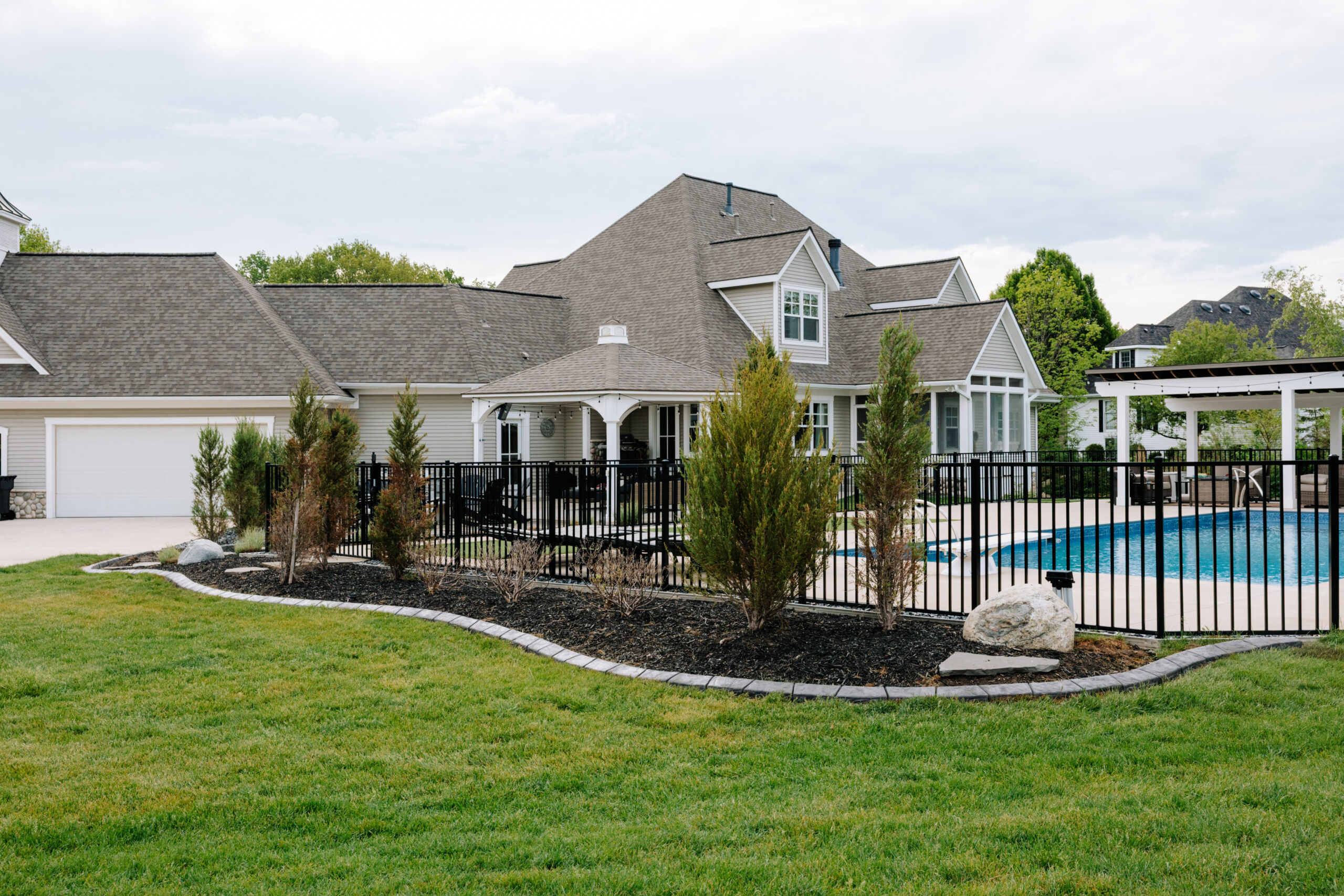
Yes, concrete curbing is worth it for most homeowners. While it costs more upfront than plastic or metal edging, its decades-long durability, clean weed barrier, and noticeable boost to curb appeal mean it pays for itself in saved time, fewer replacements, and added property value.
If you have ever fought with plastic edging that warped in the July sun, or reset the same row of bricks every spring after the frost pushed them out of line, you already know the real cost of a cheap border isn’t the price tag. It’s the weekend you spend fixing it, every single year. Continuous concrete curbing was built to end that cycle. Before diving into the costs, it helps to understand exactly what concrete curbing is and how it’s custom-installed on site in one seamless piece.
Below, we’ll give you honest answers on price, lifespan, how it holds up in West Michigan winters, and when it does (and does not) make sense for your yard.
The Top Benefits: Why Concrete Curbing Pays for Itself
The strongest case for concrete curbing isn’t how it looks on day one. It’s how little it asks of you for the next 20 years. Here is where the value actually shows up.
Durability and longevity.
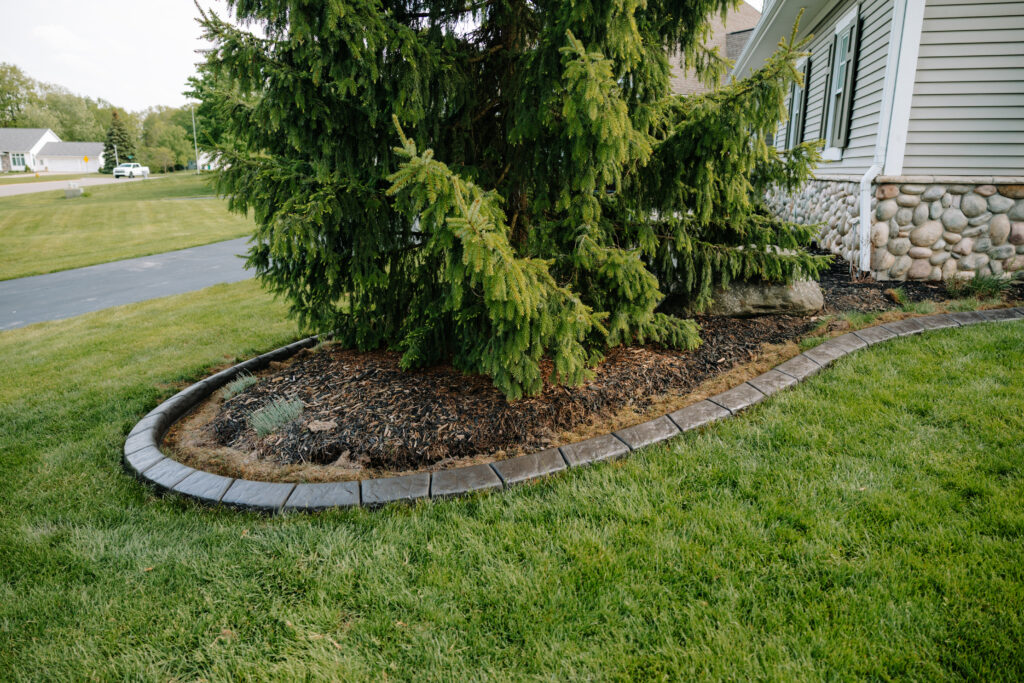
Wood rots. Plastic gets brittle and warps. Loose brick shifts and separates. Poured concrete curbing, installed in one continuous run, stays put season after season. You aren’t re-aligning, re-leveling, or replacing it.
A real mowing and trimming barrier.
A clean, raised concrete edge gives your mower wheel something to ride against and gives your beds a defined line that doesn’t need to be re-cut by hand. For most homeowners, that alone removes the single most tedious lawn chore: edging beds with a string trimmer.
Erosion and material control.
Concrete curbing locks your mulch, rock, and soil inside the bed where they belong, even after a heavy West Michigan downpour. Less washout means less money spent topping up mulch and stone every year.
A quick, honest note on weeds, because you’ll see homeowners online claim edging “doesn’t stop grass.” There is truth worth understanding here. A continuous concrete curb is far better at blocking creeping grass and surface runners than loose brick or plastic, because there are no gaps and seams for roots to travel through. It’s not a force field, though. Aggressive grasses can still send roots underneath a shallow border, and seeds will always blow in on top of mulch. The fix is installation depth and a proper footing, which is exactly what separates professional curbing from a quick DIY job.
Read More: How Concrete Edging Increases Your Property Value
Will It Crack in Michigan Winters? The Freeze-Thaw Question
This is the question every Grand Rapids homeowner should be asking, and it’s the one most “is it worth it” articles skip entirely, because they’re written for Florida and Texas yards that never freeze.
Here’s the straight answer. Poorly installed concrete curbing absolutely can crack and heave in a freeze-thaw climate like ours. When a crew simply peels back the sod and lays curbing straight onto soft ground, frost gets underneath it, lifts it, and within a few winters you have a cracked, tilted border. That is the failure people complain about, and it’s real.
It’s also entirely preventable. Done correctly, concrete curbing handles West Michigan winters for decades. The difference comes down to two things:
- Proper base preparation. A compacted base gives the curb a stable foundation so frost has nowhere to push from below.
- Control joints. We cut expansion and control joints at set intervals during installation. These give the concrete a planned place to move with ground shifts, so stress relieves at the joint instead of cracking the face of your curb.
This is the whole reason professional installation matters in our climate. The material isn’t the variable. The prep is. When you’re comparing quotes, the right question isn’t “how much per foot,” it’s “how are you basing and jointing it for winters.”
Aesthetics and Customization: Boosting Your Curb Appeal
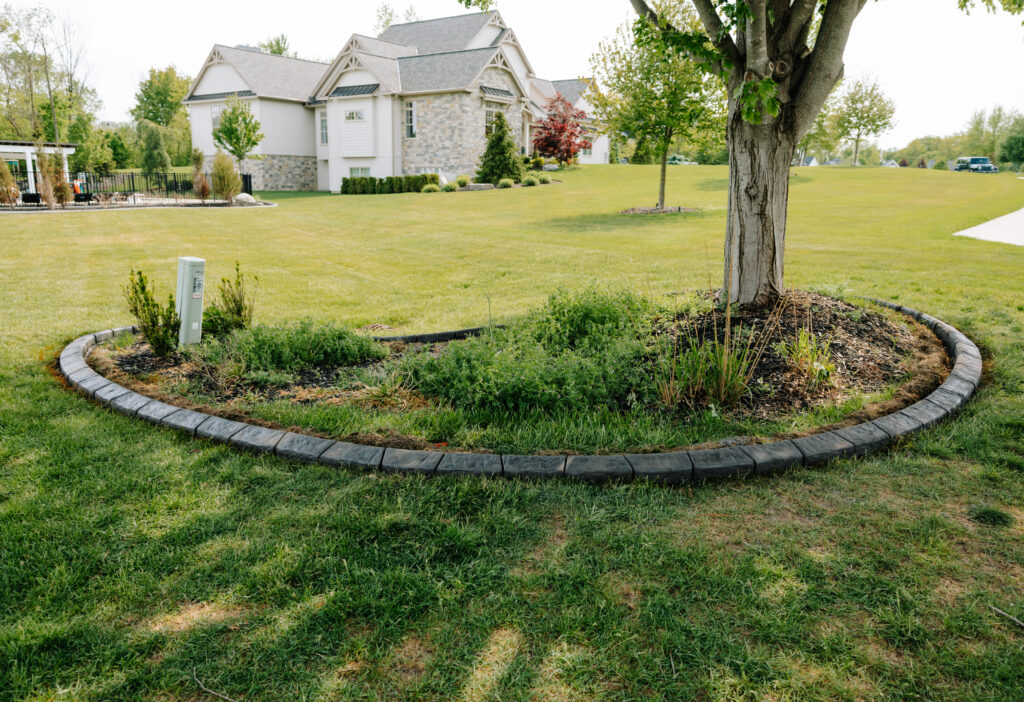
Concrete curbing isn’t only functional. It’s a permanent design feature that sharpens the entire look of your property. Realtors and buyers notice clean, defined bed lines, and that polished, maintained appearance is part of what supports resale value.
You aren’t locked into plain gray, either. Curbing can be stamped, colored, and shaped to mimic natural stone, brick, or modern slate, so it complements your home rather than fighting it. From a rustic brick pattern to a clean modern slate, you can choose from a wide variety of concrete curbing styles to match your existing landscaping and rockwork.
Concrete Curbing vs. The Alternatives
Cheaper edging always wins on the day you buy it and loses every year after. Here is how the common options actually hold up as durable landscape borders.
Plastic and Vinyl Edging
Lowest upfront cost, shortest life. It shifts with frost, gets chewed up by mower wheels, fades, and looks dated within a season or two.
Metal and Steel Edging
More durable than plastic, but it can rust over time, the exposed top edge can be sharp around kids and pets, and it offers almost no design flexibility.
Loose or Un-mortared Brick
Attractive at first, but individual units shift, separate, and let weeds grow right up through the gaps, which means you’re constantly resetting them.
Continuous Concrete Curbing
Higher upfront cost, but it’s the closest thing to a set-it-and-forget-it border. One seamless piece, no gaps, no annual reset. When you are comparing different types of landscape curbing and edging options, that one-time-versus-every-year math is the whole story.
The Financial Verdict: Cost vs. True ROI
Let’s talk about real numbers. Professional concrete curbing typically runs about $16 to $25 per linear foot. Where your project lands in that range depends on the style, color, stamping, and how complex your bed layout is. Simpler runs sit toward the lower end and custom stamped, colored profiles toward the top. Treat that range as an investment in a permanent landscape structure, not a seasonal purchase.
Here is how that upfront number earns itself back:
- Zero replacement costs. Plastic and wood borders often need replacing every few years. Concrete is a one-time install for decades of use.
- Resource savings. Less mulch and rock washing out means less money spent refilling beds after storms.
- Time is money. It removes hours of weeding, re-edging, and patching borders every season. For a busy homeowner, that reclaimed time is the real return.
- Property value. Clean, professional bed definition is exactly the kind of detail that signals a well-maintained home to buyers.
When you spread the cost across 20-plus years of service and zero replacements, concrete curbing is usually the cheaper border, not the more expensive one.
Frequently Asked Questions
How much does concrete curbing usually cost?
Professionally installed concrete curbing typically costs between $16 and $25 per linear foot. Where your project lands in that range depends on ground preparation, custom stamping, specific color additions, and the complexity of your bed layout. Plain, straight runs cost less than highly decorative, curved designs.
How long do concrete curbs last?
When properly installed, based, and sealed, concrete curbing can easily last 20 to 30 years, often the lifetime of the home. The key is professional installation. Expansion and control joints are cut during the install to let the concrete move with ground shifts, which is what prevents the cracking you sometimes see from rushed or DIY jobs.
What is the alternative to concrete curbing?
The common alternatives are plastic bender board, aluminum or steel edging, pressure-treated wood benders, and un-mortared paver stones. Each has a lower initial price tag, but all of them require ongoing maintenance, resetting, or full replacement every few years, which usually makes them more expensive over the life of your landscaping.
The Bottom Line
For homeowners who value their weekends, want a yard that looks sharp without constant upkeep, and plan to enjoy their property for years to come, concrete curbing is an investment that pays back in time saved, materials kept in place, and lasting curb appeal. In a freeze-thaw climate like West Michigan, the one thing that makes or breaks that investment is the quality of the install.
Ready to elevate your property’s curb appeal and cut down on yard work? Contact Premier Edge Concrete Solutions today to request a free estimate on your project.

I’m Nathan Endres, owner of Premier Edge Concrete Solutions. I ensure every project showcases quality and excellence. Specializing in landscape curbing and floor coatings, my team and I serve Grand Rapids, MI, with a focus on providing reliable and affordable craftsmanship.