How to Choose a Slip-Resistant Pool Deck Coating in Grand Rapids, MI
If you are comparing pool deck coating options in Grand Rapids, the two biggest questions are usually the same: will it stay safe to walk on when wet, and will it hold up through West Michigan weather? Premier Edge Concrete Solutions coats pool decks as part of its outdoor concrete coating services, using systems built for slip resistance, UV exposure, and the moisture that comes with any pool surround. This guide explains what actually makes a pool deck coating slip-resistant, how Grand Rapids weather factors into the decision, and what to ask an installer before committing to a system.
What Actually Makes a Pool Deck Coating Slip-Resistant
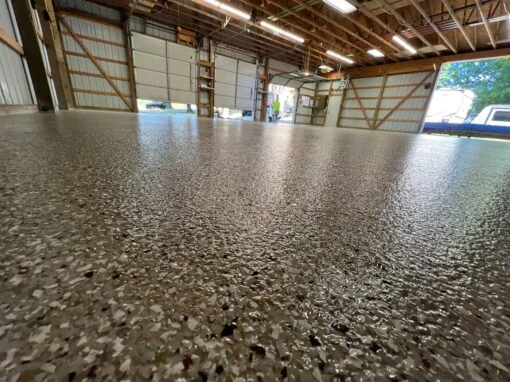
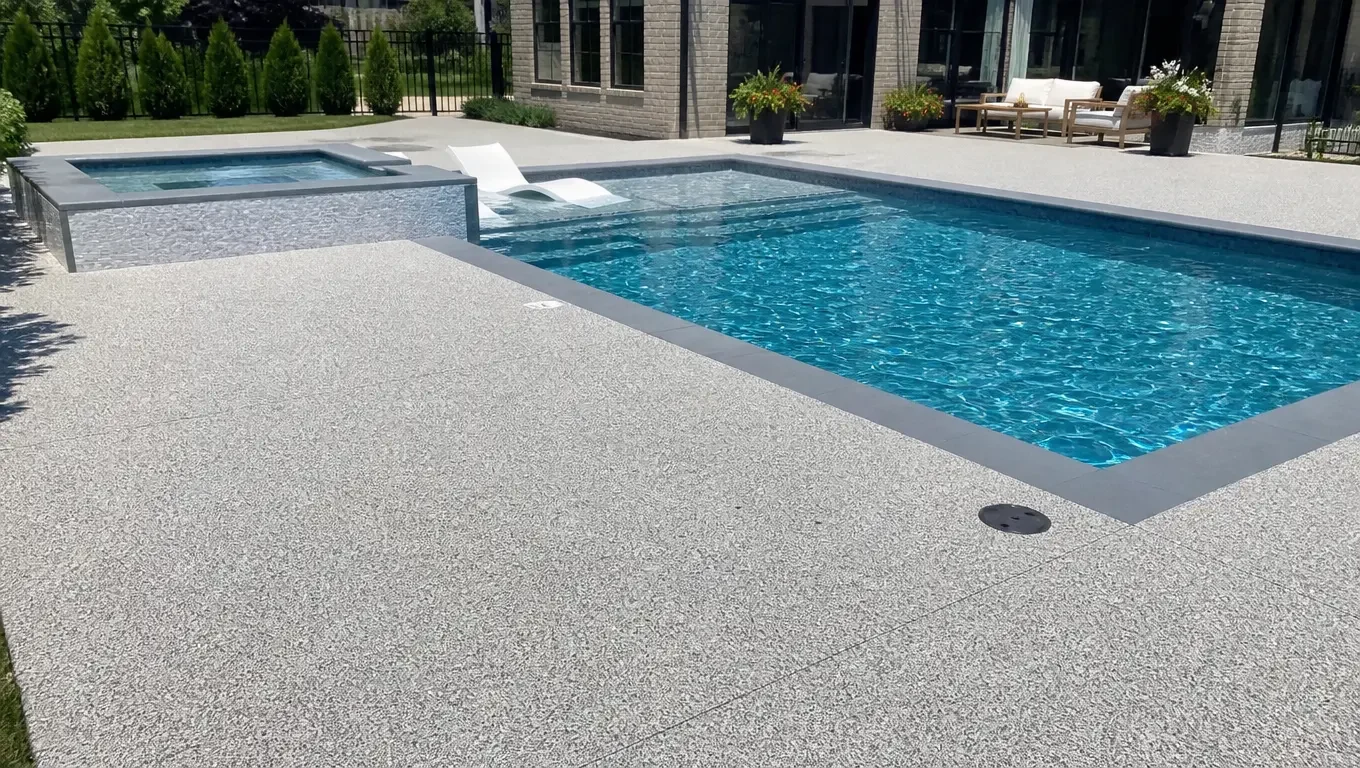
"Slip-resistant" is not a single product, it is a combination of texture and system design. Traction on a pool deck coating comes from a textured finish or broadcast aggregate worked into the topcoat, rather than from a smooth, glossy surface. A coating that looks attractive but has no texture will not provide meaningful wet-traction improvement, no matter what it is marketed as.
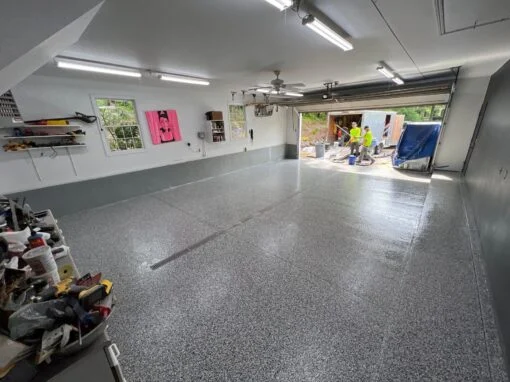
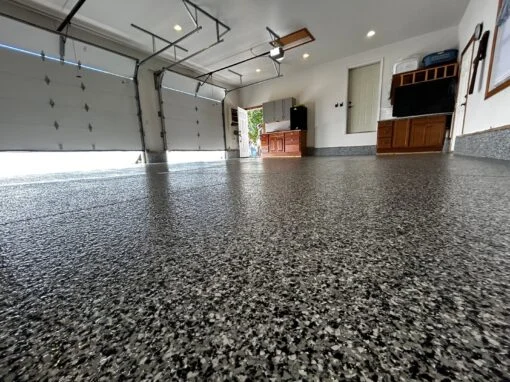
Premier Edge's outdoor coating systems are built to be slip-resistant, easy to clean, and resistant to UV damage, salt, harsh chemicals, staining, fading, cracking, and flaking, which covers the main stresses a pool deck is exposed to. On the construction side, aggregate broadcast into the topcoat is what contributes the actual slip resistance, so the topcoat formulation and the aggregate used both matter to the end result.
Why the Topcoat Matters as Much as the Texture
A textured surface only performs as intended if the coating underneath it is built for outdoor exposure. Standard epoxy can yellow and chalk when used as an exposed outdoor topcoat under direct sun, which is a problem for a surface that gets full sun exposure for most of the day. A UV-stable polyaspartic topcoat is intended for that kind of outdoor exposure instead.
This is why Premier Edge's exterior coating approach pairs a high-solids epoxy base, chosen for adhesion and chemical resistance, with a UV-stable polyaspartic topcoat for the exposed surface layer. The base handles bonding and chemical exposure from pool water, sunscreen, and cleaners, while the topcoat handles sun exposure and day-to-day wear.
- Base layer: high-solids epoxy, chosen for adhesion to the concrete and resistance to pool chemicals
- Texture layer: broadcast aggregate or a textured finish, which creates the actual wet-traction grip
- Topcoat: UV-stable polyaspartic, chosen to resist yellowing and chalking from constant sun exposure
Grand Rapids Weather and Why Preparation Matters
A pool deck coating has to survive more than sunlight in West Michigan. According to the National Weather Service Grand Rapids, the region's winter conditions regularly include thawing and refreezing, snow, ice, rain, and freezing rain. That repeated freeze-thaw cycle puts stress on any coating applied to concrete, which makes adhesion and flexibility real decision factors, not just cosmetic ones.
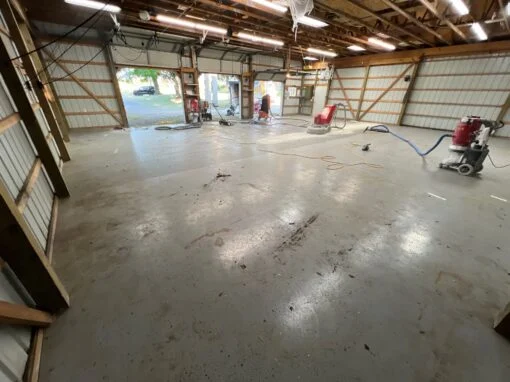
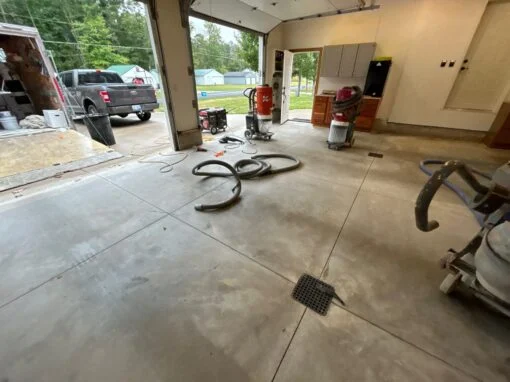
This is part of why surface preparation matters before any texture or topcoat is applied. Premier Edge's documented preparation sequence for coating projects is diamond grinding, base coat, flakes, scrape and vacuum, then final topcoat. Diamond grinding opens the surface so the base coat can properly bond to the existing slab, which is what allows the coating to hold up through seasonal moisture and temperature swings rather than lifting or cracking at the edges.
You can review the full preparation process on Premier Edge's how our concrete coating works page, and see more on outdoor-specific systems through the outdoor coating options for Michigan weather page.
Setting Realistic Expectations: Slip-Resistant Is Not Slip-Proof
A textured, exterior-rated coating meaningfully improves traction compared to bare or smooth concrete, but no coating eliminates every slip hazard around a pool. The Occupational Safety and Health Administration's walking-working surfaces guidance identifies water, snow, ice, leaks, and spills as slip hazards, and emphasizes keeping surfaces free of hazards where feasible.
Around a pool deck specifically, traction can still be affected by:
- Standing water or poor drainage
- Sunscreen, oils, and lotions on the surface
- Algae or debris buildup if the deck is not cleaned regularly
- Footwear type and how bare feet interact with the texture
- Slope and how water moves across the deck
A slip-resistant coating is one part of a safer pool area. Drainage, cleaning habits, and surface maintenance still play a role, and no coating should be treated as a guarantee against falls.
Questions to Ask Before Choosing a Coating
Before deciding on a pool deck coating, it helps to ask the installer a few direct questions so you know exactly what you are getting:
- What creates the texture, a broadcast aggregate or a textured finish, and how does it feel underfoot?
- Is the topcoat UV-stable and rated for full outdoor sun exposure, or is it a standard indoor-oriented epoxy?
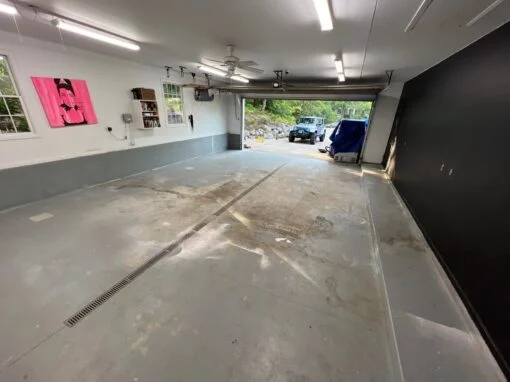
- What condition is the existing concrete in, and does it need grinding, crack repair, or other preparation before coating?
- What is the full preparation sequence, and how does the base coat bond to the slab?
- How long before the deck can be walked on and used again after installation?
The condition of your existing slab matters here too. Rough, stained, cracked, or chipped concrete may need assessment and preparation before coating, while a decorative, lightly used slab may call for a different approach than a heavily used pool surround that sees constant foot traffic and water exposure.
Installation Timing
Premier Edge installs its outdoor coating projects in 1 to 2 days. Cure time and when the deck is ready for regular use can vary depending on the specific coating system applied, so it is worth confirming return-to-use timing directly with your installer as part of planning around pool access.
Frequently Asked Questions
What makes a pool deck coating slip-resistant when the surface is wet?
Wet traction comes from texture, either a textured finish or aggregate broadcast into the topcoat, combined with a coating system designed for outdoor use. Smooth, glossy coatings do not provide meaningful wet traction regardless of the base material used.
Is epoxy alone a good choice for a sunny outdoor pool deck?
Standard epoxy can yellow and chalk when used as an exposed topcoat in direct sun. For a pool deck that gets full sun exposure, a UV-stable polyaspartic topcoat over an epoxy base is built specifically for that kind of outdoor exposure.
How does Grand Rapids freeze-thaw weather affect a pool deck coating?
Grand Rapids winters bring repeated thawing and refreezing, snow, ice, and freezing rain, which puts stress on any coating applied over concrete. Proper surface preparation, including diamond grinding so the base coat bonds to the slab, helps the coating hold up through those seasonal temperature swings.
Get Your Pool Deck Evaluated
If you are planning a pool deck coating in Grand Rapids or the surrounding West Michigan area, Premier Edge Concrete Solutions can evaluate your existing slab and walk you through the preparation and coating system options available. Call (616) 816-2300 to talk through your pool deck project and get your questions answered before you decide.