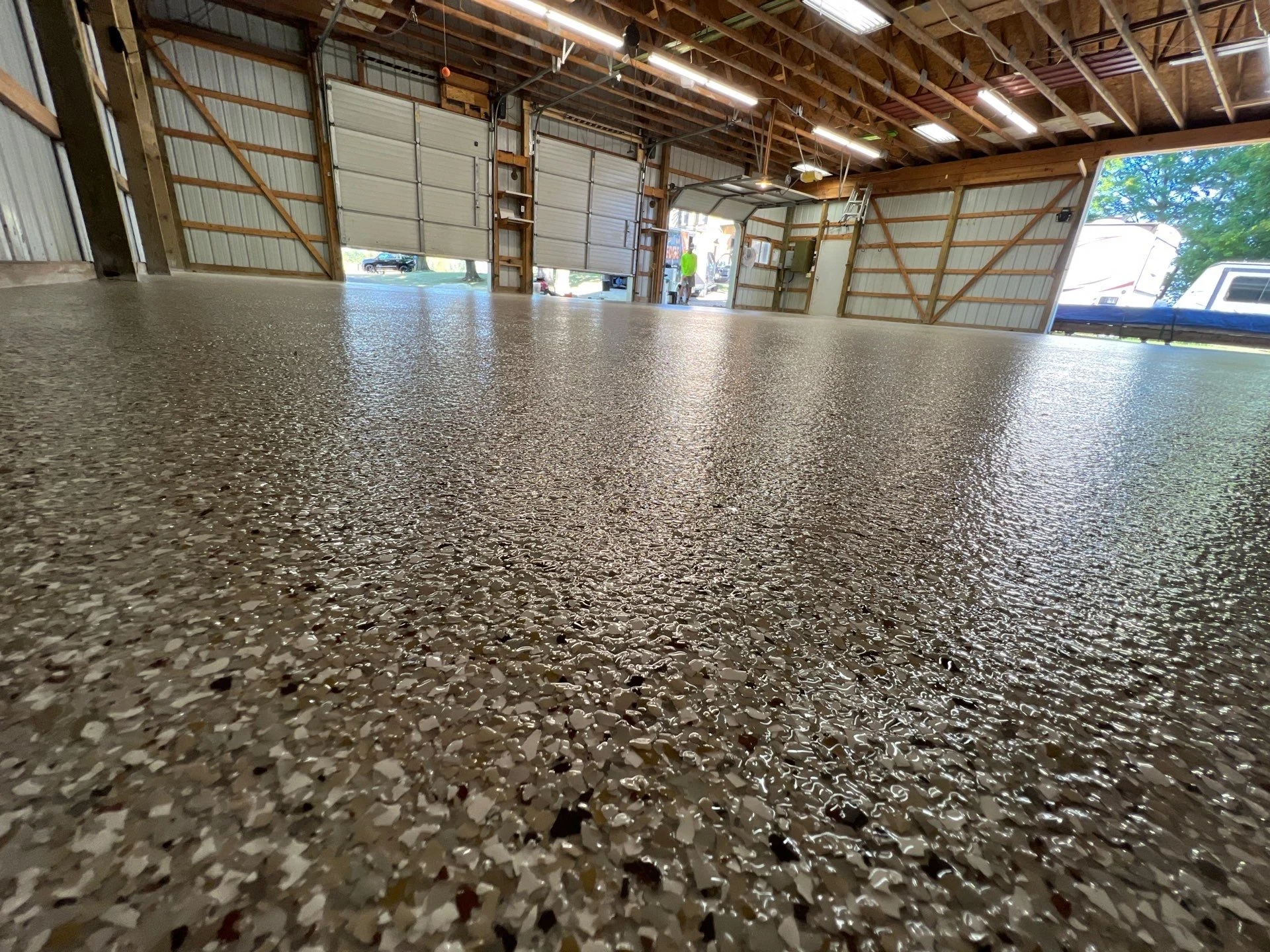
Auto repair bays take a different kind of abuse than a typical garage floor. Between heavy vehicle traffic, dropped tools, degreasers, oils, and constant cleaning, the coating system has to be matched to the real conditions of the shop, not just picked for color or shine. Premier Edge Concrete Solutions provides commercial concrete coatings for automotive-related facilities across Grand Rapids and the surrounding West Michigan area, with options that include epoxy flooring, polyaspartic coatings, and decorative flake finishes. Moisture conditions and any necessary mitigation should also be evaluated when selecting a system.
Before settling on a system, a shop owner needs answers in four areas: chemical exposure, the condition of the existing slab, realistic reopening timing, and traction in wet work zones. Here is how to evaluate each one.
Match the Coating to What Actually Touches the Floor
"Chemical resistant" is not a single, fixed property. Resistance varies by the specific coating product, the chemical involved, its concentration, and how long it sits on the surface. Sika's chemical resistance documentation reports different results across its coating lines and across one-day, three-day, and seven-day exposure windows for the same product. A broad claim that a coating "resists chemicals" does not confirm it holds up to the specific brake fluid, degreaser, or coolant used in a given bay.
- Ask for resistance data tied to the actual chemicals used in the shop, not a general marketing claim.
- Confirm whether the data reflects short exposure (a quick spill wiped up) or prolonged exposure (a pooled leak left overnight).
- Keep a list of the cleaners, fluids, and degreasers used daily so it can be checked against product documentation.
Assess the Existing Slab Before Specifying a System
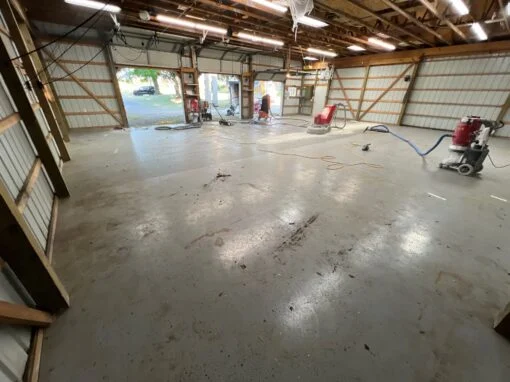
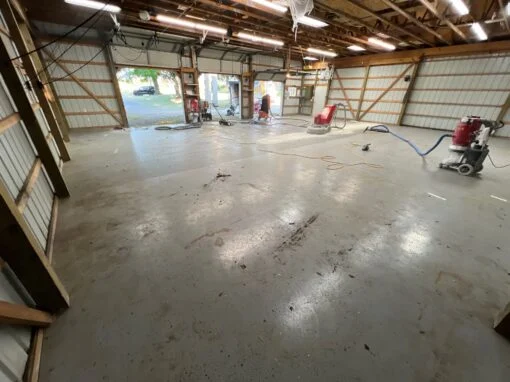
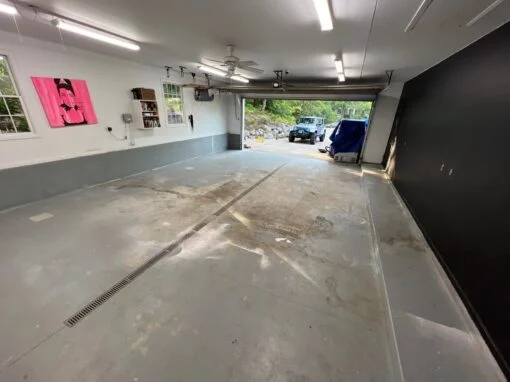
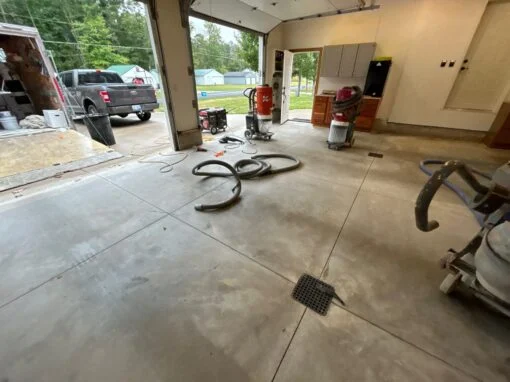
A repair bay with years of service history is not the same starting point as a clean residential garage. Oil-soaked or heavily contaminated concrete needs to be identified and addressed before a coating can properly bond. Sika's surface preparation guidance calls for mechanically profiling the concrete through grinding, shot blasting, or a similar method, and notes that contamination which cannot be removed may require taking out and replacing the affected concrete rather than coating over it.
Moisture matters just as much as surface contamination. Substrate moisture, humidity, surface temperature, and dew point all factor into whether a coating will adhere properly, since condensation during application can cause adhesion failure or a blushed, uneven finish. An assessment of the slab, not just a visual inspection, should happen before a system is chosen. Reviewing how the coating installation process works can help set expectations for what that evaluation and preparation involves.
Plan Reopening Around Real Cure Milestones, Not Guesswork
"Done" does not mean "ready for a car." Coating systems pass through distinct stages: installation completion, safe foot traffic, light traffic, and full cure, and each one happens at a different point. As one manufacturer example, a polyaspartic product like Sikafloor-515 lists roughly four hours before foot traffic, eight hours before light traffic, and five days before full cure at around 68°F. These figures are specific to that product and conditions, not a universal promise, but they illustrate why "walk on it tomorrow" and "drive a lift or forklift on it tomorrow" are two very different questions.
- Confirm which milestone (foot traffic, light vehicle traffic, heavy equipment, full cure) applies to each activity you need to resume.
- Get written confirmation before scheduling vehicles, lifts, or heavy equipment back into a freshly coated bay.
- Account for ambient temperature, since cure times shift with shop conditions.
Check Traction, Especially in Wet Work Areas
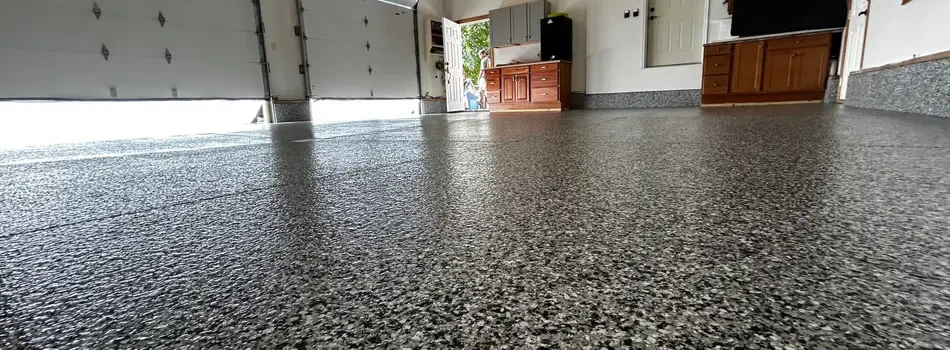
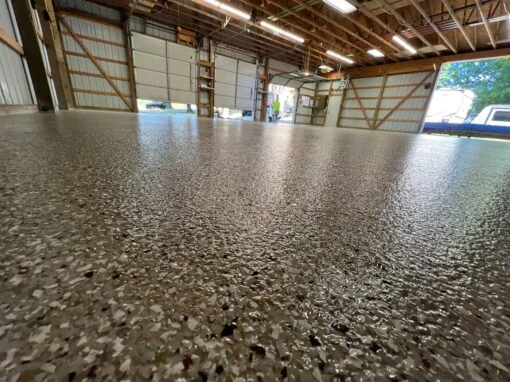
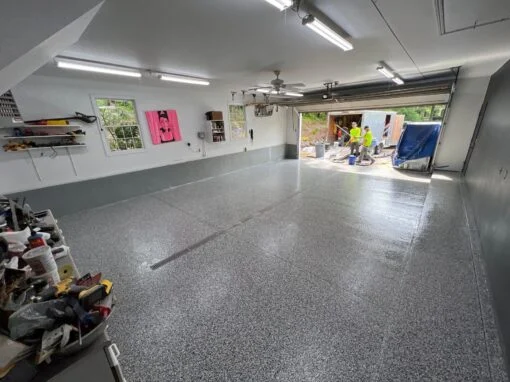
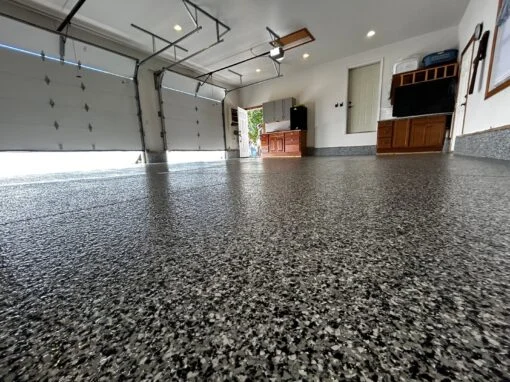
A glossy, attractive finish is not automatically a safe one. Commercial floor systems, including those built for service bays, can be customized for slip resistance with different texture levels applied by area. A wash bay, an entry point exposed to tracked-in rain or snow, and a dry parking zone inside the shop don't need identical traction profiles. Ask to see a sample of the actual finish being proposed for wet-prone areas rather than assuming any coating is automatically safe underfoot.
West Michigan winters add a practical wrinkle here. Local road maintenance relies on salt and brine, which means vehicles can track moisture, grit, and deicing residue directly into entryways and service bays during the colder months. It's worth discussing with your installer how exposed your specific entrances and bays are to that seasonal tracking, since that affects both traction needs and long-term maintenance.
Options Worth Discussing for a Service Bay

Every shop is different, so the right system depends on the chemical, traffic, and moisture findings above. Premier Edge Concrete Solutions offers commercial resinous flooring options for automotive-related facilities, with systems and finishes worth discussing that include:
- Epoxy flooring
- Polyaspartic coatings
- Decorative flake finishes
- Evaluation of slab moisture conditions and whether additional moisture mitigation is needed before installation
A single product name is not a complete specification on its own. The same resin can be used as a topcoat over a broadcast system or as part of a standalone decorative system, so it is the full layering, thickness, and documentation behind the system that determines performance, not just the base material. For a broader look at commercial options, see Premier Edge's commercial resinous flooring page.
Ready to Evaluate Your Shop's Floor?
Premier Edge Concrete Solutions provides commercial concrete coating services for businesses in Grand Rapids and the greater West Michigan area, including automotive-related facilities. The team can discuss existing concrete conditions and coating options suited to the demands of a service bay. Premier Edge advertises a lifetime warranty on indoor coating solutions, but eligibility, coverage, and exclusions for a specific commercial installation should be confirmed under the applicable written terms.
Call (616) 816-2300 to talk through your service bay's chemical exposure, slab condition, and timeline with the Premier Edge team serving Grand Rapids and West Michigan.