
When Should You Replace a Peeling Garage Floor Coating in Grand Rapids?
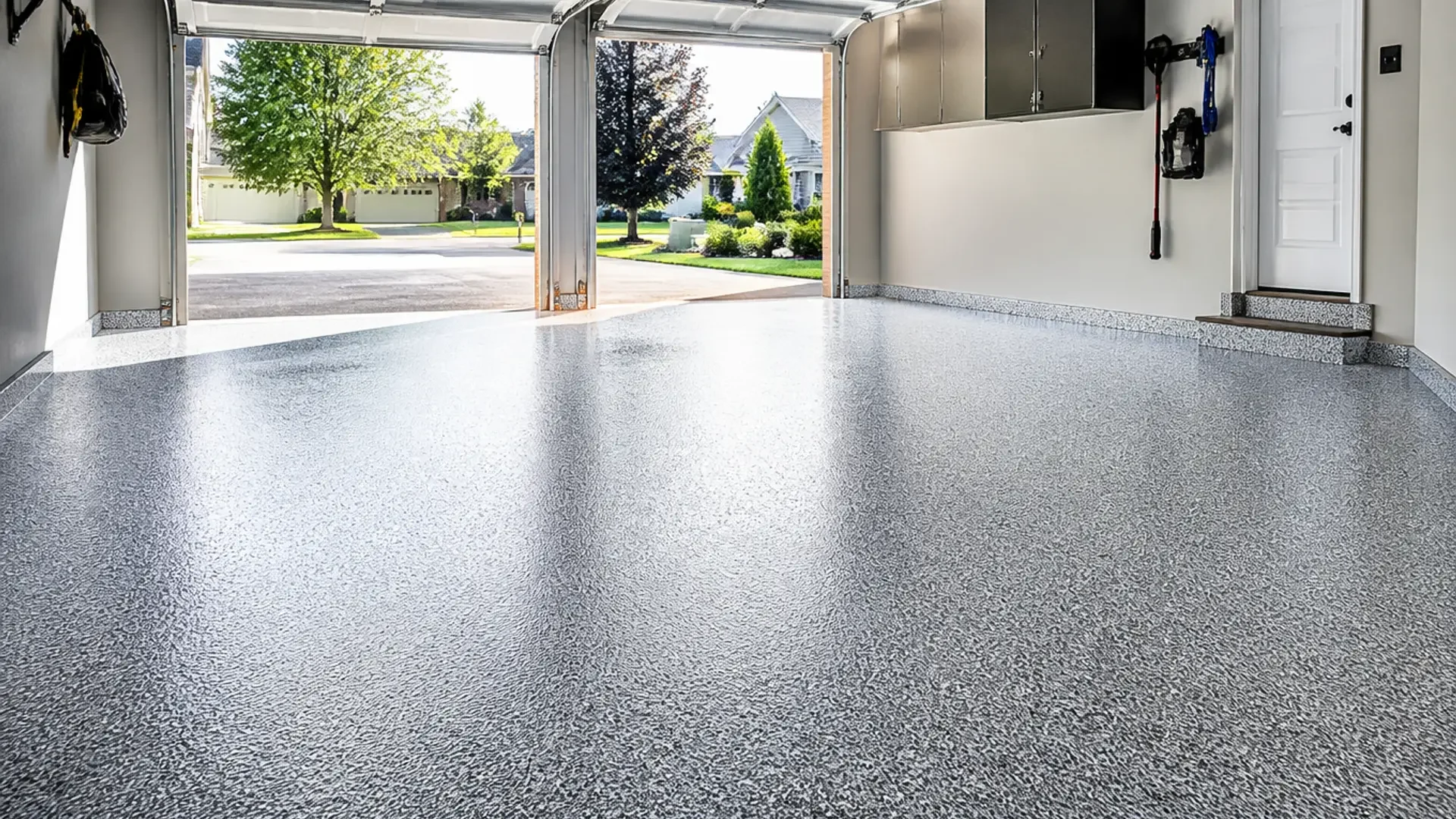
A peeling or lifting garage floor coating is frustrating, but it does not always mean the whole system has to come out. The right move depends on how much of the floor has lost adhesion. Replace the coating when lifting is widespread, new spots keep showing up, or moisture and poor adhesion caused the original failure. Small, isolated areas may be repairable on their own, but a new layer should never go over a failed one. For Grand Rapids and West Michigan homeowners weighing a repair against a full recoat, here is how to tell the difference and what a proper evaluation should include.
Repair or Replace? How to Read the Signs
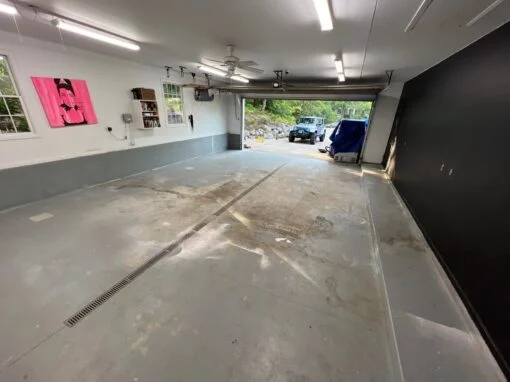
The scope of the peeling is the clearest indicator of what your garage floor actually needs. A targeted repair can be realistic when the failure is isolated, such as near a garage door threshold or along a cold joint. Once the damage spreads further, patch repairs stop being a reliable fix.
- Isolated peeling: Limited lifting near an edge, door threshold, or cold joint may be a candidate for a targeted repair.
- Widespread peeling: When more than 20 to 30 percent of the floor has lost adhesion, full removal and recoating is the more reliable path forward.
If you are not sure which category your floor falls into, our breakdown of causes and repair options for a peeling garage floor coating covers the failure patterns in more detail.
Why a New Coat Over a Peeling Floor Won't Hold
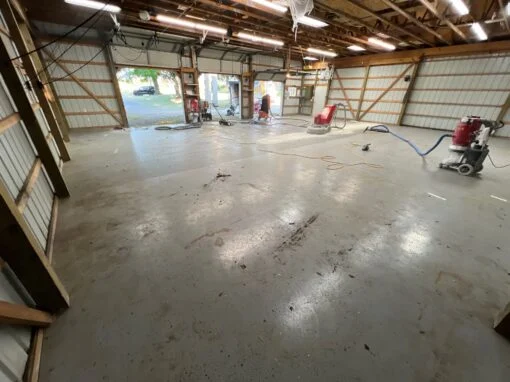
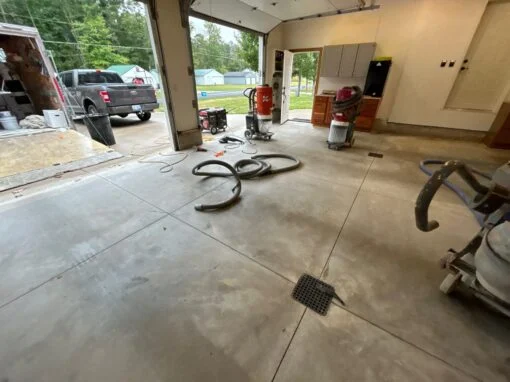
It can be tempting to simply apply a fresh layer over the damaged area, but recoating over a peeling coating is not a durable fix. The failed layer underneath is still unbonded, so whatever goes on top of it is sitting on an unstable base. The existing coating needs to be fully removed through diamond grinding before a new system can bond properly to the concrete.
What's Actually Causing the Coating to Lift
Peeling is a symptom of a bond failure, not just a cosmetic issue, so it helps to understand what causes it before deciding on a fix. The main culprits are inadequate mechanical surface preparation, moisture vapor transmission moving up through the slab, and contaminants such as oil, curing compounds, or a prior sealer left on the concrete.
In West Michigan, moisture vapor transmission and freeze-thaw cycling are conditions that can break the bond between the concrete and the coating when moisture or surface preparation were not properly addressed from the start. Industry research backs this up: moisture vapor can migrate upward through a concrete slab and contribute to blistering, peeling, and delamination, which is why proper surface preparation and moisture testing matter before any moisture-control primer or barrier goes down (Duraamen Engineered Products).
What a Proper Recoat Evaluation Looks Like
Before recoating a garage floor, we test moisture vapor transmission and use a moisture-mitigating primer when vapor levels exceed acceptable thresholds. That evaluation step is what separates a lasting recoat from a repeat failure down the road.
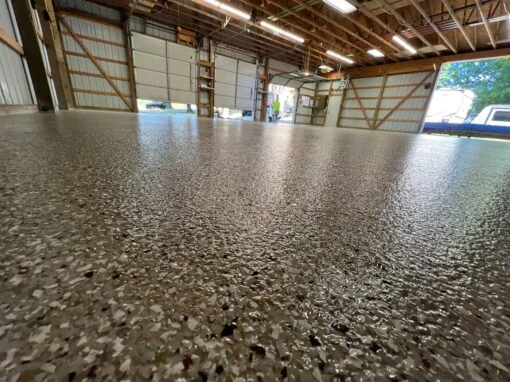
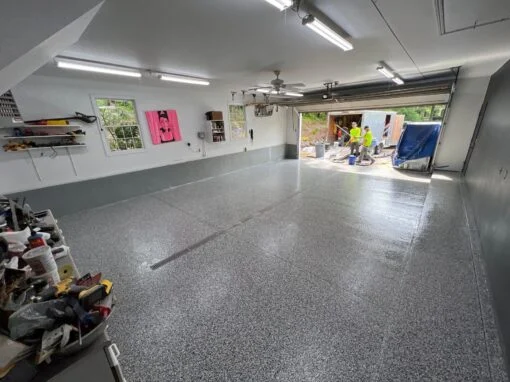
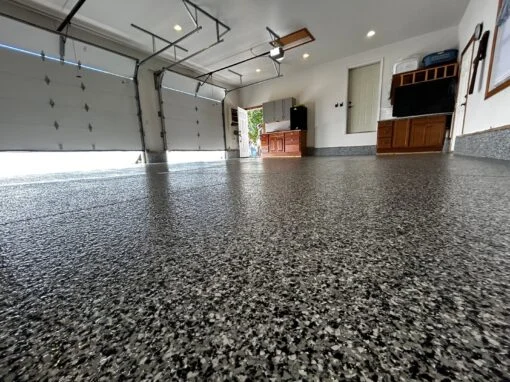
Once a floor is cleared for a full recoat, our process follows the same sequence used on new installations: diamond grinding, base coat, flake broadcast, scrape and vacuum, and a final top coat. You can see the full breakdown on our concrete coating process page.
What to Expect for Timing
Most residential recoats are completed within two days. After that, foot traffic is generally fine within 24 to 72 hours, and you can typically park a vehicle on the floor after about seven days, depending on the system selected and the condition of the concrete once the old coating is removed.
Frequently Asked Questions
Can a garage floor be recoated without removing the peeling coating?
No. The failed coating needs to be fully removed through diamond grinding first. Applying a new coat over a peeling layer leaves the unstable layer underneath, so the new coating will not bond properly.
How long should I keep cars off a recoated garage floor?
Plan on roughly seven days before parking a vehicle on a newly recoated floor, though this can vary depending on the system used and the floor's condition after the old coating is removed.
What should be checked before choosing a primer for a recoated garage floor?
Moisture vapor transmission should be tested first. If vapor levels exceed acceptable thresholds, a moisture-mitigating primer is used to help the new coating bond and hold up over time.
Ready to Get Your Garage Floor Evaluated?
If your garage floor coating is peeling and you are not sure whether it needs a repair or a full recoat, we can take a look and tell you what is actually going on underneath. Premier Edge Concrete Solutions serves Grand Rapids and the surrounding West Michigan communities, and is a BBB Accredited Business with a 5.0 Google rating from 484 reviews. Explore our garage floor coating services in Grand Rapids or call us at (616) 816-2300 to schedule an evaluation.